Home Blog Page 105

Assembly polls 2023: Can BJP think big in Karnataka?

0

To most political observers, BJP’s lack of expected electoral successes in the state so far can be attributed to the fact that it has adopted, by and large, the Congress style politics which in public perception is associated with caste considerations, allegations of corruption, and incrementalism (as opposed to quantum jump) in the matter of development.

The difference between the two parties has probably been observed by these political observers with regard to their approaches towards Hindutva. If Congress has been perceived to bear attitude of antipathy, the BJP has been considered to have sympathy for it. This shows up from time to time on issues such as ‘Tipu Jayanti’, ‘Hijab’, ‘Halal’ and so on. According to widely held public perception, BJP has no doubt taken stance against such divisive issues from time to time, but not shown sufficient understanding of the fact that these are mere symptoms of a root cause viz., policy of appeasement that has been deeply ingrained in the structure of governance.

Clearly, only with such differentiation, BJP has not been able to make a distinctly positive and superior mark in voters psyche in its favour. The lack of consistency in its electoral performance is a pointer in this regard. It is high time the party must take a quantum leap in terms of governance quality and performance standards, and shed the slow and tardy path of incremental progress and marginal growth. Interestingly, the key to achieving such transformation is hidden in the core tenets of Hindutva, by whatever name one may refer to it. What are they? An indicative list follows:

Eradication of corruption, zero tolerance of ‘appeasement’, rising above caste politics, absolute commitment to public  service, relentless pursuit of development, upliftment of poor and downtrodden across caste and creed.

Hindutva calls for determination, will, hard work and willingness to subsume individual interests to collective good. These are both arduous and challenging, but not impossible either. the state of UP led by Yogi government has demonstrated that this model is practicable and it works. The results of Polls in that state this year showed how the collective satisfaction of common voters gave BJP led NDA a convincing victory against heavy odds, including especially a hostile and conspiring media moving heaven and earth to prevent Yogi’s return to power!

Yogi model of governance is also being talked about across India these days. The election verdict of Uttarakhand, a neighbouring state of Uttar Pradesh in favour of BJP, may also arguably be said to have been influenced by the success of Yogi model in UP, to an extent.

Karnataka BJP can probably make important differences to the state’s future by following similar principles. The party should blast away the cobwebs of corruption, casteism, and incrementalism from the political culture of the state and start working for a massive and rapid transformation of the state economically, socially and politically based on the principles discussed earlier. Not only it would be able make the people of the state happy and contented in the process but also contribute positively to the prospect of the party’s electoral prospects in its neighbouring states. Large sections of people in those states are visibly unhappy and looking for alternatives to dynastic and communist rules.

Is it too late for BJP to take the plunge in Karnataka? No. There is a full year still ahead to the polls. Obviously, implementing these principles and commensurate strategies are bound to be long drawn out, but starting them will send the messages of the priorities and the intent of the party to the people of the state. A ten point action programme can be suggested here as a starting point, some of which may, depending on experience, even be incorporated in the polls manifesto going forward.

While it would be best for the state BJP to constitute a think tank comprising experts from the civil society (educationists, thinkers, industrialists, scientists, environmentalist and others) to decide upon an action program, here are 10 points agenda which can go a long way in quickly changing public perception about the governance quality.

1. Drastically cutting down the implementation time of various ongoing infra projects across the state by bringing in more manpower, expert help, and monitoring. For example, the schedule of completing metro rail work in Phase 2  & Phase 3 in the state capital may be advanced by a few months. The new CM of the state recently asked officials to complete the Phase 2 by 2024 i.e., one year ahead of the schedule. If similar spirit is injected in Phase 3 Metro and even other infra projects it is bound to make significant electoral difference;;

2. Massive programmes need be launched to build and repair roads across the state and that on war footing. Building or repairs of major roads need to be done with world class material and technology by reputed internationally reputed companies. Simultaneously, drainage system issue needs to be addressed as waterlogging also causes damage to roads in monsoon. Holistic approach and planning are needed.Tendency to assign work to favourite contractors must be avoided. As regards resources, financial and otherwise, the state can of course rely on the ministry of housing & urban affairs as well as ministry of riad transport & highways of the centre for generous assistance;

3. Mega solid waste management projects may be launched across big cities and towns, particularly in the state capital using world class equipment,  technology, experts and through training of local operators. In November last year there was a media report that the European Union and Bengaluru will work together on solid waste management project. Such initiatives need to be aggressively pursued. This will clear all these cities of garbage littered here and there creating very positive public perception quickly;

4. A mega solution need be thought of for addressing drinking water shortage in Bengaluru and dozens of other cities and towns (causing severe ground water depletion) and also supplying irrigation water in scanty rainfall/ draught-prone areas in north Karnataka districts like Belagavi & others. If Gujarat has been able to comprehensively address the drinking water, irrigation, flood-control, power supply and wildlife needs of 3 neighbouring states like Rajasthan, Maharashtra and MP, besides its own through the massive Sardar Sarovar Dam project, Karnataka can also certainly think big and get help from the centre to resolve its perennial problem of water shortage. To its advantage, it has huge water resources in the form of Netravathi and Sharavati rivers which originate and run their full course within the state;

5. As urban areas are expanding fast in the state, the government can simultaneously undertake tree plantation exercise on a massive scale under expert guidance. As per media report, the scale of tree plantation has been affected by lower budgetary allocation. If true, it is a matter of concern and needs immediate attention. With so many IT and biotech companies it should not be difficult to secure their participation in such endeavour in a big way. The govt can also involve them in restoring numerous stagnated and polluted water bodies across the state, especially in Bengaluru on war footing;

6. The civil aviation ministry has been spreading a huge number of new airports across the country most of them being greenfield projects. Bengaluru being the IT capital richly deserves the second airport. This demand is genuine and old and can’t wait. Petty interests of investors in lands around the present airport KGIA must not be allowed to block this important thing. It can change domestic and international perception about the ruling regime overnight;

7. There are vast numbers of residential apartments without OC, especially in the state capital. They house a considerable section of voters and most of them are victims of promoters’ malpractices. This problem needs to be solved once and for all pragmatically and if necessary, through regularisation by imposing fines. A government scheme viz., akrama sakrama‘ was started in 2013 but its progress has been tardy. Legal issue is reported to be amongst reasons for that. Still lakhs of apartments / houses across the state await regularisation. If the scheme is made legally fool-proof, implemented proactively and vigorously the ruling party is likely to earn goodwill of large chunk of voters. Going forward, no sale of flat or apartment may be allowed to be registered without the OC;

8. Attempts must be made to implement the welfare schemes for the poor at frantic speed in AITINT style [‘as if there is no tomorrow’]. For example, recently there was a media report of the government programme of building 5 lakh houses for the poor under PMAY. If a good part of it is completed before the polls date by working on mission mode, it can be a huge positive for the ruling regime. The same spirit is called for numerous other welfare schemes such as Ayushman Bharat, Nal se Jal, etc;

9. There is urgent need to remove the scope of corruption from the scope of governance, especially in the places of interface between government machineries and the public. This may affect petty interests of sections of politicians and babus, but it can work magically in changing public perception about the party in a positive way. AAP, for example, used it as a strategy in Delhi and got unexpectedly good results in terms of votes. It has also started claiming in curse of its Gujarat election campaign about its new ministry in Punjab having ended corruption in 10 days. Whether or not this is a fact, it is influencing public perception with media support. Its scheme of making the whole process of driving license renewal on line was also hyped nationally by the media. Karnataka being the IT capital has the wherewithal to harness technology to reduce public-babudom interface which needs to be leveraged in very large measure;

10. Last but not the least, the ruling regime needs to be extremely agile and firm in enforcing law and order. Procrastination and tendency to leave even routine law and order issues to the judiciary need to be shed forthwith.

Obviously, most of these tasks will be spread over a period of time to implement as said earlier. Probably it may be a good idea to form a high-powered task force at the apex level monitored by the Chief Minister and the task force should start these multi-dimensional programmes with zeal and commitment. Time is of essence and BJP as a party has to work hard in the left-over months to rise above competition.However, if the party makes a beginning in a systematic way while taking people of the state as partner, good days are bound to herald for both the people of the state and the party. Of course it is obvious before taking a plunge the leadership must have conviction that the new strategy will work!

What harm ‘Sicku-Maku’ Bongs have done?

(Clarification: The term ‘Sicku-Maku’ is used in West Bengal. It is the local acronym for SECULAR-MARXIST)

Mamata Banerjee has been unnecessarily credited for halting BJP’s progress in West Bengal in 2021 election. She is not at all a challenge to BJP. Prashant Kishor may try his best to project her as anti-BJP face at national level, but Mamata Banerjee has no worthy political credibility without Muslim community of West Bengal.

Muslims in West Bengal, like anywhere in India, hate BJP as they hated Congress as “Hindu Party” before 1947. To consolidate Muslim votes in her favor, Mamata Banerjee has only used this hatred of Muslims towards BJP by playing CAA card and appeasing them with some schemes.   

Mamata Banerjee has retained power in West Bengal for third consecutive time in 2021 mainly because of landslide demographic shift in the state in favor of Muslims. The state has about 35 percent of Muslims now. In 1951 census Muslims were 19.5 percent in West Bengal. This increase in Muslim population was encouraged through illegal infiltration from Bangladesh during the 34 years of Communist rule and then TMC rule.

Even as per Kazi Masum Akhtar, a Muslim intellectual of West Bengal, out of 48 percent of vote share of Mamata Banerjee in 2021 Assembly Election, 30 percent came from Muslims and 18 percent from Hindus. On the other hand, BJP’s vote share of 38 percent came from Hindu voters only.

Unlike West Bengal, Hindu votes had consolidated in Assam which helped BJP to remain in power in the state. Muslim population in Assam is also about 35 percent. But unlike West Bengal, Assam has a very negligible burden on Sicku-Maku Hindu Assamese people.

The recent Jahangirpuri Islamic riot (April 2022) in Delhi has shown how organized they are to launch violence at community level. Evil minded Brinda Karat supported those Jihadis, but never opened her mouth after the lynching of two Hindu Sadhus in Palghar. Meanwhile TMC connection of the prime accused (Ansar) of Jahangirpuri riot has been found. It will not be surprising if Ansar is found to be an illegal Bangladeshi infiltrator.   

Jahangirpuri became news as Delhi Police swung into action in no time and media were allowed to cover. Had this been in West Bengal, Hindus would have suffered the loss, media would have remained silent, state administration and ruling party would have ignored the incidence and Sicku-Maku Bongs would have licked the poster of ‘Hindu-Muslim unity’. A few dozens of such anti-Hindu riots had already occurred in West Bengal during past some years. The bottom line is West Bengal is lost to Jihadis permanently.

What Assam thinks today, West Bengal can’t even think tomorrow.

The god of subtle propaganda; Booker Prize winning author Arundhati Roy

While walking through the isles of a city library in England, I found myself staring at a name that sounded very familiar. I guess living in foreign countries for a long time does this to you, every time you see a brown person, or hear something in Hindi, or see an Indian name, you stop for a fraction of a second.

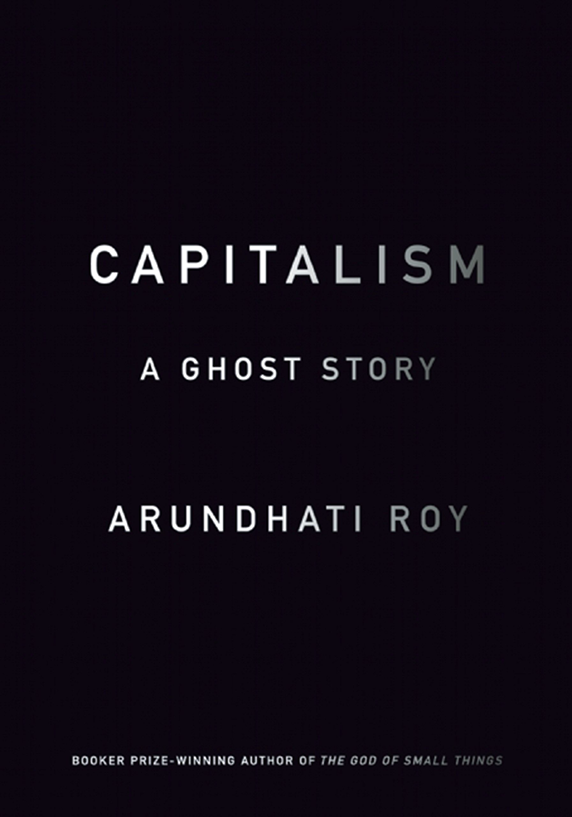
Arundhati Roy was the name I found myself staring at. My hand as if out of my control, just rose on its own and grabbed the book: Capitalism, a ghost story.

Her left leaning thoughts and communist background already gives a lot as to how the book would end up; the evil Ambani, Adani or Tata, Birla! However, as soon as I saw the table of contents, my mind raced through a bevy of questions. The table of contents looked like this:

What has Kashmir to do with Capitalism (Chapter 4 of the Book)? Perhaps, she would be talking about the time after article 370 and 35A were abrogated in 2019. Because with these articles in place Ambani, Adani or Tata, Birla or anyone else for that matter couldn’t have done anything, literally they couldn’t have moved a stone on their own. Could they? So it would make a lot of sense to hold evil capitalism accountable for the misery of Kashmir at least 2019 onwards.

Having said that, the book was actually written and published in April of 2014. Before the evil fascist, dictator Modi took over the crown, let alone abrogation of 3170/35A. Moreover, what does saint Afzal Guru have to do with Capitalism(Chapter 6 of the Book)? Now it became even more interesting for me.

With these questions in my, and hoping to get some good answers to these questions I wasted no time, found a peaceful corner in the library and started reading.

The book started exactly as I had expected, bashing Mukesh Ambani in an artistic way; “Pay respect to our new Ruler” while standing in front of Antilla on Altamount Road in Mumbai and wondering “Is it a house or a home?” In no time the author touched upon the prevailing corruption and scams, Spectrum, 2G, 3G, Coal, Mining etc. The book ended exactly as one would assume, with typical communist demands like no privatization for natural resources and essential infrastructure or more interesting that children of rich cannot inherit their parent’s wealth. I guess the author used corrupt government and big corporations interchangeably or thinks they are the same. But this is a topic for a different post. I don’t wish to get carried away from my original intent. What do the issues in Kashmir have to do with Capitalism?

So I kept on reading, the author then moved on to Anna Hazare in Chapter 2 and then to Maoists in Chapter 3. Till this point, the text was still in line with Capitalism, big corporations and corrupt government (by the way the corrupt government is Indian National Congress, its important to mention the time frame, the book was published before the evil BJP came to power and changed everything).

And then came Chapter 4, Kashmir’s fruits of Discord. I was eagerly waiting for this, as it was the sole reason why I was reading the book in the first place. Turning pages, one by one, I read the various “facts” about Kashmir that she came to know after her visit to various places in Kashmir like Shopian and after talking to the locals there. I read about the atrocities Army and Military had caused in Kashmir; human rights violation; how police removed fingernails from all the fingers for somebody; how many innocent teenagers were arrested, killed and wounded; I read about the street protests that occurred back to back in 2008, 2009 and 2010, stone pelting, the curfews and the complete lockdowns including discontinued internet services.

I thought Curfew and discontinued internet services in 2019 for several months was for the first time and of course for the longest time. Its good that I read Ms. Roy’s book. I came to know that with more than 500,000 Indian Army soldiers Kashmir was the most highly militarized zone in the world. And in no time, the chapter ended.

However, where was the link to Capitalism? I thought may be in the next chapters. Chapter 5 and Chapter 6 were dedicated to saint Afzal Guru. How the Judicial process was flawed; How his execution was illegal; how his family was deprived of their rights; what were the technical errors in the legal process; who said what during the trial; how did LK Advani know 2001 parliament attack was orchestrated by Pakistanis?; there was a mention of Gujarat Pogrom; and so on and so forth. There was indeed a lot mentioned and referred to. But why? Where is the link to Capitalism? The book is titled “Capitalism A Ghost Story”. It is roughly a 100 page book and out of which more than 50 pages are dedicated to Kashmir and Afzal Guru (3 complete chapters). Why not make the name that reflects that it would be talking about Kashmir and terrorism?

This is the subtle art of propaganda : keep mentioning bits and pieces of your own narrative in a subtle way everywhere till the time it reaches the subconscious level of the consumer with the consumer being completely unaware of the fact that they are being fed with a propaganda. I chose the book only because I wanted to know about what the author thinks about Capitalism and Kashmir Period. I was not at all interested in her views on Kashmir and Afzal Guru or her interactions with Local Kashmiris. Even the people who are not inclined towards politics will by default form an opinion on Kashmir and Afzal Guru after reading this book on Capitalism.

And those are the people who were shocked and shattered after watching the movie The Kashmir Files. Now, you can imagine why a big section in India even though apolitical, neutral, rational and well read have some biases and prejudices for or against something in similar issues. Not only a big section in India, but even a larger International community has a prejudice against Kashmir.

The book does not give any, I mean literally any insight into Capitalism. But it definitely gives a lot of fabricated information on Kashmir. It makes sure the readers who when hear about Kashmir, react with their angst.

Make a movie, a brilliant one, just add a few things, make a Pandit a villain, a Dalit or a Muslim a victim or Rahim chacha a saint that helps everyone. It need not be a movie or a book, it could be an advertisement, an essay or anything, you have to drop a hint of your narrative again and again and again. You don’t have to write a complete blog or a write a 100 page book or make a movie to flush your narrative down the audience’s throat; just a tiny capsule a day will reap all the benefits and much more than you ask for.

Major Gaurav Arya keeps asking this question on TV why do Pakistan and some other countries think that half a million Indian soldiers are patrolling a teeny tiny Kashmir Valley. He should ask Authors like Arundhati Roy, why?

To be frank, Arundhati Roy is not the only author who is doing things like this, its just that I happened to find one of her books the other week and wrote this blog. There are many other so called intellectuals doing to same.

Also Read:

Financialization of Housing- Boon or curse?

0

Brief overview of topic:

Particularly I do not agree with the UN report describing negative side but also, I am not fully against the report.

As we all know, everything has two sides one positive and another negative side. The financialization of housing too has two sides, one positive implication and another negative implication. But we have to see which side dominates and which is suppressed by the other one. Converting housing as a basic utility into a commodity has various implications.

Today financialization of housing is common in almost every place. Today people see housing as an investment opportunity rather than a basic necessity for dwelling purposes. Nowadays housing is not seen as a basic utility to be consumed by every person in the country but it is seen as an opportunity to invest our excess capital and gain profit.

People nowadays with their excess capital make investments in real estate and with these housing prices hikes. It becomes impossible for middle-class and lower-class families to buy a new house for dwelling purposes. After keeping some portion of income aside labelled as savings, people keep some per cent income for investment purposes.

First, they see the stock market as the best opportunity for investment, but if the market is highly volatile, they opt for many other options and investing in real estate is one of them. Rich investors make huge bidding on houses for investment. With these housing prices hikes and making it for middle and low-class people impossible to own any house for basic utility. Discussion and research were also conducted by the United Nations Human Right council about the financialization of housing and its implication for the well-being of many people in different countries. Specifically, two countries were selected for the research, these were India and Portugal.

Negative side of the financialization of housing:

The negative side would be that low-class and middle-class families are not able to fulfil their housing rights because the rich families are seeing housing as an investment opportunity for wealth creation rather than as a basic utility that is to be acquired by every citizen of the country. It is their fundamental right or you may say housing right given to them by the constitution.

The real estate business is expected to grow at a constant compounded annual growth rate of 3.2%. Urban gentrification is a term that defined the augmentation of housing prices, rental prices hike in property values, resulting in the exclusion of the low-income class from their neighbourhood and push in living in slums, squatter settlements and homelessness.

As it is stated by Professor Robert Shiller, the total value of land in China is incredibly high relative to its GDP. Hence the rent is very high. How can the average middle class have to cope with these prices and at the same time fulfilling its dwelling purpose? So, with these, we can conclude that there are many reasons with the help of which we can say that due to the financialization of housing, the housing problems have increased rather than decreased.

Benefits:

However, financialization has also merits which we ought to discuss because of this many financial products have increased in the financial market. Now more investors have participated in this process and more finance is coming into the financial markets. The financialization of housing has attracted more private equity, HNI, FPI and many corporate investors, which helps to keep the fiscal deficit under the control and bring new investments into the market. Because of these financial markets increased, which is considered a positive side for the particular nation.

Another benefit is the accessibility of financial products to the large number of investors, who might be unable to purchase land physically, so in these, they can easily get in and get out of the trade. With the financialization of housing, manipulation of housing prices is near impossible. As the efficient market theory professes that with a much number of speculators, manipulation of housing prices becomes impossible.

With the advent of the financialization of housing, many new things have come that are considered innovations. Different types of insurance have come to insure houses against risks like a flood, fire and any other natural calamities. People buy the insurance to ensure that their houses are being insured against any risk.

Financialization of housing becomes a curse when big private firms and players enter into the picture and try to manipulate housing prices in their favor and this results in the exclusion of low and middle-class families.

Solution for the financialization of housing:

To overcome this Government has to enter and tend to take control of the real estate market into their hands. They have to create rules and regulations and efficiently regulate the real estate market. Government has a huge responsibility for regulating the real estate market and ensuring adequate housing for all of its citizens. I feel there should be some sort of regulation by the Government to provide subsidized or affordable housing to everyone.

To conclude I will say that the financialization of housing is not bad but due to some major players it becomes worst for the lower class of groups and it violates human rights.

Example:

As we all know India is a vast nation with about 1.3 billion population. As a result, there would be a problem with housing. Many such people are not getting houses to live in and are unable to afford them because of huge housing prices. And housing prices have increased more than 50% in 5 years.

There are many ways to eradicate this problem by increasing more houses with an affordable range. Because of this those people are not able to purchase houses due to income constraints and it becomes impossible to buy them. In India, the government has implemented the housing scheme under the name, “Housing for all” in which government aims to establish 20 million houses in urban areas. With the aim of housing 100 million people by 2022.

An insight into the Indian caste system: How we are systematically misguided by its misinterpretation

0

If the word caste is derived from the Portugese word ’casta’, if there is no caste in ancient India, where did the caste system and caste discrimination come from? Didn’t sage Manu write about caste and social stratification in his book Manu Smriti? No, it is highly misinterpreted by people with vested interests, here is why.

varna representation

There are around 20 smritis in Hinduism written by 20 different sages. Not one of them is considered veracious but as everyone wants to question it, lets dig into it. What Sage Manu has written in ManuSmrithi is about Varnas, not castes. These varnas have been highly misunderstood by the people. Sage Manu divided people into 4 varnas or categories Brahmin, Kshatriya, vaishya, and shudra. As sage interpreted varnas the professions that fall under the Brahmin category are researchers, teachers, engineers, authors, scientists, Priests, doctors.., etc.

The people who fall under the Kshatriya category are Rulers, soldiers, administrators, guards.., etc. The people who fall under the Vaishya category are businessmen, merchants, traders, finance, agricultural workers, pastoral work .., etc. Finally, the professions under the shudra category are artisans, hunters, manual labor, cattle breeding.., etc. all these are irrespective of their own birth. It is hugely misinterpreted when he said from where the varnas are born from respectively.

Brahmin varna is the one who has the profession with the use of intellect, so he symbolically said they are born from the head of Brahma. Kshatriyas are warriors, a profession with the use of hands symbolically from the shoulders of Brahma. As vaishyas have work of agriculture, so born from thighs of Brahma and finally, Shudras are with the profession of smaller works like labor with the use of feet so symbolically born from feet of Brahma. Some people argue that there are five varnas and the fifth varna is (untouchables)Dalit caste. But in Manu smriti it is clearly mentioned that there are only four, no fifth varna.

So what did sage Manu mean by the importance of Varna?

A SLOKHA FROM MANU SMRITHI

In ManuSmriti, Sage Manu has written that “Brahmin can become a shudra and Shudra can become Brahmin, a person from any varna can change to any varna by acquiring such Qualities”. When he mentioned that people are to be revered by the level of their Varna, everybody misunderstood and misinterpreted that Shudras are to be looked down on. But, what It really means is that when a person has both skills and professions that belong to two different varnas, they should be revered with Varna which is top in the order.

This is the reason why the Valmiki who is a hunter a shudra, became a highly revered Sage, a Brahmin. Vyasa Maharshi who is born in the family of a Fisherman became a great sage who gave us Mahabharata, Maharshi Vishwamitra who was a Kshatriya by birth became Brahmin. Satyakama Jabali who is a Shudra in Chandogya Upanishad became a Rishi a Brahmin due to his qualities. All the Alwars and Nayanars whose idols are present in the Lord Vishnu and Lord Shiva’s temples, none of them are from Brahmin caste but are all worshipped first, even before the God himself.

slokha from Bhagawadgita

In BhagawadGita it is written that “Brahmin, Kshatriya, Vaishya and Shudra Varnas are distributed by their qualities and Skills and the karmas they do, it is not acquired by birth.” It also mentions a person who wears a janeu (sacred thread) but misses the skills and qualities of becoming a Brahmin, is a shudra. and is the same with every Varna. The reading and misinterpreting of the ancient Hindu scriptures have been done by Many foreign scholars like Max Muller who had vested interests and misinterpreted vedas and are read by great scholars like BR Ambedkar. This varna system through years of outliving through generations became a mere profession by the lineage of birth.

max muller

Then, how can we prove that we are but one with different varnas? well, through Gotras. Every Gothra that we know is present in all the Brahmin, Kshatriya, Vaishya and Shudra castes. This is a live example that we all are but one and the Varna system has been misunderstood and the caste system has been created between people to divide Us.

The oppression of lower Varnas

As soon as the Varna system has become hereditary as a family profession by lineage, the oppression of lower varnas has started, there is no denying that. This soon has been labeled as the caste system. But the Struggle and fighting against the caste discrimination have also been shared by people from higher caste such as Annamacharya, Shankaracharya, Ramanuja, Veerabrahmendra, Swami Ramanand Tirtha, and many more. These are the people who knew the real meaning of varna and fought for social reformation in a revolutionary way. “The Land on which King, servant, Brahmin and Sudhras sleep is same. There is no class distinction, when it is Lord who dwells in all the beings.” is one of the line in Annamacharya’s song.

Ramanuja leading Harijans into the Temple.

Observe the pseudo-liberals who pose for social reforms always blames only Brahmins but not other higher castes who oppressed Dalits? This is because they want to eradicate the Hindu religion, but not the caste system. If tomorrow there will be the annihilation of the caste system, these people will be the first ones to oppose it.

Urban Naxal propaganda rally in USA

Episode of Shambhuka in Ramayan.

Whenever the caste issue raises and wants to blame the ancient Hindu scriptures, the two things that are most primarily brought up are Manu Smriti and Shambhuka episode from Ramayana. There is a misinterpretation that Lord Ram killed Shambook because he is a Shudra. But is it true? what really happened?

Shambooka vadha

A person comes running to Lord Ram with his dead child in his arms and asks for help, he comes to know that someone has been doing a rigid penance which resulted in his child’s sickness. So, lord Ram goes to search for the one doing the penance and is shocked to see him doing penance hanging upside down, then introduces himself, and asks him to stop, because of the catastrophe it’s been causing, he asks him who he is and why is he doing this penance. He says “I am Shambooka, a Shudra, I am doing this penance to attain swarg, celestial heaven with my living body and conquest the world of heaven by defeating Indra and will not stop his penance until I achieve it.” while he is still talking, Lord Ram takes his sword and beheads him. While you might think he killed him as he said he is a Shudra, you might wanna rethink that from the perspective of Varnas. And don’t forget that, this is the time of Sage Valmiki, who has been able to change his varna with his qualities. When it is said about being a Brahmin, it is not a caste but a quality, education of vedas and upanishads.

When it is said about being a shudra it is not about being a lower caste and it doesn’t mean he can’t attain swarg after death through karma and good deeds, it just means he can’t do it while he is still alive. Attaining Swarg with the living body is impossible even to Great sages who did a penance, only to attain moksha, but here, Shambooka has been doing a rigid penance in an irregular way hanging upside down for an evil reason which caused the death of a child, which is why Lord Ram killed him. Then Lord Rama told Indra “ This Man wants to attain swarga, please bless him with eternal Heaven”. Then Indra says ” Rama, as he died in your hands, he has already attained moksha”. Lord Ram never showed any discrimination towards shudras. In Arayana Kaand, Lord Rama accepted the directly tasted berries from Shabari who is a Tribal. It is just one of the many moments in Ramayan.

Ancient scriptures Like Vedas, Upanishads, and Bhagawadgeeta nowhere support any discrimination or inferior status towards Shudras. Rigveda says “There is no one superior or inferior in the Vedas. All are equal just like brothers. All should help each other to attain the pleasures of this as well as the other world”. It is written that “Shudras are the giver of grains”. Truth is that in the Vedic age there was no caste system. Only the Varna system was in practice. In the middle ages, the caste system came into practice. Few ignorant priests, elites and western scholars interpolated the Texts like Ramayana and Manu smriti with verses supporting the caste system. These interpolations were done with vested interests.

The recent events of Hindu unity are shaking the western and pseudos to the core, which is why they have been using the words like Hindutva, Hindu nationalism, caste and Brahminical patriarchy. This is how they tried to divide us during colonial times and they are using the same policy to divide us even today. The unity is what saves Hindus today in this world where the mere existence of Hindus is considered offensive. To stop this Hinduphobia, let’s forget all the differences and fight back the evil forces that have been trying to divide us.

Ayushman Bharat Digital Mission —- India’s giant leap into Digital Health

0

Whenever a person falls sick or is concerned about his or her health, he/she wants to get the best possible healthcare, but in a country as vast and as diverse as India two barrier comes in the way. One is the spatial separation from a good health facility or health care provider e.g., a person living in far off place in a village cannot access good quality healthcare at time, because there is no such facility near him even if he may be possessing the financial recourse to access best possible healthcare. The other barrier is the financial separation from good quality health care e.g., a poor person living in a metropolitan city may not possess the required financial recourse to pay for good quality healthcare even when he is living near the best hospital in the country.

To overcome these two barriers, our Govt under the visionary leadership of Hon’ble PM Shri Narendra Modi has launched the Ayushman Bharat Scheme. One component of the scheme the Pradhan Mantri Jan Arogya Yojana (PMJAY) is taking care of the financial barrier in healthcare by providing free health insurance to all poor people of the country up to 5 lacs. The other component Ayushman Bharat Digital Mission (ABDM) is going to bridge the spatial gap through optimal use of information technology in the field of health care.

ABDM was announced by our Hon’ble PM from the Red Fort on 15 august 2020 and was run as pilot project in the UTs since then. On 27th September 2021 the mission was rolled out in all states of the country.

This is the best time to utilize digital technology in one of the most important pillars of nation building i.e., Healthcare and Wellness Promotion, because under the Digital India Initiative, an internet and Mobile Phone Connection has reached almost 90 % of the nook and corner of our country and is fast expanding, add to that the Jan Dhan bank account of each individual and unique identity of Aadhaar, called the JAM trinity provides the perfect culture medium for digital health to flourish.

When fully implemented the digitalization is going bring a sea of change and drastically improve healthcare in our country making us a global leader in healthcare. Information technology in which India is already undisputed Global leader, when brought into our already robust healthcare system is going to bridge all possible gaps thus going a long way in nourishing a healthy society which is essential for the progress of our country.

The benefits to health accessors or patients as well as to healthcare providers is innumerable.

Each person in the country is going to get a Unique ABHA (Ayushman Bharat Health Account) number, to which his all-longitudinal health data will be linked. This will obviate the need to carry hard copy of health records in file when visiting different doctors or health facilities, which often patients misplace. Whenever a patient visits to any hospital/health facility, be it Govt or private, he doesn’t need to carry his previous medical records in a file, as the doctor or hospital will be able access all of the previous medical records of the patient online from all the previous health facilities the patient already visited with the explicit consent of the patient.

This ready access to past medical records will drastically improve the diagnostics as well as economics of healthcare as the previous tests needs not to be repeated as happens in the physical world because of the patient often misplacing previous records.

All healthcare providers of all systems of medicines will be registered in a comprehensive nationwide Healthcare Provider Registry (HPR) after thorough verification of authenticity the credentials and qualification of each provider. This will automatically filter out the quacks/fake practitioners, about whom we often listen in the news. Those whose credentials are not found authentic will not be registered in the HPR thus automatically they will lose chance to practice and dupe common people. This comprehensive HPR will also enable patients to search for doctors and specialists of their choice in any place throughout the country, filtered based on options like qualification, expertise, patients’ rating, availability, accessibility, consultation charge etc.

Like wise all health facilities be it a big corporate hospital, govt hospital, diagnostic laboratory, radio diagnostic center, Indian System of Medicine Centre will be registered in a comprehensive nationwide Health Facility Registry (HFR). All Health facilities will be interconnected through Unified Health Interface (UHI). UHI like UPI in the financial world will enable all health facilities to communicate and exchange data seamlessly, whatever software or HMIS system the hospitals or health care provider is using. It will also enable seamless exchange of data between health information providers, patients PHR apps, health information users.

Like in the email world we can send mail from one service provider to another service provider, say from Gmail to Yahoo or Hot mail etc., or in the financial world one can exchange fund between different UPI apps like Pay TM to google pay or HDFC UPI, or Bharat Pay, or Phone pay etc. likewise UHI enables data exchange between different Health Management Information Systems like e-Hospital, e-Sushrut, Arkus or any teleconsultation apps like Practo, Lybrate, mFine or any make PHR app.

The healthcare providers especially private health facilities and doctors or online consultation apps like Practo, Lybrate etc. may think that by participating in the open interoperable platform they may lose their catchment of patients to other players but it will open up a sea of consumers or sea of health care seekers and quality healthcare providers will stand to only benefit from it. This will encourage competition between providers thus pushing them to uplift the standard of care which will immensely benefit the common citizens of our country.  

The digitalization will come with other numerous benefits like teleconsultation facility with any doctor all over the country, taking expert opinion of specialist /superspecialist by primary care physicians at far off health facilities like Primary Health centers, Community Health Centers. Patients can book and avail lab facilities at home, or after giving sample they don’t have to wait or revisit the lab for report as patients’ report will be linked with the ABHA No which he/she can access from PHR app or his doctor can view on his HMIs software and give treatment remotely.

Therefore, it’s an act of patriotism for all Citizens of our India, be healthcare providers or Health seekers to proactively participate in this mission of ABDM and make it a grand success.                 

अजान का “ग़ैरक़ानूनी” शोर कब तक?

गंगा जामुनी तहज़ीब से लबरेज़ हमारे देश में सभी मुस्लिम और विशेषकर ग़ैर मुस्लिम समाज के लोग ख़ुशी ख़ुशी दिन में 5 बार अजान सुनते हुए अपनी ज़िंदगी बिता रहे थे। फिर अचानक महाराष्ट्र से नवनिर्माण सेना प्रमुख राज ठाकरे के लाउड्स्पीकर से अजान बंद करने की चेतावनी से सिर्फ़ महाराष्ट्र ही नही बल्कि पूरे देश में लाउड्स्पीकर से अजान देने के विरोध में आवाज़ उठने लगी है।

हिंदू संगठनों का कहना है के मस्जिदों से आते ऐसे ग़ैरक़ानूनी शोर से आसपास रहने वाले लोगों को दिनभर परेशानी का सामना करना पड़ता है, बच्चों की पढ़ाई और बुजुर्ग भी इस कानफोड़ू शोर से परेशान हैं। इस वजह से मस्जिदों पर लगे लाउड्स्पीकर पर रोक लगाने की माँग की जा रही है। जिस तेज़ी से इस मामले ने तूल पकड़ा है उसकी वजह से फ़िलहाल महाराष्ट्र, कर्नाटक और राजस्थान सरकारों ने लाउड्स्पीकर पर रोक लगाने का आदेश पारित कर दिया है। अजान के कर्कश ध्वनि प्रदूषण पर पहले भी बहुत बार सवाल उठे है लेकिन हर बार तुष्टिकरण की राजनीति के आगे उन सभी सवालों को अनसुना कर दिया गया।

एक क़ौम विशेष को इस देश की भ्रष्ट राजनीति ने इतना बड़ा बना दिया की उसे लगने लगा है के वह भारत देश में क़ानून से भी ऊपर है और इसी का नतीजा है के देश की सर्वोच्च न्यायालय के निर्देशो के बाद भी मस्जिदों पर लगे इन लाउड्स्पीकर को नही हटाया गया है। सर्वोच्च न्यायालय ने अपने आदेश में यह स्पष्ट किया है की आवासीय इलाक़े में दिन में ध्वनि की सीमा 55 डेसिबल और रात में 45 डेसिबल होनी चाहिए लेकिन फिर भी हफ़्ते के सातों दिन और दिन में 5 बार सर्वोच्च न्यायालय के निर्देशों की धज्जियाँ उड़ाई जाती हैं। हिंदू संगठनों की यह माँग है कि जब होली और दीवाली पर ड़ीजे बैन किया जाता है तो फिर अजान पर भी कार्यवाही होनी चाहिए।

अजान के शोर से सिर्फ़ हिंदू समुदाय में रोष हो ऐसा भी नही है हाल ही में पानीपत में रहने वाले मोहम्मद आज़म ने लिखित रूप मे पुलिस से शिकायत कर इस शोर को बंद करवाने की माँग की साथ ही उन्होंने सर्वोच्च न्यायालय के निर्देश का हवाला दिया जिसमें रात 10 और सुबह 6 बजे तक लाउड्स्पीकर बजाना बैन है।

जब इस्लामिक देशों जैसे दुबई,टर्की और मोरोक्को जैसे देशों में लाउड्स्पीकर पर प्रतिबंध है तो फिर भारत जैसे लोकतांत्रिक देश बहुसंखक आबादी हिंदू है उस देश में ज़बरदस्ती अजान का शोर दूसरों पर थोपना कहाँ तक तर्कसंगत है? उम्मीद की जा सकती है जिस तरह देश में राजनेतिक समीकरणों में बदलाव हो रहा है उसे देखते हुए लगता है की जल्द ही भारत में इस ग़ैर क़ानूनी अजान के शोर से हमेशा के लिए राहत मिलेगी।

गैर-कानूनी गतिविधियाँ (रोकथाम) अधिनियम, १९६७ संशोधन विधेयक २०१९: भाग-2

मित्रों पिछले अंक में हमने गैर-कानूनी गतिविधियाँ (रोकथाम) अधिनियम, १९६७ (UAPA ) से सम्बंधित पृष्ठभूमि, इसकी आवश्यकता और इसके अंतर्गत किये गए संसोधनो के बारे में जानकारी प्राप्त की, हमने ये भी जाना की पूर्व के UAPA और संशोधन विधेयक २०१९ के पश्चात के UAPA में क्या विशेष अंतर स्थापित होगा। अब हम अन्य बिन्दुओ पर भी संक्षिप्त दृष्टि डालेंगे:-

अब यदि किसी व्यक्ति को आतंकवादी घोषित कर दिया जाता है सरकार द्वारा तो इस अधिनियम में उसके पास क्या अधिकार दिए गए हैं अपना बचाव करने के लिए, आइये देखते हैं :-

१:- सरकार द्वारा आतंकवादी घोषित किया गया व्यक्ति, आतंकवादी घोषित होने के पश्चात, ३० दिनों या दिए गए समयावधि के अंदर, इस घोषणा के विरुद्ध सरकार के पास ही अपील प्रेषित कर इसे चुनौती दे सकता है।

२:- यदि सरकार इस व्यक्ति के अपील को नामंजूर कर देती है, तब इस नामंजूरी के आदेश को वो व्यक्ति एक उच्च न्यायालय  से अवकाश प्राप्त न्यायधीश की अगुवाई में नियुक्त समिति के समक्ष अर्जी देकर, चुनौती दे सकता है।

अब आइये देखते हैं कि आतंकवादी घोषित हो जाने के पश्चात उस व्यक्ति के अधिकारों पर क्या प्रभाव पड़ता है:-

१:- आपराधिक प्रक्रिया संहिता के अनुसार यदि किसी अपराध के लिए किसी व्यक्ति को गिरफ्तार किया जाता है तो समान्य तौर पर (क) न्यायालय द्वारा  न्यायिक हिरासत का आदेश मिलते ही उसे जमानत पर छोड़े जाने के अधिकार का उपयोग करने का अधिकार मिल जाता है  (ख) धारा १६७ के अनुसार ७ वर्ष तक के कारावास से दण्डित होने वाले अपराधों के लिए ६० दिन और ७ वर्ष से अधिक के कारावास से दण्डित होने वाले अपराधों के लिए ९० दिन के अंदर पुलिस द्वारा आरोप पत्र न्यायालय में प्रेषित ना करने पर जमानत का अधिकार मिल जाता है। परन्तु UAPA में २०१९ के संशोधन के पश्चात १८० दिनों तक आतंकी घोषित किये गए व्यक्ति को जमानत का अधिकार नहीं प्राप्त होता।

२:- यदि NIA (National Investigation Agency) का अधिकारी (जो उस व्यक्ति के केस की जाँच कर रहा है) न्यायालय से जाँच के लिए और समय की अनुसंशा  करता है तो उसे बढ़ाया जा सकता है।

३:-  यदि आतंकवादी घोषित किये गए व्यक्ति के विरुद्ध FIR में प्रथम दृष्टया साक्ष्य दिखाई देता है तो उसके जमानत की अर्जी या तो ख़ारिज की जाएगी या फिर जमानत देते हुए विशेष सतर्कता बरती  जाएगी।

UAPA  के अंतर्गत समस्त क्रियाओ को सम्पादित करने वाली कार्यपालिका NIA अर्थात (National Investigation Agency) होती है, इस संशोधन के जरिये NIA को और अधिक सशक्त बनाया गया है, जो निम्नवत है :-

एनआईए द्वारा संपत्ति की जब्ती की मंजूरी: इस  अधिनियम २०१९ से पूर्व एक जांच अधिकारी को आतंकवाद से जुड़ी संपत्तियों को जब्त करने के लिए सम्बंधित  राज्य के  पुलिस महानिदेशक की पूर्व स्वीकृति प्राप्त करने की आवश्यकता होती थी परन्तु अब इस २०१९ के संसोधन अधिनियम के पश्चात  अगर जांच राष्ट्रीय जांच एजेंसी (एनआईए) के एक अधिकारी द्वारा की जाती है, तो आतंकवाद से जुड़ी ऐसी संपत्ति की जब्ती के लिए पुलिस महानिदेशक की नहीं अपितु  एनआईए के महानिदेशक की मंजूरी की आवश्यकता होगी।

एनआईए द्वारा जांच: अधिनियम के तहत, मामलों की जांच उप-अधीक्षक या सहायक पुलिस आयुक्त या उससे ऊपर के स्तर के अधिकारियों द्वारा की जा सकती है। बिल अतिरिक्त रूप से एनआईए के इंस्पेक्टर या उससे ऊपर के रैंक के अधिकारियों को मामलों की जांच करने का अधिकार देता है।

संधियों की अनुसूची में सम्मिलन: अधिनियम आतंकवादी कृत्यों को परिभाषित करता है जिसमें अधिनियम की अनुसूची में सूचीबद्ध किसी भी संधि के दायरे में किए गए कृत्यों को शामिल किया जाता है। अनुसूची में नौ संधियों को सूचीबद्ध किया गया है, जिसमें The Convention for the Suppression of Terrorist Bombings (1997), और  The Convention against Taking of Hostages (1979), शामिल हैं। बिल सूची में एक और संधि भी जोड़ता है जो की The International Convention for Suppression of Acts of Nuclear Terrorism (2005) है।

मित्रो आज दुनिया का शायद ही कोई ऐसा देश है जो आतंकवाद की चपेट में ना आया हो चाहे वो बाहुबली अमेरिका, फ़्रांस , रूस या जर्मनी हो या फिर श्रीलंका जैसे छोटे देश | और सबसे ज्यादा कट्टरपंथी मजहबी  आतंकवाद ने पुरे विश्व को सबसे ज्यादा नुकसान पहुंचाया है सबसे ज्यादा नरसंहार किया है | हमारा देश भारतवर्ष भी आज़ादी से पूर्व और आज़ादी के पश्चात कई बार बल्कि बार बार मजहबी आतंकवाद का शिकार बना है उदहारण के लिए (१)पंजाब के अमृतसर में  जलियावाला बाग़ में अंग्रेजो के द्वारा किया गया आतंकवाद; (२) केरल में मोपला मजहबी आतंकियों द्वारा किया गया भयानक आतंकवाद; (३) डायरेक्ट एक्शन डे के रूप में कलकत्ता और नोआखली में मोहम्मद अली जिन्ना द्वारा दिखाया गया भयानक आतंकवाद; (३) १९९३ में मुंबई में सिलसिलेवार किये गए बम विस्फोट; (४) पंजाब में ख़ालिश्तान के नाम पर भयानक आतंकवाद; (५) जम्मू कश्मीर में १९९० -१९९१ में कश्मीरी पंडितो के विरुद्ध किया गया भयानक आतंकवाद; (६) २६/११ को मुंबई में हुए हमले; (७) पुलवामा में हुए कायराना  आतंकी हमले; (८) उरी में हुआ भयानक आतंकी हमला; (९) गोधरा में ट्रेन के एक कोच में ५९ रामभक्तो को जिन्दा जला देने वाला भयानक आतंकी हमला तथा (१०) संसद पर हुआ भयानक आतंकवादी हमला इत्यादि ऐसे कई अनगिनत आतंकवादी अमानवीय घटनाओ को दृष्टिगत करते हुए UAPA में २०१९ के संसोधन अधिनियम के द्वारा जो आवश्यक संसोधन किये गए हैं वो वास्तव में देश को सुरक्षित रखने के लिए अति आवश्यक है और इन्हे अस्तित्व में होना ही चाहिए।

दोस्तों पूरा विश्व (१) इस्लामिक इस्टेट ऑफ़ सीरिया एंड इराक (ISIS); (२) अल- कायदा; (३) तालिबान; (४) बोको हराम; (५) हमास; (६) लश्करे तयबा; (७) अल नुसरा फ्रंट; (८) जेमा इस्लामिया (९) अबू सय्याफ; (१०) जैश-ए-मोहम्मद; (११) हरकत-उल-मुजाहिद्दीन; (१२)हिजबुल मुजाहिद्दीन; (१३) हिजबुल्लाह;(१४)तहरीके जेहाद ; (१५)अल-बदर मुजाहिदीन; (१६)हरकतुल मुजाहिदीन ; (१७)हरकते-जेहादे-इस्लामी ;(१८)जमातुल मुजाहिदीन;(१९)हिजबुल मोमिन  (२०)अल फतह फोर्स इत्यादि आतंकवादी संगठनो से पीड़ित है और इन सबका एक ही लछ्य है, पूरी दुनिया में अपने मजहब का राष्ट्र बनाना।

अब ऐसी परिस्थिति में ये अति आवश्यक है की है हमारे देश में कोई तो ऐसा कानून, नियम या प्रावधान हो जिसकी सहायता से आतंकवाद पर कड़ा प्रहार किया जा सके और इसे रोका जा सके। मित्रो अब यंहा गौर करने वाली बात ये भी है की अब न केवल आतंकवादी कानून की पकड़ में आएंगे अपितु आतंकीयो को किसी भी प्रकार की (आर्थिक, सामाजिक , राजनितिक या वैचारिक) सहायता देने वाले लोग भी आतंकवादी के दायरे में लाये जायेंगे और उन पर मुकदमा चला कर उचित दंड दिया जा सकेगा।

इस संसोधन अधिनियम का विरोध करने वाले एक ही राग अलाप रहे हैं, की POTA  या TADA  की तरह इसका भी दुरुपयोग किया जायेगा परन्तु मित्रो देश के संविधान के अनुसार बनाये गए नियम, कानून और प्रावधानों का दुरुपयोग तो केवल तुष्टिकरण, परिवारवाद, स्वार्थ और भ्र्ष्टाचार के आकंठ  में डूबे राजनितिक दल  ही कर सकते हैं , पर अपने राष्ट्र से प्रेम करने वाले कभी नहीं कर सकते।

आज रोहंगिया और बंगलादेशी घुसपैठिये पुरे देश के लिए खतरा बन चुके है, ये धीरे धीरे देश के गद्दारो की सहायता से देश के कोने कोने में फ़ैल चुके हैं। ये घुसपैठिये हमारे देश के अन्न, वायु , धरती और जल  का अनधिकृत रूप से उपभोग कर रहे हैं। हमारे देश की अर्थव्यवस्था पर बोझ बन कर जी रहे हैं और तुष्टिकरण का नीचतापूर्ण खेल खेलने वाले तथाकथित समाज के ठेकेदारों की सहायता से कागज बनवाकर सरकारी सुविधाओं का लाभ उठा रहे हैं और वक्त मिलते ही पीठ  खंजर भोक दे रहे हैं। CAA  के विरोध में किये गए दिल्ली के दंगो को और हनुमान जन्मोत्सव के जुलुस के विरोध में उसी दिल्ली के जंहागीर पूरी में हुए हिंसक दंगे को क्या आप भूल सकते हैं, नहीं ना।

इसीलिए इस प्रकार के नियम और प्रावधान देश की सुरक्षा, एकता और अखंडता के लिए अति आवश्यक है।

Act East Policy, Cultural Connectivity, and Tourism

0

Act East Policy, or “AEP”, is the most outstanding policy that makes Modi’s administration likely takes a serious step towards Southeast Asia. Despite India and Southeast Asia are the most diverse areas in the world. However, given the historical ties that had been crafted centuries ago, India and its southeast neighbor states have been sharing a common area about their cultural bond, particularly the religious realm. Depending on this reality, AEP must ideally be on the same track in how India and Southeast Asia join their similar knot on cultural connectivity, especially making religious tourism in Northeast Region is prominent stuff to be considered as a post-pandemic development strategy.

Furthermore, integrating AEP into the Indian foreign policy I argue that AEP has to affirm the close historical and cultural ties between India and Southeast Asia, realizing people-to-people relations between India’s Northeast Region and its east neighbor states. Modi’s administration has been exacerbating Indian diplomacy by conducting several multilateral and bilateral dialogs featuring Southeast Asia states, highlighting huge opportunities to share economic growth and mutual prosperity. Hall (2019) also gave the BJP-led government a mark about vishwaguru, placing India’s soft-power to be a “world guru” by performing engaging in religious diplomacy through India’s image as a tourist destination.

Moreover, Murni & Mishra (2019) have already stated that shared religious ties based on Hinduism and Buddhism between India and broader Southeast Asia had been centuries-old ago. They believe that AEP is actively encouraging ties between these two entities through improving infrastructure facilities at the place of pilgrims and uniting them as tourist hubs. 

Some Potentials.

According to Bhonsale (2019) in ORF Special Report, Buddhism一as a religion that born in India and spread to other countries一contains supreme potential for inbound flow of tourists, attracting tourists from other bordering states in East and Southeast Asia, regarding shared Mahayana and Theravada traditions in the society throughout this region. Internationally acknowledged, India Northeast Region is a part of a home for several Buddhist heritage sites along with India and Nepal. There is prominently recognized that Northeast Region offers some Buddhist heritage trails cantered in Arunachal Pradesh and Sikkim, including but not limited to Rumtek Monastery, Urgelling Monastery, Tawang and Bomdila Monastery. Besides the destinations themselves, tourism potentials within the AEP framework are also measured institutionally by looking at the existence of the International Buddhist Conclave (IBC). Kumar (2018) stated IBC was launched to enhance the religious dimension identity of India and promote transnational activity in tourism. It also takes into account that institution organized by state ministry may provide resources and policies to ease barriers, moreover, invent tourism innovation.  

Future Development.

AEP will be or is being notably, prospective Indian foreign policy that likely materializes India-Southeast Asia long-life relation. This policy ideally leads to infrastructure development in Northeast Region by central and state governments and international institutions. As already mentioned above, AEP has to compromise with some identified barriers in the tourism area, erasing physical, interstate, and domestic obstacles indeed. Undoubtedly, the major scale of physical obstacles is developmental challenges. Referring to Singh (2018), developmental challenges are constituted by the lack of internal infrastructure and service and isolation of region that hamper accessibility of logistics. 

Another thing that must be addressed is an interstate obstacle, known as border security and illegal migration. India for a long time is still being busy solving those two problems. Hance, India together with Bangladesh and Myanmar should take the time to sit at the same diplomatic table, looking for any practical cooperation to tackle security and illegal movement considering the similarity of linguistic and cultural linkage between their society. Even, it is relatively being spotlighted on political violence based on religious beliefs in India. The lack of protection towards religious minorities is remaining on daily basis. Generally speaking, being a prominent religious tourist destination also insists on recognition and protection to religious minorities.

गैर-कानूनी गतिविधियाँ (रोकथाम) अधिनियम, १९६७ संशोधन विधेयक २०१९: भाग-१

मित्रो इस विधेयक (जो की ८ जुलाई २०१९ को लोकसभा में प्रस्तुत किया गया था और अब जिसे लोक सभा और राज्य सभा दोनों में पूर्ण बहुमत से पास (पारित) करा लिया गया और जो अब राष्ट्रपति द्वारा स्वीकार्यता मिलाने के पश्चात अधिनियम के रूप में लागू कर दिया जायेगा) की आजकल बड़ी ही चर्चा है। हर प्रबुद्ध व्यक्ति इस विधेयक के द्वारा  गैर-कानूनी गतिविधियाँ (रोकथाम) अधिनियम, 1967 (जिसे अंग्रेजी में Unlawful Activities (Prevention) Act -1967 कहते हैं।) में किये जाने वाले संसोधनो और इसके फलस्वरूप समाजिक व्यवस्था को पहुंचने वाले लाभ और हानी  के बारे में चर्चा परिचर्चा बड़े जोर शोर से क्र रहा है और अपने बुद्धिमत्ता के अनुसार विश्लेषण कर सकारात्मक या नकारात्मक निष्कर्ष पर पहुंचने का प्रयास कर रहा है।

आइये हम भी एक दृष्टि डालकर इसे समझने का प्रयास करते हैं। 

पृष्ठभूमि:- मित्रो जैसा की हम सब इस अकाट्य तथ्य से भलीभांति परिचित हैं कि किसी भी विधि, नियम या प्रावधान के निर्माण और उसको लागू करने के पीछे युक्तियुक्त  पृष्भूमि का होना अति आवश्यक है, अत: आइये ये जानने का प्रयास करते हैं कि आखिर “गैर-कानूनी गतिविधियाँ (रोकथाम) अधिनियम, १९६७  (जिसे अंग्रेजी में Unlawful Activities (Prevention) Act -1967 कहते हैं) की आवश्यकता क्यों पड़ी।

जैसा की आप इस तथ्य से भी भलीभांति परिचित हैं की हमारे देश में एक पार्टी है जो “द्रविड़ मुनेत्र कजगम” अर्थात Dravid Munetra Kazhagam (DMK)” है , जिसकी स्थापना श्री सी एन अन्नादुरई (Mr. C. N. Annadurai) ने की थी, ये तमिलनाडु (मद्रास) के मुख्यमंत्री थे। श्री सी एन अन्नादुरई (Mr. C. N. Annadurai) ने वर्ष १९६२ में राज्यसभा में अपने दिए गए भाषण से पुरे देश में खलबली मचा दी थी। इन्होने राज्यसभा में दिए गए अपने भाषण में अलग तमिलनाडु नामक देश की मांग रख दी थी और पुरे देश के वातावरण को विषाक्त कर दिया था। 

मित्रो वर्ष १९६२ में ही चीन की धोखेबाजी, धूर्तता और मक्कारी के कारण ना चाहते हुए भी हमारे देश को युद्ध में उतरना पड़ा था। अत: एक ओर चीन के साथ युद्ध हो रहा था और वंही दूसरी ओर  श्री सी एन अन्नादुरई की अलग तमिलनाडु नामक देश बनाने की मांग थी अत: आप अंदाजा लगा सकते हैं की देश कैसी परिस्थिति से जूझ रहा था। हालाँकि युद्ध शुरू होने के पश्चात श्री सी एन अन्नादुरई ने अपनी मांग छोड़ दी। दोस्तों यंहा गौर करने वाली बात  की बाहरी ताकतों से लड़ने के लिए तो हमारे पास नियम या विधियां हैं/थी  अनुच्छेद ३५२ के रूप में हमारे संविधान में लेकिन देश के आंतरिक वातावरण को खंडित करने वाली ताकतों (जो संविधान द्वारा प्रदत्त मुलभुत अधिकारों का दुरुपयोग करके देश की एकता और अखंडता को तोड़ने का प्रयास करते हैं) को रोकने के लिए हमारे पास कोई नियम या अधिनियम नहीं था। अत सरकार को नागरिको के कुछ मुलभुत अधिकारों पर युक्तियुक्त रोक लगाने की आवश्यकता महसूस हुई। 

भारत की संप्रभुता और अखंडता के हितों को ध्यान में रखकर  नागरिको के मूलभूत अधिकारों पर  उचित प्रतिबंध लगाने के पहलू पर गौर करने के लिए  राष्ट्रीय एकता परिषद ने (राष्ट्रीय एकता और क्षेत्रीयकरण पर) एक समिति नियुक्त की| समिति की सिफारिशों की स्वीकृति के अनुसरण में संविधान (सोलहवां संशोधन) अधिनियम, १९६३ (16th (Constitution) Amendment Act -1963) अधिनियमित किया गया।

राष्ट्रीय एकता और क्षेत्रवाद पर राष्ट्रीय एकता परिषद द्वारा नियुक्त समिति की सर्वसम्मत सिफारिश की सरकार द्वारा स्वीकृति के अनुसरण में, संविधान (सोलहवां संशोधन) अधिनियम, 1963 अधिनियमित किया गया जिसके द्वारा संसद को, भारत की संप्रभुता और अखंडता के हितों में, कानून द्वारा, नागरिको के कुछ  मूलभूत अधिकारों पर, उचित प्रतिबंध लगाने के लिए सशक्त बनाया गया। ये मूलभूत अधिकार निम्नवत हैं:-

१:- भाषण और अभिव्यक्ति की स्वतंत्रता (Freedom of Speech and Expression);

२:-शांतिपूर्वक और बिना हथियारों के इकट्ठा होने का अधिकार (Right to Assemble peaceably and without arms); और

३:-एसोसिएशन या यूनियन बनाने का अधिकार (Right to Form Associations or Unions)।

इस विधेयक का उद्देश्य भारत की अखंडता और संप्रभुता के खिलाफ निर्देशित गतिविधियों से निपटने के लिए शक्तियां उपलब्ध कराना था। विधेयक को संसद के दोनों सदनों द्वारा पारित किया गया और 30 दिसंबर 1967 को राष्ट्रपति की सहमति प्राप्त हुई, और इस प्रकार गैर-कानूनी गतिविधियाँ (रोकथाम) अधिनियम, १९६७ (जिसे अंग्रेजी में Unlawful Activities (Prevention) Act -1967 (UAPA )कहते हैं) अस्तित्व में आया।

संसोधन (Amendment)

ऐसा नहीं है की पहली बार २०१९ में ही इस UAPA में संशोधन हो रहा है अपितु समय-समय पर इसमें संसोधन होते रहे हैं, जैसे :-

The Unlawful Activities (Prevention) Amendment Act, 1969

The Criminal Law (Amendment) Act, 1972

The Delegated Legislation Provisions (Amendment) Act, 1986

The Unlawful Activities (Prevention) Amendment Act, 2004

The Unlawful Activities (Prevention) Amendment Act, 2008

The Unlawful Activities (Prevention) Amendment Act, 2012

चलिए देखते हैं की UAPA से पूर्व और पश्चात और कितने  अधिनियम गैरकानूनी गतिविधियाँ (रोकथाम) के लिए लागू  किये गए:-

१:- Preventive Detention Act ये वर्ष १९५० में लागू किया गया और १९६९ में इसे समाप्त कर दिया गया।

२:- Armed Forces Special  Powers Act इसे वर्ष १९५८ में लागू किया गया जो अब तक जारी है।

३:- Maintenance of Internal Security Act  इसे हम MISA के नाम से भी जानते हैं। ये वर्ष १९७१ में लागू किया गया था और १९७७ में समाप्त कर दिया गया।

४:- National Security Act इसे वर्ष १९८० में लागू  किया गया था और अब तक जारी है।

५:- Terrorist & Disruptive Activities (Prevention Act ) इसे हम TADA के नाम से भी जानते हैं। दोस्तों इसे पंजाब और अन्य राज्यों में चल रहे आतंकवादी घटनाओ को ध्यान में रखकर वर्ष १९८५ में लागू किया गया था और वर्ष १९९५ में इसे समाप्त कर दिया गया।

६:- Prevention of Terrorism Act  इसे POTA के नाम से भी जानते हैं| कंधार विमान  हाइजैक और संसद पर हुई आतंकवादी घटनाओ को ध्यान में रखते हुए  इसे वर्ष २००१ में लागू  किया गया था, परन्तु वर्ष २००४ में कांग्रेस की सरकार ने इसे समाप्त कर दिया।

हालाँकि, वर्ष २००४  में UAPA  में संशोधन करके  पोटा (POTA ) के अधिकांश प्रावधानों को फिर से शामिल कर लिया गया। वर्ष  २००८ में मुंबई  में हुए हमले के बाद इसे और मजबूत किया गया। सबसे नया  संशोधन २०१९  में किया गया है। इस संसोधन के उद्देश्यों और कारणों के बयान के अनुसार, विधेयक गैरकानूनी गतिविधियों (रोकथाम) अधिनियम, १९६७  में संशोधन करता है ताकि गैरकानूनी गतिविधियों को रोकने में इसे और अधिक प्रभावी बनाया जा सके और वित्तीय कार्रवाई कार्य बल FATF (मनी लॉन्ड्रिंग और आतंकवाद वित्तपोषण से निपटने के लिए एक अंतर्राष्ट्रीय संगठन) में की गई प्रतिबद्धताओं को पूरा किया जा सके।

जुलाई २०१९  में, यूएपीए के दायरे का विस्तार किया गया। चलिए देखते हैं कि ये विस्तार किस प्रकार किया गया है?

गैरकानूनी गतिविधियां (रोकथाम) संशोधन विधेयक, २०१९  लोकसभा में ८ जुलाई २०१९  को गृह मंत्री, अमित शाह द्वारा पेश किया गया था। यह विधेयक गैरकानूनी गतिविधि (रोकथाम) अधिनियम, १९६७  में संशोधन करता है। अन्य बातों के अलावा, आतंकवादी गतिविधियों के साथ निपटने के लिए ये अधिनियम  विशेष प्रक्रिया प्रदान करता है यह अधिनियम २४  जुलाई को लोकसभा और २ अगस्त को राज्यसभा में पारित किया गया था। इसे ८ अगस्त को राष्ट्रपति की सहमति प्राप्त हुई।

पीआरएस लेजिस्लेटिव रिसर्च ने अधिनियम की व्याख्या निम्न प्रकार से की है:-

आतंकवाद कौन कर सकता है: अधिनियम के तहत, केंद्र सरकार किसी संगठन को आतंकवादी संगठन के रूप में नामित कर सकती है यदि वह:

(i) आतंकवाद के कृत्य करता है या उसमें भाग लेता है,:- अर्थात वो प्रत्यक्ष रूप से आतंकवाद की घटनाओ से जुड़ा होता है और अपने संगठन या समूह के गुर्गों के द्वारा आतंकवाद की घटनाओ को अंजाम देता है।

(ii) आतंकवाद के लिए तैयार करता है :- जैसे अर्बन नक्सली ये स्वयं तो आतंक की कार्यवाही नहीं करते परन्तु अपने विचारों से अपने लेखों से लोगो को भड़का कर देश की एकता और अखंडता पर कुठाराघात करते हैं।

(iii) आतंकवाद को बढ़ावा देता है,:- ये वो संगठन या समूह होते है जो किसी न किसी प्रकार से आतंकवादी संगठनों को आतंकवादी घटनाओ को अंजाम देने के लिए सहायता पहुंचाते (जैसे आर्थिक, समाजिक या फिर राजनितिक सहायता देकर) हैं और

(iv) आतंकवाद में अन्यथा शामिल है।

विधेयक अतिरिक्त रूप से सरकार को उसी आधार पर व्यक्तियों को आतंकवादी के रूप में नामित करने का अधिकार देता है।

उपर्युक्त  व्याख्या का विश्लेषण हम निम्न प्रकार से कर सकते हैं। इस UAPA में पहले केवल हम एक संगठन या समूह को आतंकवादी घोषित कर सकते थे उदहारण के लिए भारत सरकार जैसे ही मोहम्मद हाफिज सईद के संगठन “लष्करे तोयबा” को आतंकवादी संगठन घोषित करती थी ये हाफिज सईद और इसके पालतू गुर्गे तुरंत किसी दूसरे संगठन के नाम पर अपना आतंकवाद फैलाना शुरू कर  देते थे  या इसके गुर्गे व्यक्तिगत रूप से आतंकवादी गतिविधियां शुरू कर देते थे। अपने प्रतिबंधित संगठन की सारी काली कमाई नए संगठन के एकाउंट में  स्थानांतरित कर देते थे अत: इनको रोक पाना थोड़ा मुश्किल था और तो और भारत में किसी व्यक्ति विशेष को आतंकवादी घोषित करने का प्रावधान नहीं था इसीलिए भारत मोहम्मद हाफिज सईद या दावूद इब्राहिम या मौलाना मसूद अज़हर को वैश्विक आतंकवादी घोषित करने के लिए अमेरिका को प्रार्थना करता था।

परन्तु अब इस संसोधन के द्वारा सरकार के पास वो शक्तियां मिल गयी है की वो किसी व्यक्ति को जो उपर्युक्त प्रकार से आतंकवादी घटनाओ से जुड़ा है, बिना किसी मुकदमे के आतंकवादी के रूप में नामित कर सकती है और उसका नाम UAPA  के 4th Schedule में आतंकवादी के रूप में अंकित कर सकती है।

इस अंक में बस इतना ही शेष हम अगले अंक में विश्लेषित करेंगे।