Home Blog Page 795

Gambhir isn’t stopping at CRPF aid alone

For a cricket fan Gautam Gambhir is defined through various lenses. He is a big match player having delivered in high-pressure World Cup finals not once but twice and with one of them being against Pakistan. He is also your abrasive West Delhi young man who is up for a combat when the other side could be merely inquiring time! Behind that face lives a man who is emotional, sensitive but is blessed with a vision. Some of these attributes which tilt towards emotions have been bred in Gambhir ever since he was blessed with a daughter in 2014.

The former India opening batsman shares that he can’t say no to his daughter Aazeen. He often tells his close friends that every since Aazeen came to his life he has been pretty emotional towards the girl child. Gambhir was already enraged with the news of 25 CRPF jawans massacred in Chattisgarh. The following day when he saw pictures of grieving daughters of the two martyrs he was distraught. This was the trigger moment for Gambhir. He immediately decided that he will do something for the families of the martyrs and also get his team, Kolkata KnightRiders to play in Indian Premier League (IPL) with black armbands to show solidarity with the families.

Those who know the KKR captain closely reveal that he will not stop here and will set up a wing in Gautam Gambhir Foundation where in there could be more welfare schemes floated for defence personnel. Another idea that Gambhir has never made public is that he wants to have a school of his own. He has a novel idea which is to have a daily period where a representative of defence forces will share his experiences with young Indians. Gambhir feels that the flame of patriotism needs to be kept alive and the only way we can do it is by regular interactions with defence officers. He is looking for a land around Delhi NCR and hopefully he will be able to crack it soon.

This is not the first time that Gambhir has extended support to someone in choppy waters. A while back he also supported Asian Gold medallist boxer Dingko Singh who is battling with cancer. A couple of years ago he financially supported Indian Ice Hockey team which didn’t have enough funds to travel for an outing abroad.

Bahubali and Secularism

0

As was expected, Bahubali has be tagged as being “too-Hindu” in some reviews out by the second day of opening. This reviewer goes as far as to search “at least one non-Hindu culture” in the film and is pretty disappointed about not being able to find it. May be Amarendra Bahubali having a spiritual revelation in his dreams with a Sufi song could have made her happy. It is So sad that  Rajamouli could not do that, to keep up the secular fabric or Ganga-Jamuni Tahjib of this country!

I have always been a fan of good, sensible music from Hindi cinema. Incidentally, some of the best lyrics in Hindi cinema are found in Sufi songs praising Allah. Be it Khwaja mere khwaja, arziyan, ha raham (Aamir), these are present in my playlist, or when singing at some function. Invariably such songs are present in singing contests, dance contests etc. on all channels.

Before this post, just like anyone else, I never gave a thought to the fact that such devotional songs praising Hindu gods are almost non-existing in Hindi cinema and frankly it doesn’t matter. But its surprising that when one such movie comes out which due to sheer common sense (that only Hindus would exist in such time period and setup as of the imaginary Mahishmati kingdom) is having Hindu tones, so-called-secular just cannot accept it. It is interesting to give a thought to who is being “hate-mongerer” when such statements are being made or as seculars like to say, who is making the issue communal.

Cinema is a reflection of society, and if it is set-up in a particular period, it is bound to reflect “that” society. Is our secularism so fragile that “one” movie, which does not have “one-single-non-Hindu-culture” needs to be pointed out so? What next, should we impose that every movie have at least one song which is dedicated to a minority God/almighty ? We can also impose that every second movie has a non-Hindu central character so as to maintain the Ganga-Jamuni tehjeeb or secular fabric of this nation.

These reviews once again bring out the much known but rarely accepted anti-Hindu bias of Bollywood. While this bias has been going on for long time in Bollywood, some suddenly feel threatened when a movie comes up which is straight enough to show what it wants to show. And frankly there is nothing to be offended about because it has nothing anti-non-Hindu about it.

While this would not be expected of the so-called-seculars, those secular in real terms, need to have some thinking as to whether it is such movies or is it such statements/reviews that a cause of problem. While the movie could have been simply come and gone, such comments have given rise to an unwanted line of thoughts and arguments which certainly had no place in the picture.

After EPS and OPS merger, there will be UPS (Uninterrupted Power Supply) in the state: Tamilnadu Government

0

Chennai. The Tamil Nadu government has announced today that after the merger of the two factions of ruling AIADMK, there will be Uninterrupted Power Supply in the state. People who are kept in dark, will see the light after the merger, an EPS loyalist told the media.

“Listen! Our government’s top most priority is to keep it running! Our CM’s top most priority is to continue as a sitting CM. Everything comes after that. I do not understanding why and what the people are sweating about? We are suffering much more to get any power that can be sustainable and used without much anxiety”, the loyalist told the media.

“It has to be OPS and not EPS. Who has a better resume than our leader for running the state under utter political uncertainties? and also under uncertain ties! We are all OK with the merger provided OPS becomes the chief minister of the state again”, an OPS loyalist issued a statement, not too far away from the EPS camp.

“We cannot operate on suspended power. We have a full-time chief minister. We have a full-time Electricity minister. We don’t have even half the power that we need, for our day to-day consumption. EPS or OPS, we need UPS”, an exasperated Chennai man was seen saying from very close to both the camps.

“The Tamilnadu government is continuously working on the merger. The EPS and OPS factions will be merged soon. We are open to invite any other rival groups. Teams with nicknames like IPS or APS are welcome to join the mega merger. We have only one condition, the faction’s name has to start with a vowel and end with PS”, the government’s spokesperson released an official statement, on the power struggle that is prevalent in Chennai.

A tinge of Sharia in IPC: Sec.295(A) and our own Charlie Hebdo episode

Ever wondered how a simple tweet about noise pollution can land you in jail? Let’s do a deep dive. 

In the past couple of weeks, social media and the mainstream media has hyped up a simple tweet by playback singer Sonu Nigam against the use of loud speakers for early morning Muslim prayer call Azan, calling it ‘Gundagardi’.  

This episode is well covered by all media channels. What happened in between probably will not be as widely discussed. Soon after the live tonsuring episode, newspapers carried another news of a case being filed against Sonu Nigam for ‘deliberate and malicious acts, intended to outrage religious feelings’.

While an outburst and a knee jerk reaction is expected from religious leaders and politically minded Muslims to such controversial tweets, how this leads to the invocation of a Criminal Code is beyond the knowledge of the laity.

To begin with, India has a long history of Freedom of Expression rooted in tradition. The earliest recorded sources are the Vedas which contain many musings and questions with a view to seek answers. Probably the most famous of them is the Nasadiya Sukta of the Rig Veda which questions the omniscience of the Creator God and yet is comfortable not having an answer for the same. Charvaka was highly critical of the Brahmins yet he attains the status of a Rishi. Buddha laughed at the sacrifices of the Brahmins. Our poetic literature has a genre called Ninda Stuti (praise by accusation) which probably is unique to India.

Against a backdrop of such vibrant debate and discussion, one wonders how laws as crude as Sec.295 of Indian Penal Code came in to existence. Sec.295(A) makes deliberate outraging of religious feelings or insulting any religious beliefs a criminal offence punishable with imprisonment and/or with fine.

Most complaints against offending religious sentiments are made under Sec.295. A cursory look at all the cases reveals that an overwhelming majority of the cases under this section were filed by Muslims. To understand the reasons behind this, we need to take a look in to the history of this legislation. As early as early 1920s, India witnessed communal disharmony – long before the apologists started holding Wahabbism responsible for the radicalization of Indian Muslims and much before the Middle East discovered oil reserves which ‘allegedly’ made them rich and repressive at the same time – almost half a century before Charlie Hebdo came into existence.

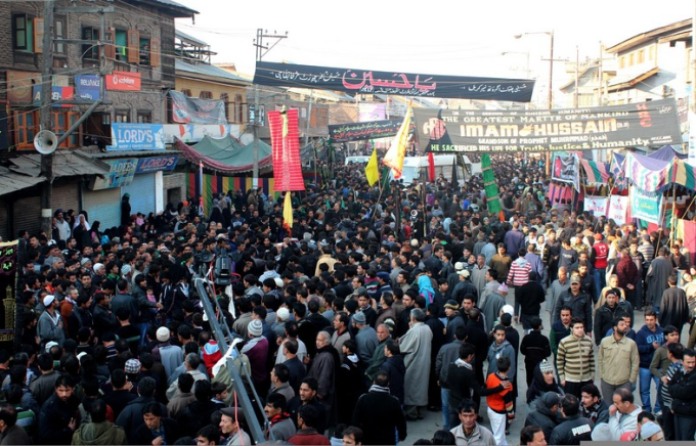
ashura57jpg-2303679_p9.jpg

The early 1900s witnessed the emergence of two Shaheeds (martyrs) in the Indian sub-continent. One was the great Bhagat Singh who was born in 1907. Bhagat Singh was a well educated and a self confessed atheist who started Naujawan Bharat Sabha inspired by the revolutionary movements in Europe. In his own words, Singh described his life’s purpose as dedicated to the noblest cause, that of the freedom of the country. Singh was sentenced to death in the prolonged and dramatic Lahore conspiracy case following which he was executed in 1931, at the age of 23, making him an instant legend and a symbol of patriotism all over India.

   Shaheed Ilm ud din Ghazi (right) and Shaheed Bhagat Singh (left). Martyrs for diametrically opposite causes

Another Punjabi who later became the national hero of Pakistan and is variously called a Shaheed, a Ghazi and a Ghazi Shaheed was born about a year after Bhagat Singh was born. Ilm ud din, as he was called, was born in Lahore in 1908 into a lower middle class carpenter family. Ilm ud din’s rise to Shaheeddom explains the inherently opposed world views of the two largest communities in India.

In 1923, a Hindu publisher named Rajpal published an anonymous pamphlet titled Rangila Rasul, which contained a recension of Sahih Bukhari, among other sources, along with an allegedly salacious commentary. The book was authored by Pandit Chamupati of Arya Samaj allegedly in response to distasteful depiction of Hindu deities by members of Muslim community.

The book greatly incensed the Indian Muslim community who took the matter to Lahore High court. Upon receiving an unfavourable judgment at the High court, members of the Muslim community resorted to large scale demonstrations against the publisher.

As an uneducated teenager who was unaware of the happenings around him, Ilm ud din passed by one such demonstration and overheard the members of his community swearing death to the publisher Rajpal. Ilm ud din was outraged at the grave insult to the Prophet and vowed to kill Rajpal. Ilm ud din bought a dagger, waited outside Rajpal’s office and as he came out, pounced on to an unsuspecting and unarmed Rajpal and stabbed him to death in cold blood.

The British government caught him red handed and tried him in the sessions court where he was sentenced to death on the charge of murder. Upon his execution in 1929, Ilm ud Din became an instant hero in the eyes of the Indian Muslim community, so much so that a leader as tall as Allama Iqbal lauded his ‘act of bravery’ and declared: “This uneducated young man has surpassed us, the educated ones.” Today Ilm ud din is the national hero of Pakistan and continues to arouse great Islamic patriotism in their youth.

Hazrat-Ghazi-Ilm-Din-Shaheed-R.A-Shrine2

                                Hazarat Ghazi Ilm ud Din Shaheed’s tomb. Source: www.dostpakistan.pk

The genesis of such an outrage against blasphemy is contained in the core scriptures of Quran and the Hadith. forming basis for Sharia lawAlthough we find innumerable apologists who argue that this is blatant misuse of the scriptures and singling verses out of context, it remains a fact that the scriptures are liable to be allegedly so misused and to such dire consequences.

The execution of Ilm Din had far-reaching consequences. In 1927, the British administration enacted a law prohibiting insults aimed at the founders and leaders of religious communities in the form of Sec.295(A). This is the genesis of blasphemy laws in the Indian subcontinent. Post partition, Pakistan extended the section by adding Sec.295(B) and Sec.295(C) making any act perceived as defiling the Holy Quran and use of perceived derogatory words against the Prophet a criminal offence punishable with life imprisonment and death penalty respectively.

An independent India inherited the same colonial Sec.295(A) enacted with the sole intention of curbing voices against the highly inflammable Muslim sentiments- our own blasphemy laws- under which a tweet as harmless as the one in question can potentially put a popular singer behind the bars.

Call it perversion of secularism or pseudo-secularism, it has only disturbed a centuries old tradition of argumentation and open debate in an inherently syncretic Indian culture.

Do Not Forget to Declare Loan and Card Payment Over 2 Lakhs in Cash In ITR

New ITR forms have a newly added column for declaring all the cash payment over 2 lakhs made for credit card and loan bills during the post-demonetisation period. This is mandatory to declare all the cash transaction over 2 lakhs made during the period of 9th November to 30th December while filing income tax return. The government has recently launched new ITR form for the assessment year 2017-18 which has separate columns for declaring such cash transactions.

This new column must be used for declaring any cash payment made to loan settlement or credit card bill settlement during the 50 days note ban period. The intention to introduce his column is to match cash deposit details made during that period with the total income of the taxpayer. All bank loans and credit cards are provided upon furnishing PAN details so any payment towards them can be easily traced by the Income Tax department. The data provided in income tax return filing will be collated with the credit card payment and loan payment details to find out if any payment over 2 lakhs has been made in cash or not during the specified period.

This step is the outcome of strategic thinking to trace black money that has been used to settle down credit card bill or loan payment. This also associates concern of tracing black money settlement done by using credit cards for heavy purchases during the demonetisation period. After the demonetisation announcement, Indian citizens were given a 50 days’ window to deposit all banned notes into their bank account. It was a last chance for the tax evaders to declare their black money by paying a tax at 50% rate.

However, the column related to declaring cash transaction over 2 lakhs is clearly an attempt to find the tax evaders. Although, officials from IT departments has made it clear that these columns for declaring cash transaction will not be there in the ITR forms from next assessment years. Also, it has been reflected from official releases that ITR forms will be modified according to the needs every year. Also, the types of ITR forms have been cut down from nine to seven this year by the Central Board of Direct Taxes (CBDT). Along with new columns, there are many other changes have bene introduced this year for income tax return filing. Now linking Aadhaar card with PAN card is mandatory for the taxpayers. Those who have not received their Aadhar number yet can quote their Aadhar application reference number in the ITR form for this year.

ITR 1 Sahaj form has been rationalised and cut down to fewer pages than the old 9-page forms. Further to changes in the ITR-1 Sahaj form, the ITR 2 and ITR 3 forms has been modified as well. The new ITR 2 form will be applicable for the individuals and HUFs who does not earn from any proprietary business or profession. The new ITR 3 will be applicable to those individuals and HUFs who earn through proprietary business or profession. The new ITR 4 form will be applicable to the business and profession under presumptive income category.

The impact of this strategy:

These new ITR forms and the rule for declaring cash transaction over 2 lakhs during the demonetisation period is an initiative taken by the government purely to trace the tax evaders. The IT Department will scrutinize ITR forms by matching details with PAN linked account to trace all the tax evaders. In this way, all the tax evaders who had settled down black money through credit card and loan payment will be traced now.

शहरी नक्सलियों से देश को बचाइए

0

सुकमा में नक्सली हमले में शहीद हुए जवानों के परिजनों के मदद के लिए गौतम गंभीर अब सामने आ गये हैं. दरसल वे अपने मदद की बात सबसे छुपाना चाहते थे लेकीन आखिर ये बात सामने आ ही गयी. लेकिन मेरा ये आर्टिकल आज सिर्फ गौतम गंभीर पे नहीं बल्की उन लोगों पर ज्यादा है जो सिर्फ देश को तोड़ने वालों की बात करते हैं.

कई टीवी चैनेल पर नक्सली विचारधाराओं के लोगों को टीवी डिबेट के नाम पर अपनी विचारधारा देश में फैलाने के लए बुलाते हैं. जंगल के नक्सली से ज्यादा खतरनाक तो शहर के ठंडे कमरे में बैठा नक्सली सबसे ज्यादा खतरनाक है. जंगल के नक्सली सिर्फ शरीर पे वार कर सकते हैं और उनके लिए हमारी सेना काफी हैं, लेकिन जो ए.सी. लगाकर ठंडे कमरों में बैठकर देश की विचारधारा को मार रहे हैं उनसे हमें खतरा ज्यादा है और ऐसे लोगों की तादाद आजकल बढने लगी हैं. इसे हमें रोकना ही होगा.

जंगल वाले नक्सलियों से निपटने के लिए हमारे जवान हैं. पर जो शहर में रहने वाले हैं और टीवी पे आकर प्राईम टाईम में बैठ कर उनके लिए रोना रोते हैं, उनसे कौन निपटेगा? क्यूंकी जंगल के नक्सली सिर्फ शरीर पर हमला करते हैं लेकिन शहरो में रहने वाले ये सुट बूट के नक्सली बच्चों के दिमाग पे वार करते हैं. हाँ इससे जानमाल का नुकसान दिखता नहीं लेकिन वो बच्चे और जवान युनिव्हर्सिटी में ‘भारत तेरे टुकड़े होंगे’ नारा जरूर लगाते हैं.

सरकार हमेशा की तरह खामोश

इस बार भी सरकार ने इस नक्सली हमले की निंदा की है, और जवाब देने की बात कही है. लेकिन जवाब कब मिलेगा? पाकिस्तान पर सर्जिकल स्ट्राईक कर दी, लेकिन अब उस बात को ६ महीने हो गये हैं, और बीजेपी आज भी वही ढोल पीट रही है जैसे काँग्रेस १९४७, १९६५ और १९७१ का ढोल पीटती है. मरनेवाले र्सिर्फ जवान नही होते हैं, उनके साथ मरते है उनके परिवारवाले, नई नवेली दुल्हन, बच्चों के सपने. टीवी वालों के पास दिखाने के लिए कन्हैया और रोहित वेमुला का परिवार है और पत्थरबाज को जीप पे बांधने के बाद उसके घर तक पहुंचने वाला मीडिया (१, २ को छोड़कर) कभी आर्मी के परिवार वालों के घर जवान के अंतिम संस्कार के १२ दिन बाद कभी नही पहुंचती है.

झूठी पत्रकारिता कब तक?

आजकल दिल्ली मे कई पत्रकार घूम रहे हैं. जो बड़ेबड़े कमरों में बैठते हैं और कहते हैं कि आर्मी तो सबपर जुल्म कर रही है. इनके लिए कन्हैया और खालिद जैसे लोग हीरो होते है लेकिन कभी जवानों के कुर्बानी पर एक आंसू नहीं बहाते. सबको पता है कौन सा न्यूज चैनेल नक्सली विचारधारा को समर्थन करता है और कौन सा नहीं. कुछ लोग टीवी डीबेट मे उन नक्सली विचारधाराओं के लोगों को फ्रीडम ऑफ एक्सप्रेशन ने नाम पर बुलाते है और उनकी विचारधारा पूरे देश मे फैलाना चाहते है.

The Lal Krishna Advani column: Kejriwal’s reaction to AAP’s MCD debacle

0

Greeting folks,

Many of you might have been surprised by Arvind Kejriwal’s reaction to AAP’s debacle in the Delhi municipal elections. No protests, agitations or tantrums as people expected. Contrarily, Kejriwal congratulated the BJP after the election results and shockingly AAP even praised Yogi Adityanath for his decision to cancel some public holidays. Worry not, with my decades of experience in Indian politics, I can explain everything.

After Narendra Modi became Prime Minister in May 2014, he and Amit Shah did not call for Assembly polls in Delhi immediately because they were afraid of one man, Arvind Kejriwal. As you all know, Narendra Modi was my trainee and I know him well. He was not afraid of losing to Kejriwal. But he was scared of winning against Kejriwal!

The BJP was already the governing party in the MCD and the Parliament. A BJP win the Assembly would have given Kejriwal an attractive target to hold Modi accountable on 3 fronts, MCD, Assembly and Parliament. With this exciting personality full of tantrums and a benevolent media, Modi would have found governing difficult. So Amit Shah and Modi must have sat down to discuss what to do. Shah would have suggested waiting for a few months to allow the Modi wave to subside.

A few months down the line, again both must have sat down together, worried. “The Modi wave has dimmed, but unfortunately is still strong enough to sweep Delhi.” Shah must have said.

“What to do now?” Modi must have said, “We have to declare elections sooner or later.”

That’s when Shah came up with his master plan. “Let’s do negative campaign against Kejriwal. Attack him and make him a hero. Put the entire cabinet to campaign against him.”

Despite this, towards the end of the campaigning, the 2 parties were more or less even. Then Amit Shah played another trick. He said, “Let’s parachute Kiran Bedi from outside as CM candidate and demoralize the local leadership.” The plan worked and AAP swept with 67 of 70 seats. Modi and Shah were happy. An employed Kejriwal is any day better than an unemployed Kejriwal.

Now Kejriwal was a worried man. He never wanted to be CM. That’s why he ran away in his first term. All he wanted was to become a people’s representative and harass the ruling party, throw tantrums and remain in the news. But now there was a challenge. With 67 of 70 MPs, it is difficult to argue that the opposition does not allow you to function. Also, the Congress was wiped out. So using an argument that “BJP Congress mile hua hain” was also out of question. After all 3 plus 0 is still only 3.

However, Kejriwal turned out to be smarter than Modi and Shah had imagined. He became a CM with no portfolio and tried used his entire free time to challenge Modi.

However, 2 years down the line, his dramatics and non-performance had made him unpopular. Hence, he was looking for a way out by winning outside Delhi. But the Punjab and Goa debacle hit him hard.

Now, another thing scared him, the thought of winning the upcoming MCD elections. So far he could give excuses like the MCD or the Modi Government not allowing him to work. But what to do if he won MCD? He would be more accountable. He was scared that Modi and Shah would try some tricks or even rig EVMs to make AAP win the MCD polls. But the MCD results have come as a big relief for him. I met him the other day and he is his old cheerful self again.

Yours,
L.K. Advani

How much does Britain owe India? An attempt at objectively calculating Britain’s debt to India

0

There has been this raging debate on the quantum and nature of the debt Britain owed India (both financially as well as morally), but it is something very difficult to quantify.

How does one quantify the value of trade and income lost when Britain caused Indian exports of finished textile products from some 800,000 pieces a year in 1795 to zero in 1804? How does one quantify the value of cash crops exported from India at dirt cheap prices while forcing imports of finished goods? Mike Davis in his work, “Late Victorian Holocausts: El Niño Famines and the Making of the Third World” estimates that in Bengal alone in the time period 1875-1900, Indigo, Opium, Wheat, Rice (for exports) acreage increased by millions of acres while subsistence farming reduced by a commiserate amount. During this same period, annual grain exports rose from 3 million tonnes to 10 million tonnes (pp 299). It is another matter that Britain used China and its demand for Opium (grown in Bengal) to fund this increasing deficit the Raj faced. Mike Davis estimates that in 1879, Britain exported 87,000 chests of Opium to China from Bengal and used the revenues gained to fund the growing deficit of the Raj economy.

How does one quantify the value of the railways, which were built with Indian taxes, and cost 2 to 3 times more than what it costed on similar terrain in Australia, NZ or the US and was considered a great scam even by a few Britishers who raised it in the British Parliament.

We can however quantify the cost India incurred in paying for the bills of the Raj, fixed in gold (Britain moved to the gold standard in 1820), while India remained on the silver standard till about 1890-95 when it made the move towards the gold standard. In the interim, the Indian rupee depreciated substantially. By 1893, India was being billed Rs 270 million in the gold standard, while it was earning only Rs 266 million. This imbalance (billed in gold, revenue collected in silver) lead to something Dietmar Rothermund in his Economic history of India (pp 43) called “Parasitical paralysis” and lead to deflationary stagnation. Aside from what was billed (which can be justified as reasonable costs to run the Raj), the imbalance alone cost India GBP 105 million in the time period 1873-1893. Adjusted for inflation at 1893 prices, we arrive at a sum of $ 11 billion.

During WW1, India “gifted” a sum of GBP 90 million (Rs 380 crores, rough exchange value of 1 GBP = 4 INR) to Britain. Adjusting for inflation, it is the equivalent of $ 11,176,470,000 (11.1 BN USD) today. Now, this is over and above the true market price costs of the resources this does not include the cost of jute, cotton, food materials, wheat, rice which were exported to Britain (it sort of loosely was paid back, but will cover that further down the post). NC historians estimated a total debt of Rs 1,000 crores or GBP 250 Mn had been accrued post WW1 by Britain. To put into a modern perspective, that is equivalent to roughly $ 18 Bn in today’s money.

WW2 upped the ante substantially. By 1944, Britain owed India a sum of GBP 1.3 Bn, or roughly a 1/5th of its GNP1 (some historians peg it at about 1/8th). GBP 1.3 Bn in 1944 terms is equal to GBP 52 Billion today or $ 65 Bn.

Even neglecting the study conducted by Congress historians that arrived at the figure of Rs 1,000 crores, the three line items studied here give a total debt of $ 87 billion in 2016.

Britain handled these crisis in the Indian economy with a silver bullet- printing notes. Rothemund estimates that the amount of silver coins in circulation went up 600 million pieces in a 2 decade period from 1876-1893. During WW1 and WW2, the amount of paper currency in circulation also shot up dramatically, it was particularly egregious during WW2 when the Raj printed so many notes that it doubled the amount of currency in circulation from 1940 to 1942, fueling an inflation rate which hit 350% in this time period, causing the savings of the Indians to be totally wiped out.

At the end of the war (WW2), Britain agreed to pay a sum of Rs 1,500 crores or GBP 375 million and post Independence India settled. In essence of a total debt (that is objective and provable) $ 87 billion, Britain agreed to pay back $ 15 billion, writing off on its own accord the balance of $ 72 billion.

So if you want to put a quantified, provable figure, British debt to India comes at $ 72 billion.

How much of it has been repaid? At the end of the war (WW2), Britain agreed to pay a sum of ~ Rs 1,500 crores or GBP 375 Million and post Independence India settled. In essence of a total debt (that is objective and provable) $ 76 Bn, Britain agreed to pay back $ 15 Bn, writing off on its own accord the balance of $ 61 Bn. In addition to this and in the interests of fairness, it must be mentioned that Britain averaged around GBP 100 million in annual aid in the period 1977-1978, it was around GBP 50 million in the late 60’s annually, reaching GBP 250 million in 2012. In the same spirit of fairness, a lot of this was tied into grants, which meant money given to India went back to Britain like the case when India had to purchase 6 ships from Britain at inflated prices (India’s Foreign Relations 1947-2007 by Jayanta Kumar Ray).

In summation,

in 1947, Britain owed India 2.5 billion (after accounting for the settlement), India’s GDP in 1947 was $ 20 billion, so roughly 12.5% of India’s GDP was due to it from Britain. It gets even more interesting, Japan’s GDP in 1939 was around $ 7 Bn, and it was a world power, Britain owed India (even discounting the 1k crore figure) $ 2.5 Bn by 1943-44. That was just the sum Britain extracted from India to wage her own wars.

This was the objective debt accrued by Britain in a span of some 25 years. Now you could extrapolate it to a period of 200 odd years and the figure would be unfathomably large.

Other sources,

  1. Srinath Raghavan’s India’s War: World War II and the Making of Modern South Asia
  2. Britannia Overruled: British Policy and World Power in the Twentieth Century by David Reynolds

Disclaimer: The numbers were adjusted for inflation and converted to USD using online resources, so there could be an error, but the actual numbers reported by various sources (from that time period) are accurate.

Time bombs planted by the UPA: Grade inflation in education system

0

Much was discussed about the uninterrupted supply of scams and scandals during the UPA regime. Unfortunately, what has not been discussed sufficiently, is the havoc wrecked by UPA in the education space. Unlike cases of financial irregularities, the consequences of mischievous or ill-informed tinkering with the education system, show up at least 5 years later. They start to show up only once a few batches of students graduate from the changed system and enter the workforce.

In a nation plagued with poorly designed rules and laws, environmental issues, rickety infrastructure and unplanned cities, our only hope is to graduate at least a couple of batches of well-educated and smart students. Hopefully, once the workforce sees the arrival of products of a good education system, we might be able to see the next generation take the lead and fix issues. Once the judges, lawyers, civil servants, entrepreneurs, politicians, academics and teachers are picked from a well-educated and astute batch of students, we might be able to fix some of our critical issues. The number of issues currently plaguing the system is well beyond the reach of a handful of individuals to fix.

Unfortunately, the UPA years did exactly the reverse. Instead of working on improving access and quality, they accomplished the reverse. It is likely that some of this was done at the behest of NGOs. In a society fragmented via quotas drawn out arbitrarily on the basis of caste and communal cracks, the UPA exacerbated issues by partitioning the education sector in a shockingly sectarian manner as the Reality Check India blog covers so comprehensively in a variety of posts.

Here I will restrict the discussion to something which hasn’t received enough scrutiny: Grade inflation. For the uninitiated, Grade inflation is the tendency to award progressively higher academic grades for work that would have received lower grades in the past.

This is the graph of the median percentage in the CBSE Class 12 examinations. It shot up by nearly 8% between 2004 and 2016. This happened in the regime of a sycophantic IAS officer who faithfully implemented many of Kapil Sibal’s disastrous ideas such as the CCE which replaced the Grade 10 board exam. In 2016, over 11% of all candidates scored a full 10/10 GPA in the CCE style of assessment. The practical component of Science stream subjects have been reduced to a joke, as nearly everyone receives a full score of 30/30 or 29/30.  Students who have barely attended labs during the school year manage to score full marks in practical work. Guidelines for correcting papers are such that grammatical mistakes even in language papers, do not invite much penalty.

Grade inflation compounds and leads to a rapid decline in standards and it also conceals any possibility of detecting or arresting that decline. It was revealed, that in 2016, CBSE awarded as many as 16 extra marks in Mathematics in the Class 12 exam. And that the scores on marksheets, were often as much as 10% higher than what the candidates had actually scored. As s country which ranked only above Kyrgyzstan in the PISA test, it is unacceptable that we turn off an alarm just because the music isn’t as sweet as we’d like it to be.

Only 4.7% of the students scored above 90% in CBSE 2013 exams (class 12) but in CBSE 2016, this corresponding fraction was 7.7%. Similar trends are observed in the ICSE and ISC examinations, where this ratio jumped from 7.1% in ISC 2013 to 11.8% in ISC 2016.  A score of 90% indicated excellence, even just a decade ago, but now many of the good schools have an average score of well above 85% thanks to this unprecedented run of inflation of marks. Subject-wise histograms reveal atrocious grade distortion and the curves do not even remotely resemble bell shaped curves or normal or Poisson distributions.

The current government has made some effort to clamp down on the issue of grade inflation, but the domain of assessment and the calibration of scores between different boards is something which requires the inputs of academics and statisticians. Inflation also becomes a cat and mouse game where all school boards start misreporting scores to compete with each other. Not only does this need to be nipped in the bud, but we also need an exam-watchdog organisation to ensure that examining bodies stick to standards. If this government does manage to swing the axe on grade inflation and the generous award of extra marks, it could be the defusal of a ticking time-bomb, though it is already quite late. Stray cases of  “saffronization of education” are unwanted, but they are trivial issues in comparison.

Ashutosh, check your facts on Hindutva

0

Ashutosh, a spokesperson of the Aam Aadmi Party (AAP) has appeared in the op-ed page of Indian Express yesterday which is one place to meet/read most of those who are plotting overtime to break India along communal lines and put the blame on RSS and Modi-government.

Much of RSS’ and Hindutva’s ideologues mistake has been to concentrate on social reforms and leave the field of academic and media manipulation to Nehruvian-Left combine. It has had a disastrous effect. The Left-Liberals have worked overtime to divide the people on sectarian and communal lines. India First thus could never get off the ground.

Ashutosh, a JNU alumni, largely targets two of RSS’ main idealogues—M.S. Golwalkar and VD Savarkar. He quotes from their works to show they were anti-Muslims and anti-Christians and their concept of Hindu Rashtra didn’t have any scope for minorities. He says this philosophy is being brought to fruition under the present dispensation. Says Ashutosh: “This is a desire for civilizational conquest.”

Ashutosh quotes from Golwalkar’s Bunch of Thoughts: “There are three enemies of India–Muslims, Christians and Communists.” He further accuses Golwalkar as a fascist who was inspired by Hitler.

Dear Ashutosh, are you aware of these words of Golwalkar: “The Muslims must realize that we are all one people and it is the same blood that courses in all our veins.”

Or, “Let Muslims be more devout Muslims. We will help them to be more devout.” (He wrote in Spotlight (P 48).

Or, “Let the Muslims evolve their own laws.” (as a caution against the Uniform Civil Code).

Before we come to the Hitler part, let’s dwell on the Muslim/ minority bit a little longer. It’s a fact that Golwalkar was embittered by partition and the two-nation theory. He also feared the religious identity of Muslims could keep them emotionally in sync with Pakistan and work to India’s disadvantage.

While evaluating this sentiment of Golwalkar, as well as on Hitler, we must remember that men are product of their times. India was hurting under the yoke of British and an enemy’s enemy is one’s friend is perfectly logical. Hitler thus could have been seen as useful to fight British; as imperialist Japan was seen to be useful by Subhas Chandra Bose. It’s also pertinent to remember that Jewish people were the role model of Golwalkar. Its not a profile of a man who was anti-Semitic or proponent of Hitler’s fascism.

Ashutosh further claims that Veer Savarkar’s idea of India was not “common love” but “common blood.” Well, this is what Savarkar wrote in Essentials of Hindutva, and I quote:

“Afer all, there is throughout this world so far as man is concerned but a single race—the human race kept alive by one common blood, the human blood.”

This doesn’t look like words from a man who wanted Hindu supremacy.  Indeed, when confined in Ratnagiri, Savarkar invited all untouchable families in his house and dined with them. The Pan-Hindu canteen and Patit Pavan Mandir are standing symbols of his efforts.

It’s been the ploy of mischief-makers to take a sentence or two out of context and paint an individual, organization or a movement in a poor light. Let’s make a few points in this regard:

One, RSS doesn’t follow a book. Indeed, Hinduism doesn’t follow ANY book. Golwalkar’s Bunch of Thoughts isn’t a recommended reading in RSS. Indeed, take a head count and you won’t find 10 persons in RSS who would’ve read the book

Two, RSS has no qualms in denouncing or apologizing their own actions. It was Golwalkar himself who repudiated and withdrew his book “We the Nationhood Defined” in 1948. RSS also officially disowned the book in 2006.

Three, not all BJP men are from the RSS. For example, the present chief minister of Uttar Pradesh, Yogi Adityanath is not from RSS. (So Ashutosh stop suggesting that RSS, VHP, BJP are all the same).

Because of this brain-wash, Muslims in India consider RSS to be an existential threat. It’s time they consider the points below and repudiate this propaganda of India-breakers who are anybody’s friends but theirs.

  • RSS doesn’t look to restrict Muslims from doing Namaaz;
  • It doesn’t call for Burqa ban;
  • It doesn’t ask to butcher Muslims or have them kicked out of India;
  • Indeed; it asks government to promote Madrasas;
  • It’s not against Muslims getting subsidy for Haj; or mosques not getting aids
  • It doesn’t say that why “pakhandi” babas have alone been jailed and not certain Maulanas who are less than pious;
  • Why government has control over Hindu temples and not over Masjids or Mosques;
  • RSS has backed bans of animal sacrifice in a few Hindu temples, such as Dakhineswar Kali Temple in Kolkata. They haven’t made any such appeal against Bakri-Eid.

Attend any Hindu festival in RSS shakhas and you would see all caste participate equally. There is complete harmony among followers of all religions. Many of them are untouchables and yet they distribute “prasads.”

The harder men like Ashutosh try to create a communal divide, the stronger should be our resistance to it. India First should always supersede our religious identity.