Home Blog Page 502

Citizenship Amendment Act and the NRC: An exception and a long standing policy

0

The uproar pertaining to and emerging from the Citizenship Amendment Act has largely been associated with its relation to the National Register of Citizens exercise currently underway in Assam and proposed for the entire country by the government. The CAA has largely been criticized for being a tool that could allow all non-muslims to stay in India and to deny citizenship to Muslim immigrants. There is some legitimacy to such apprehensions and arguments given the political extremes that exist in the current ruling dispensation. At the same time, it also seems to me that the whole picture of India’s immigration policy over the years is far more complicated, the NRC and CAA debates when looked at from this perspective have provided space for debate and also to some extent hope.

The CAA is not the first time India’s citizenship act has been amended. Under the original act of 1950 anyone born in India from the date of enactment of the constitution was a citizen by virtue of their birth in India. Later the acts were amended first in 1987 and then again in 2004 under UPA-I. In the first instance to add a restriction that one of the parents should be an Indian citizen and in the latter case, to impose further restrictions that both parents must be Indian citizens to guarantee a child born in India citizenship by virtue of their birth. Why did this policy shift take place making it gradually difficult to become an Indian citizen by virtue of their birth in the country? This is where the entire debate about the immigration policy of India has its roots. The uncontrolled (and at times encouraged) influx of immigrants into India after the Bangladesh war, the immigration of Tamils due to civil war in Sri Lanka and the flow of Tibetan refugees were some of the forces which led to a protectionist citizenship and immigration policy.

On the other hand, a lot of leeways were provided through the provisions of citizenship by registration and descent. The list is comprehensive but with one key difference, in those cases, individuals are not defacto citizens they must go through an application process. Such a process is obviously easier for the government of the day to regulate even on a case by case basis at times. The case for NRC also developed out of these crises and in fact, the amendment of 1987 must be viewed in conjugation with the Assam Accords of 1985. Public sentiment and fear against immigrants, at times justified, led to these policy changes.

Now the Assam Accords being not only an agreement between the civil movements of Assam and the Indian government but was also being a follow up to an agreement between the sovereign governments of India and Bangladesh must have been respected with prompt action. But as always political calculations and vote banks came in way of long term deliberations and policy implementations. Finally, the Supreme Court had to intervene so much so that it asked the machinery responsible for the execution of the NRC to directly report to it.

With this background in the back of our minds, let us look at the problem at hand. The CAA must, therefore, be viewed as an exception. This is the first time that the government has taken a less protectionist stance on the matter of immigration and considered long-standing humanitarian demands. The demands for Rohingyas and Ahmediyas are much more recent compared to the identification of state-sponsored persecution of Hindus, Buddhists, Christians and other religious minorities in Pakistan, Bangladesh and Afghanistan. The decline in their populations in these countries is living proof of their persecution.

It is also relevant here to mention that although the Bangladesh genocide brought in an influx of immigrants irrespective of religion, the flow of Hindus and other minorities continued in large numbers as late as the early 2000s, this is when the Bangladesh economy picked up and religious extremism was slowly sidelined. Is it also not a fact that people belonging to the Muslim faith who form an outright majority in Bangladesh cannot be kept at an equal footing with religious minorities with a recorded history of religious persecution against them. That would be comparing unequals and against the spirit of Article 14. Is the fact that the migration of these minorities goes much beyond the aftershock of the 1971 genocide not relevant?

The larger point here is that this should be used as an opportunity to provide relief to genuine refugees and asylum seekers. After the Eminent Persons Group of the UNHCR headed by former CJI Justice PN Bhagwati submitted its report, a comprehensive refugee policy was envisaged. Dr. Shashi Tharoor with his long experience of working with the UNHCR did propose a private members bill “The Asylum Bill” in Lok Sabha in 2015, bills such as this will go a long way in changing India’s view towards immigration from protectionist to considerate.

The CAA does not touch the status of citizenship seekers who are Muslims, they still have the same channels to apply for citizenship as they had before the CAA was enacted. Their claims under the NRC procedure are also untouched, everyone excluded can appeal to tribunals, apply for citizenship under the citizenship act by registration, descent and naturalization. Should the implementation of the Assam Accords and the process of identification of illegal immigrants be completely stalled just because some relief has been provided to a persecuted section of the society which has nowhere else to go? When did we become so protectionist? Shouldn’t the process be completed and then everyone provided with an option to either return to their original countries or naturalize to Indian citizens under a robust and well planned Asylum law?

To me, this is where the protests and debates must focus their energy. One can never support the abuse of power by the police and state mechanisms but at the same time, the moral high ground of a legitimate protest is lost the moment even a small section of it turns violent, remember Chauri Chaura. Social movements and student protests have been integral to changing the political discourse in India, be it the dark days of the emergency, or the Mandal commission or the Assam movement. Organised non-violent protests based on rational demands and motivated out of facts and goodwill are always welcome in a democracy. The Prime minister should also at this point make it a personal mission to pacify sentiments and start a dialogue, this is something only mass leaders can do, he must rise to be a statesman. I beg of him. Bring order and let us all calm down and sit and talk and as Neruda said not move our hands so much.

Rahul Gandhi, the Bermuda triangle of Congress party

0

The Bermuda triangle analogy can be used to describe the congress party of today in several ways. Bermuda triangle is described as the region that is located in the western part of North Atlantic Ocean. Bermuda triangle is quite mysterious and is reported to have engulfed ships and flights that have gone near to quietly which no one knows how and why such mystery takes place.

Today the congress party is ruthlessly criticised and mocked by people of India because of the adamant determination of the party wish to encircle around one family and venerate the members of one family alone can save the party.

It is so sickening that most the congress men sermon around India that only Rahul Gandhi or his sister Mrs Vadra or the mother Sonia Gandhi alone can save the party and if the party president-ship is ever given to any outsider of the family, the party may disappear. The real truth is different and far from the one most congress men think or believe. It is the family that dispels and detracts people from congress party. The real Bermuda triangle of congress party is Rahul Gandhi, the great dynast of the party.

Congress men always follow the famous management rule that king can do no wrong. If someone points to them about the mistake of the king, immediately they would refer the rule again to console self that king can do no wrong.

If we look at the hierarchical matrix of congress party today, we can easily find a triangular arrangement but the only difference is that congress party is in an equilateral triangle where all the three sides are of equal length.

Sonia Gandhi, her son dynast son Rahul Gandhi and her daughter Mrs. Vadra hold the triangular shape of the congress party. All the three of them alone are eligible to become the president of congress party and any one of them is acceptable to the party. Another beauty in the acceptance of any one from the family lays the economic principle of fungibility. Sonia Gandhi can be replaced by Rahul Gandhi and Rahul Gandhi can be replaced by Mrs Vadra and vice versa. But no one outside of the family has the right to occupy the position is the said rule in congress party.

The real problem of the congress party is twofold. The ego clashes between several leaders within the congress party to question and deny any power and authority to each other makes the party to accept Bermuda triangle as the best option. Another problem is the acceptance of people of India. All those ego-rich congress leaders either want power for self or to their sons and daughters, are least bothered about congress party’s acceptance or rejection by people of India because all these selfish, greedy, dynasty promoting congress men want their self-interest to be served the best. They hope someday may come, people may feel tired and fatigue over BJP and that would bring luck to them. Until then the party must be rolled within the Bermuda triangle. As long as congress party is controlled by Bermuda triangle, people are there to abuse and criticise the congress party and through such regular criticism, the congress can be kept alive because people have not forgotten the congress party and that is why congress party is still criticized may the political thinking of all those selfish congress men.

The infamous reference of Savarkar by the dynast was highly relished and delish-ed by most congress men in the stage evokes only such possibility.

It looks like the congress men want the family to run the party and at the same time they never want the family to be so powerful and can win election. If the family can ever win election, then all those sycophants will lose their job and respect and hence they never want the family to win and at the same time they need the same family to check mate the fellow greedy in the party not to become president of the party.

The real Bermuda triangle of the congress party is its prince who is waiting for his second coronation. Through regular utterances of nonsense, exposure of ignorance and inability, display of anger that he could not become prime minister of India, hatred for Modi because Modi gives no chance for corruption and nepotism, Rahul Gandhi is actually weakening the party. Further the alliance parties are also sceptical of congress party under its dynast who is nothing but a Bermuda triangle.

The determined mother may easily win in making her son the president of congress party again but will she win in making her son, prime minister of India is a million dollar question. Congress mukt India is necessary as long as congress party does not want to mukt itself from the pariwar.

A request from an honest tax payer

0

Respected Prime Minister, India

Sir, I am a common citizen-voter of India who works hard to fulfill my dreams and make life of family members convenient. As I was common middle class person, I have completed my education using education loan and with initial hurdles in my career now working with a well known software company. Unlike multi-millionaire, actors, political leaders, I have paid my taxes honestly from my meagre earning since the day one of my job.

Sir, I truly love my country and respect every citizen of my country, however recent controversies leaves me wondering, is government making justice with my hard earned money which I contribute to the progress and well being of my country? I am asking this question because, government is funding some universities like JNU, AMU etc. from tax payers money, and what we are getting in return is really depressing. Not one but there are a series of controversies and violent protests reported from these universities. Mentioning some of them here;
1. Anti-India slogans
2. Protest for capital punishment of terrorists
3. Vandalizing statue of Swami Vivekanand ji
4. CAB, NRC protest

Sir, I understand the value of protest in democracy but those protests should be peaceful and non-violent, but the protests in which targeting public properties, pelting stones, petrol bombs on police etc. shows their true faces.

Sir, sometimes I consider myself as responsible for this as they are growing on money which me or common men are paying in terms of taxes. So to make justice with my hard earned money, I humbly request you to grant me certain percentage of rebate on my income tax. I do not wish to contribute for the education or betterment of those whose hidden agenda is disturbing the common man’s life in my country.

Thank you,

Common citizen of India

Utopian Islamic world created by liberals

Few weeks back a “Tik tok” user was blocked accessing her account for the reason of exposing the China’s Islamic policy. But the liberals who fight for equal rights across all corners of the world was silent and the intensity with which they oppose right wing governments were missing in action. The JNU types who ask for Aazadi till now has not protested for it as for them liberal world has boundaries and utopian ideas. Let us now discuss the traits of this Utopian world created by liberals for Muslim friends in democratic nations.

Perennial Victims:

Muslims always will be the victims of democratic government. Even in those countries which are having Muslim rulers they are victims. Muslims always have to hate fellow citizens irrespective of caste, creed and color. If it is in West they have to hate White people. If it is in African nation they have to hate fellow African American Christians. If it is in India they have to hate Brahmins, Jats, Thakurs, Baniyas, Jains, Sikhs etc. In Bangladesh they have to hate fellow Dalits and their leaders. In Myanmar & Sri Lanka it is Buddhists & Tamils. In the utopian world Muslims are always victims and they always should be.

Rule 1: Even if they occupy highest positions in the Society they always should be victims.

Renaissance Should be opposed:

Islamic religion always should oppose Renaissance. Those texts in Quran which does not suit the modern world should not be changed and condemned. But the texts of Bible, Vedas, Buddhists are parochial and should not be even allowed to exist. The texts in Quran which are against women and other religions should not be discussed. The taboo word “Kafirs” can be used freely but the words like “Blacks”,”Untouchables” can’t be used and those who use it should be hanged.

Rule 2: NEVER TOUCH THE QURAN.

Woman freedom:

Woman wearing Burqa is an example of diversity. But women wearing gunghahat,sindhoor are regressive and their families who allow that should be killed. Woman can be sex slaves to maulvis but women who marry Brahmins are victims of organized crime. Women are not allowed to roam freely, go to work etc.

Rule 3: The culture which allow women working for their countries should be abolished.

Minorities will be persecuted:

The golden rule of that Utopian world is “Kafirs can be persecuted but still you can get away with it because Muslims are always victims”. Muslims can split the countries, create civil wars, create untouchability etc but kafirs are the ones who are responsible for it. Citizenship of persecuted Kafirs are of no concern but Muslims can roam around any country and should be given the citizenship the day they land in a country.

Never discuss China, Middle East & Islamic neighbors:

We should never discuss oppression of China & other Islamic nations as they are like that due to their genes. But democratic world should always be shouted back and blamed. Diversification of Islamic world should not be discussed but West should accept regressive Islamic traditions for diversity. Authoritarian Left/Islamic regime never be condemned but the countries which accept democracy should be condemned for not following secularist concepts.

Rule 4: Democracy & Islam are mutually exclusive. If needed democracy needs to be abolished.

Terrorism has no religion:

Terrorism has no religion except if the accused are not Kafirs. If they are Kafirs then attack and abuse their culture but if it is by fellow Islamists, they are just some random lone wolves who are influenced by the culture of Kafirs to do that. Weekly once Islamists has the rights to practice terrorism on the kafirs but always they can get away on the basis of rule “Terrorism has no religion”.

Rich Muslim vs Poor Muslims:

Rich Muslim kids are allowed to go to western countries and study. Poor Muslim kids have to   throw stones and practice Jihad. Rich Muslim kids will create eco system of killing kafirs by sitting in western world and it is the duty of poor kids to execute it by becoming suicide bombers, killing people randomly using random methods like crashing with vehicles, throwing stones, burning down houses etc. Incentives will be given to rich kids to study by using treasury of government which was filled after taxing kafirs.

Rule 5: Rich & Poor has different set of standards to live.

Maulivis should never be condemned:

Maulivis should never be condemned for their ignorant acts of molestation, hate speeches and polarizing societies. But Brahmin pandits should be harassed for following their peaceful tradition. Maulvis are free to execute anyone at any point of time. Their friday sermons should never be condemned. There should not be any law for Muslims in democratic world and Shariah needs to be implemented.

Once these utopian idea are implemented, liberals will disappear and will start working on creating another utopian world for Muslims in another free and fair democratic country.

— Harishankar Nagarajan

Is DMK’s donation to left parties and releasing the cat out of the bag, a ploy to win new alliance?

0

In the last parliamentary election DMK has stated in its poll affidavit that the party had donated 15 crore each to its allies such as CPI and Kongunadu Makkal Desiya Katchi and 10 crore to CPI (M). In brief DMK had donated 40 crore to its allies.

The point is not about poll donation or one political party donating some money to another alliance political party as election funding. But the transparency and urgency shown by DMK in releasing the above information which both communist parties initially appears to have attempted to suppress, only raises serious doubt.

The doubts raised by people are quite obvious and the ramifications of the doubts are many.  Was the DMK wants to sends out a clear message that the alliance parties won the parliamentary election due to DMK and not due to its own political strength of each party? Such possibility cannot be ruled out because after the grand victory, DMK went high and even told publically that Nanguneri constituency the congress party must give to DMK as the chance of DMK winning the constituency is quite high when compared to congress candidate.

The Nanguneri constituency was represented by congress candidate who later contested and won Kanyakumari parliamentary constituency and hence resigned the Nanguneri constituency. Unfortunately the celebration of DMK did not last long and the subsequent by-poll in Vellore parliamentary constituency, despite selling negative politics, lies and hatred like hot bread by DMK, DMK could just win the seat with a thin margin below 10,000 votes. After the face savour victory in Vellore, DMK toned down from its heightened arrogance and the feeling of invincibility and finally surrendered the Nanguneri claim to the congress party and both congress and DMK contested two assembly constituencies such as Nanguneri and Vikravandi as alliance partners and got defeated by AIADMK by huge margin.

All the above tectonic changes happened just within 3-4 months of grand victory of DMK in the parliament election that was based on selling lies, hatred and negative politics and fear mongering among minority communities.

In Tamil Nadu, the political parties giving cash to voters for vote is quite normal and is well known. But paying cash to political parties in the form of donation during election season to attract alliance partners is something quite shocking. DMK was the first political party in Tamil Nadu to experiment and perfect the so called Tirumangalam formula. Now the same DMK appears to have perfected the art of donation formula may be to attract alliance partners.

When DMK can donate nearly 40 crore to different political parties, why can’t the party donate money to poor people of Tamil Nadu by way of building houses for them, giving them monthly wage to sustain their family, provide them medical assistance, build hospitals to offer completely free medical care to poor people etc. If DMK has ever done that, where is the need for DMK to win the alliance and where is the need for the party to pay money to the voters etc.

Communist parties in India are far more invisible than the microbes in the air in Tamil Nadu. The most bewildering aspect is that to such invisible, electron-microscopic political force, why DMK has given such huge donation and does that not show the desperation of the party to win the election? If the allegations of DMK against EPS are true why then DMK is so scared of facing people?

Tamil Nadu is yawning for a change and people are against DMK coming back to power. Tamil Nadu has to be saved from fear mongering and negative politics. The politics of corruption and dynasty promotion people all over India started to oppose and the defeat of the great dynast Raghul Gandhi in his home constituency in UP is the best example for how people of India disapprove dynastic politics.

Today DMK is in the mercy of its alliance parties and not the other way. Even though none of its alliance parties like congress, VCK, MDMK, CPI and CPI (M) have any base in the state but still DMK wants the support of all these parties just to show DMK has mege alliance to its side.

If people are asked to choose between EPS and Stalin, 6-8 out of 10 people to whom we toss such question would say their preference would be EPS and not Stalin. The alliance parties also must realize that their political existence should not be reduced make Stalin as next chief minister of the state; instead they should reduce DMK and ensure DMK must agree for coalition government and rotational chief minister-ship to all the alliance partners. 

If the question of Super Star versus DMK is asked, naturally it is Super Star. From cradle to those working in graveyard, from CEO to cart puller, from beggar to temple priest, from new born baby to the one in the sick chamber, all of them unilaterally would say Super Star and Super Star alone can save the state. Hope Super Star, at least to save the state that he loves the most will enter politics and defeat the corrupt, dynastic force in the state.

नागरिकता संशोधन अधिनियम अर्थात जननी जन्मभूमिश्च स्वर्गादपि गरीयसी

0

दुनिया भर के तमाम देशों में दो दर्जन से भी ज्यादा देश आधिकारिक रूप से इस्लामिक राष्ट्र हैं अर्थात इस्लाम इन देशों का अधिकृत धर्म है और इस्लाम धर्म तथा इसके अनुयाइयों को सरकारी संरक्षण प्राप्त है। इन्हे अपने धर्म का पालन करने की पूरी आज़ादी है। तक़रीबन ऐसी ही स्थिति ईसाई धर्म की भी है। अनेक पश्चिमी देशों का अधिकृत धर्म ईसाई है।

परन्तु विश्व के तीसरे सबसे बड़े धर्म को मानने वाले हिन्दुओं के लिए एक भी देश नहीं है जिसका अधिकृत धर्म हिन्दू हो। यहाँ तक की कुछ अन्य धर्म जिनके अनुयायियों की संख्या हिन्दुओं से कहीं कम है, उनके लिए भी कई देश हैं, जैसे की बौद्ध और यहूदी धर्म।

कुछ साल पहले तक नेपाल एकमात्र हिन्दू राष्ट्र हुआ करता था, परन्तु वहां की आतंरिक राजनीति और कुछ बाहरी शक्तियों के कुचक्र के कारण, नेपाल भी आधिकारिक रूप से एक धर्म निरपेक्ष राज्य बन गया।

इस तरह आज के समय में १०० करोड़ से भी ज्यादा हिन्दुओं के लिए पूरे विश्व में कोई भी देश ऐसा नहीं है जिसे हिन्दुओ का अधिकृत राष्ट्र कहा जा सके। भारत १९४७ में आज़ादी और बटवारे के समय एक धर्म निरपेक्ष राष्ट्र के रूप में स्थापित हुआ और यही स्थिति अभी तक बनी हुई है, जबकि बंटवारे से उत्पन्न हुए पाकिस्तान और पूर्वी पाकिस्तान (जो की १९७१ में बांग्लादेश के रूप में स्थापित हुआ) इस्लामिक देश बने। अविभाजित भारत में रह रहे मुस्लिमो को विशेष रूप से दो देश मिले, परन्तु बहुसंख्यक हिन्दुओं को मिला एक धर्म निरपेक्ष राष्ट्र। यह एक अलग विषय है की भारत में धर्म निरपेक्षता बाद में अल्पसंख्यक विशेषतः मुस्लिम तुस्टीकरण का दूसरा नाम बन गयी और हिन्दू अपने ही देश में दोयम दर्जे के नागरिक बनते चले गए।

ऐसे में जहाँ दूसरे अन्य धर्मों के लोगों के लिए दुनिया में आसरा लेने के लिए अनेक देश हैं, हिन्दुओं के लिए अपना कहने को कोई राष्ट्र नहीं है। क्या यह १०० करोड़ से भी अधिक हिन्दुओं के लिए दुखद स्थिति नहीं है?

दशकों पहले किसी ने संघ के तृतीय सर संघचालक बाला साहब देवरस से पूछा की क्या भारत एक हिन्दू राष्ट्र है? तब उन्होंने उत्तर दिया की “भारत हिन्दू राष्ट्र नहीं है परन्तु हिन्दुओ के लिए एकमात्र राष्ट्र भारत ही है।”

इस कथन को आज जब हम नागरिकता संसोधन कानून के सन्दर्भ में देखते है तो सच्चाई नज़र आती है।

इस क़ानून की आखिर जरुरत क्यों पड़ी?

इसका सबसे बड़ा कारण यह है कि भारत के तीन पडोसी देश — अफ़ग़ानिस्तान, पाकिस्तान और बांग्लादेश में पिछले कई दशकों में अल्पसंख्यकों का धार्मिक उत्पीड़न होता रहा है। १९४७ में पाकिस्तान में जहाँ हिन्दुओं कि संख्या २३% से भी ज्यादा थी वो आज के समय में घटकर ३% से भी कम रह गयी है। यही हाल कमोबेश बांग्लादेश और अफ़ग़ानिस्तान का भी है। इन सभी देशो में अल्पसंख्यक विशेषकर हिन्दू या तो मार दिए गए या उनका जबरन धर्म परिवर्तन करा दिया गया। जो बच गए उनमे से अधिकांश ने भागकर भारत में शरण ले ली।

मानवाधिकार हनन का इससे बड़ा उदाहरण भारतीय उपमहाद्वीप में और कहीं देखने को नहीं मिलेगा। ऐसे में यदि भारत सरकार इन देशों के अल्पसंख्यकों के उत्पीड़न को संज्ञान में लेकर उनके लिए भारत में रहने की स्थायी व्यवस्था करती है तो इसमें किसी को क्या आपत्ति हो सकती है? बल्कि इस कदम का तो पुरे विश्व में स्वागत होना चाहिए।

मानव कल्याण का इससे सुन्दर उदाहरण देखने को नहीं मिलता जहाँ सरकार के एक कदम से असंख्य लोगों की पीड़ा समाप्त हो जाएगी और उन्हें सम्मान पूर्वक जीवन जीने का अधिकार मिलेगा। विश्व के कई देशों में जहाँ आज शरणार्थियों के विरुद्ध मुहीम चलायी जा रही है और उन्हें देश से बाहर निकालने की मांग की जा रही है, वहीँ भारत सरकार इसके उलट अन्य देशों में उत्पीड़न के शिकार लोगों को बाहें फैलाकर स्वागत कर रही है। यह मानव कल्याण की दिशा में ऐतिहासिक कदम है।

इस क़ानून को लेकर कुछ लोग यह भ्रम फैला रहे हैं की यह मुस्लिम विरोधी है। उनका यह कथन तर्क से परे है। ऐसे लोग समाज में भ्रान्ति फैलाकर देश में अराजकता की स्थिति पैदा करना चाहते हैं और कुछ नहीं।

पहली बात तो यह की ये कानून भारत के नागरिक चाहे वो हिन्दू हो या मुसलमान लागू नहीं होता है। यह भारत में शरण लिए हुए लोगों को नागरिकता देने का कानून है और जो भी व्यक्ति पहले से भारत का नागरिक है उस पर इस कानून का कोई असर नहीं होगा।

दूसरा, मुस्लिम शरणार्थी (अवैध घुसपैठिये नहीं) इस कानून के बाद भी भारत में चाहें तो सामन्य नियमों के अंतर्गत नागरिकता लेने के लिए आवेदन दे सकते हैं और सरकार उनकी पात्रता के हिसाब से नागरिकता देने पर विचार कर सकती है।

कुछ अन्य लोग यह भ्रान्ति फैला रहे हैं की यह कानून केवल हिन्दुओं के लिए है। यह भी एक सफ़ेद झूठ है जिसका उद्देश्य समाज में अशांति उत्पन्न करना है। सच्चाई यह है की ये कानून हिन्दू, सिख, बौद्ध, जैन, पारसी और ईसाई धर्मो के लिए है जो इन तीन पडोसी देशों में अल्पसंख्यक है और धार्मिक उत्पीड़न के शिकार हैं। यह बात सही है कि हिन्दू इस कानून से सबसे बड़ी संख्या में प्रभावित होंगे लेकिन हमें यह भी ध्यान रखना चाहिए की पडोसी देशों में सबसे ज्यादा धार्मिक उत्पीड़न यदि किसी का हुआ है तो वो हिन्दू ही हैं।

पूर्वोत्तर के कुछ राज्यों में भी देश विरोधी तत्वों द्वारा यह कुप्रचार किया जा रहा हैं की इस कानून के लागू होने से पूर्वोत्तर के राज्यों की, वहां के लोगों की और संस्कृति की पहचान खतरे में पड़ जाएगी क्यूंकि बांग्लादेशी हिन्दू बड़ी संख्या में वहां बसाये जायेंगे। ऐसा कहना पूरी तरह से हास्यास्पद है। पूर्वोत्तर के अधिकांश राज्य इस कानून के दायरे से बाहर हैं। असम और मेघालय के लिए सरकार ने भरोसा दिलाया है कि वहां कि स्थानीय सभ्यता संस्कृति पर कोई प्रभाव न पड़े इसके लिए उचित कदम उठाये जायेंगे। ऐसे में वहां के लोगों को इस कानून से डरने की कोई आवश्यकता नहीं है।

कुछ जानकारों का मानना है कि ऐसा कानून कई दशक पहले आ जाता तो लाखों करोड़ों हिन्दुओं, सिखों तथा अन्य धर्मावलम्बिओं का नरसंहार न होता, इनकी महिलाओं कि अस्मत न लुटने पाती और इन सभी को सम्मान के साथ जीने का अवसर मिलता। जब १९५० में नेहरू-लियाक़त समझौता हुआ, उसी समय यदि इस तरह के कानून कि व्यवस्था कर दी जाती तो आज इसकी आवश्यकता नहीं होती और करोड़ो ज़िंदगियों को बचाया जा सकता था।

आज जबकि यह विधेयक संसद से पास होकर अधिनियम बन चुका है, निःसंदेह मोदी सरकार बधाई की पात्र है। देर से ही सही इस अधिनियम की प्रासंगिकता आज के समय में भी उतनी ही है जितनी ५० साल पहले होती।

आज बाला साहब देवरस जी का यह कथन कि “भारत हिन्दू राष्ट्र नहीं है परन्तु हिन्दुओ के लिए एकमात्र राष्ट्र भारत ही है” सत्य साबित होता दिख रहा है।

पडोसी देशों के प्रताड़ित हिन्दुओं के लिए कम से कम एक देश ऐसा है जहाँ उनका खुले मन से स्वागत होगा, परन्तु ये बात उनलोगों को समझ में नहीं आएगी जिन्हें अपनी जन्मभूमि-मातृभूमि का महत्व नहीं पता। इन्हे पता नहीं कि हिन्दू धर्म में जन्मभूमि को स्वर्ग से भी ऊँचा स्थान दिया गया है, भगवन राम ने अनुज लक्ष्मण को समझाते हुए कहा था कि — “अपि स्वर्णमयी लंका न मे रोचति लक्ष्मण, जननी जन्मभूमिश्च स्वर्गादपि गरीयसी” अर्थात “लक्ष्मण, ये सोने की लंका मुझे सुहावन नहीं लगती, माता और मातृभूमि मुझे इस स्वर्ग से ज्यादा प्यारी है ।”

Margazhi Musings – A fascinating dance performance by Guru Roja Kannan & students

For one who is culturally challenged, in critiquing a Bharathanatyam performance, it was actually easy pickings to enjoy the dance-drama like celebration, on stage at the Dance Festival put together by Karthik Fine Arts, at Bharathiya  Vidya  Bhavan, Mylapore, Chennai, on 15th December, 2019 at 19.00 hrs. Yes, Margazhi is designated as Music season. Music concerts do take the pride of place. Rasikas throng them, from morning to night. But, the UNESCO designation of Chennai in 2017, as part of the Creative City Network, was for its ‘Culture and Arts’. And that includes all dance forms too, and among them, Bharathanatyam takes its rightful top slot.

It was Thyaga Rahasyam, celebrating Thyagarajaswamy, the presiding deity  of Thiruvarur, Tamil Nadu. In the language of the presenter, “The production narrates the journey of a Soul, personified as Manonmani, in search of Nilotpalam, the Blue Lotus.” The theme being Manonmani, depicting the soul, is yearning for the love of the lord Tyagesar or paramatman. Stringing together Sambandar’s Thevaram, on the grandeur of the temple and wading  through a  lilting  song of Muthuswamy Dikshithar et al, culminating with Thirumoolar’s Thirumandirams. (A candid confession due, these details were obtained from a student in the group, to maintain authenticity). It was performed by the group, christened as Bharatha Natyalaya, a three decade old dance school run by Smt. Roja Kannan, a senior citizen now.

She still has more than a spring in her sprightly step, that her far younger students, would do well to emulate. Listen to her perceptive observation, “The stamina of the younger generation is less than ours. I can easily keep up with the fittest of them without strain! As a result we find that now there is a shift towards those actions which make fewer demands on the knee, the back or the heel over a period of time.” Some commentary this on the millenials who boast of jogging and gym culture. She is now the President of Association of Bharathanatyam Artistes of India (ABHAI), a well deserved position they say, and her infectious enthusiasm, must be godsend for the dance form, considering her long years on stage, undeniable dexterity in the art form, and not least, her networking skills, the well informed muse.

Glimpse of the performance

To those in the know of things, her home productions are literally a family affair. Her students are her family and reciprocity is loving and passionate and that is reflected when the students perform her bidding on stage. She has trained a host of seniors who have their own schools as well, and come  this season and other shows, home in  together as one. The joi de vivre and bonhomie in the dance group a.k.a. family, does not come without a school masterly discipline and training, which is enjoyed, not endured by her students. The result is the gay abandon with which the performers reveal their skill set, in harmony. Where does it come from?

Here is her take of 10th Jan, 2013 vintage, on the completion of 25 years in Sept 2012, of her dance school.  “Another change is the dwindling number of practitioners who have a holistic approach to the Bharathanatyam. There are many teachers but few gurus. This has a direct impact on the way lyrics are presented. Outstanding artistes are those who persevere to realise the sublime and not settle for anything less. Under the stewardship of my gurus – Arvindakshan Sir or Adyar Lakshmanan Sir or Smt. Kalanidhi Narayan,- I learnt different aspects of the art such as music, nattuvangam, composing, theory and abhinaya. I train my students on the same line and they are successful performers and an integral part of my team”. The students’ effortless ease revealed they had a Guru and not a teacher.

One near cynical comment may be in order. Hope it is not misplaced. Be it an ‘All Are Welcome’ or ticketed performances, the family and friends of her own students, past and present and possible future too, those aspiring to  come under her tutelage, for her dedication and devotion to her divine attachment, make a good number, to fill the hall, as captive audience, and let it not seem so empty otherwise. And there are always belligerent student colleagues and family in tandem, to robustly applaud their colleagues and wards, which add to the musical glitter of the evening. Well, this day, it appeared that a good section of ordinary rasikas too joined in (as mischievous enquiries at the ticket table revealed). Good for the dancers to have a hall full of people than mere chairs.

The running commentary on stage was easy to keep tab with the flow. The recorded background music in the vernacular, seamlessly fit the dancing belles. The girls and ladies too were in colourful costumes (available on lease that makes Chennai season its own?) in dazzling colours which added lustre to the dimly lit stage and darkened hall. The facial expressions (which is at the core of any Bharathanatyam exposition) not bemused contortions, made fascinating viewing to follow, to capture the words and story, for the rasikas to keep in step and tune.

Let’s give it to these dance gurus and their schools. It is their love and passion that keeps alive the art form. They devote their time, space and lives, as it were, for they like and love what they are engaged in. Yes, the parents too, who spare time and lucre, but then without the teachers’ devotion, it would mean little, right. It was the celebrated Robin Marlar, a cricket writer, who said, “Mine is the only profession where I am paid to watch what I love”.

Well, the Bharathanatyam dance artistes may not get ‘paid’, as well as they may deserve. Sangitha Kalanidhi designate (at the Music Academy) in her acceptance speech on 15th Dec, 2018, pointedly observed (not lamented) that “We as rasikas (including myself) owe it to ourselves and society at large, to keep these centuries old art forms going, by willingly paying and patronising them, and not necessarily seek always ‘All are Welcome’ shows or expect sponsors to take the tab”. She was quite blunt and it was not uttered a day soon. We owe it to our cultural moorings to  support these art forms, if we have any sense of pride and proportion, in the rich heritage of this oldest civilisation. Are we game?

Notwithstanding the Chennai Music Season attaining international recognition and exposure, there are several programmes, be it music or dance, being performed to empty halls. Sabhas continue to ‘compete’ during the Margazhi season rather than putting their heads together for spreading the season over a longer duration and affording opportunity to  rasikas to attend more of such shows. But the requests have fallen on deaf ears with the response that the feverish enthusiasm during the month long season  is margazhi specific and would not last longer. This means that the dance festivals in the midst of the music season, struggle to sport a full house all the time.

(Narasimhan Vijayaraghavan-Author is practising advocate in the Madras High Court)

The Citizenship Amendment Bill: The demon that it never was

0

The Citizenship Amendment Bill having occupied a prominent part of the political discourse in India in recent days has deservedly won its acronym, the CAB. Although, it has become one of those pieces of legislation which has been given interpretations beyond its scope and aims. It has become a vent for those who perennially believe that the Indian government has sinister motives at its heart and wants to make India a Hindu Rashtra. There is no denying that there is a section in the ruling dispensation that does want that, but the quintessential question is, as it always is, has the actions of the democratically elected and accountable government reflected those desires? People will agree to disagree on that question.

My objection is not to that disagreement but to the overarching misinformation that is going around about the CAB. Usually, I do not attach much importance to the reporting of foreign media outlets on events in India, since they are filled with biases and oversimplifications. But this time I was so outraged that I needed a vent and hence this post. On the eve of the landslide conservative victory in the UK, I sat reflecting on why across the world, the working class has slowly become estranged with its champions the socialists, and my eyes went on to this post of the Washington Post from 13th Dec, its headline read like an apocalyptic premonition for Muslims in India (and I quote verbatim): “India’s new law may leave millions of Muslims without citizenship “. The Post which runs under the tagline that democracy dies in darkness had come down to the level of the BJP’s troll cadre in its reporting. This is not a one-off instance, several political leaders, media outlets, public speakers have expressed views on the CAB which sounds more like wishful thinking than facts.

The facts as not too complicated, the interpretations about the ulterior motives of the government and so and so forth can be convoluted but not the facts. First, the Citizenship Amendment Act is an act only affecting illegal immigrants and not the ordinary citizens of the country be it Hindus, Muslims or any other religion. Further, its effect on the status and ability of Muslim illegal immigrants to acquire Indian citizenship is null. It’s as if the act never existed. The act only provides some relief to the immigrants who have faced religious persecution and are minorities in Islamic states of Afghanistan, Bangladesh and Pakistan. The act is also retrospectively applicable to illegal immigrants who came in before the 31st Dec 2014 and hence is not a change in India’s policy on illegal immigrants.

Now come the questions of discrimination based on religion, and why is it that Hindus, Sikhs, Jains, Buddhists, Christians and Parsis require relief and Muslim immigrants do not. Objections based on Article 14 and 15 have also been reasonably raised. Legal opinion as far as I could discern is divided and ultimately the courts will decide the constitutionality of the act. Not being anywhere close to having any detailed understanding of the law I can only repeat the arguments made by former attorney general Mr. Harish Salve, which to me in my limited ability to reason sounded satisfactory and rational. He said that objections based on Article 14 can be countered by understanding the interpretations in long-standing judgements that the Supreme Court of India has given to article 14.

Not going into legal terms such as intelligible differentia and rational nexus with the objects of the bill, simply put these interpretations mean the following. The right to equality is not to treat everyone equally, it’s to treat equals equally, the basic difference between equality and justice. Are Hindus, Sikhs, Christians and other minorities in nations which declare themselves in their constitutions to be Islamic nations (and where the population of these minorities has gone down strikingly since the adoption of these said constitutions), to be treated equally with Muslims who form an overwhelming majority in these nations and who have protection of faith under the constitutional machinery.

Just as an example the percentage of Hindus in Pakistan ranged between 12.5-20% just after independence depending on what census data one uses but has now come down to less than 2%. Just to contrast and highlight the plight of these communities, Muslims in India have grown from 9.8% to 14.3% between 1952 and 2011. Further is it not a valid question to ask where in the neighbouring countries could the Hindus and Sikhs go if they were religiously persecuted. This plight of minority communities is not an issue which has come to light suddenly since the BJP came to power, it’s just that instead of mere statements of concern and solidarity they have acted to provide these people relief, obviously this suits their political agenda, but does that in any way reduce the objectivity of the plight of these minorities.

Former Prime Minister Dr. Manmohan Singh, former Assam Chief Minister Mr. Tarun Gogoi, and the current Chief Minister of Bengal Ms. Mamata Banerjee amongst several other prominent leaders who oppose this act now had raised the same concern and legitimately so when they were in positions of power. People have also aptly questioned the government on its policy to provide relief only against religious persecution and that too to people only from these 3 countries, this is a valid point, but no bill ever solves all problems in one go.

Who is to stop this government or a democratically elected government of a later day from providing relief to Rohingyas, or Ahmediyas if it has the will and the mandate to do so? The BJP had the will and the mandate to implement what it had clearly promised in its manifesto. But again I ask how does that reduce the objective requirement and validity of this act, and how does it in any way have any detrimental effect on the status of even illegal Muslim immigrants in India forget those who have immigrated legally and/or are citizens? The answer again is that there is no change in their status CAB or no CAB. Why then this fueling of sentiments through misinformation.

I beg of the mainstream national media, which has so far behaved maturely on this issue to inform the people of what the Citizenship Amendment Act really is and not to provide space to extremist views both from the ruling dispensation and the opposition. Strongly held views based on facts and policy differences are always welcome in a democracy. The courts will ultimately take a call on constitutionality. The states will have their say when it comes to the implementation of the law, they will have the power to say no, and then the centre would have the power to go to the courts against them. All this happens under the umbrella of the constitution and hence is most appropriate.

Maybe our leaders could sit down for once and reach a consensus, who knows what miracle lies in the girth of time, but till then keep the dialogue going based on facts, information and rationality. Let’s not make a bigger devil out of the CAB than it really is. And once again shame on those outlets like the Washington Post, and political leaders and public figures who are selling fear for sales and popularity. This the reason why ordinary people are moving away from the mainstream media, and consequently more space is being created for extremist views and misinformation campaigns.

How the protests are making a strong case for CAA, and perhaps, NRC

0

There is a term called ‘unintended consequences’ in the social sciences. These are outcomes of purposeful actions, that are not intended or foreseen. One of the types of unintended consequences is ‘Perverse Result’, meaning, an effect contrary to what was originally intended.

The CAA protests across the country seem to have a perverse effect. Let’s look at it from a closer look.

During the debates on Citizenship Amendment Bill in Lok Sabha and Rajya Sabha, the Union Home Minister Mr. Amit Shah mentioned several times that this bill does NOT impact any of the existing citizens of India. He explained in great detail what it is intended for religious minorities seeking Indian Citizenship due to religious persecution in the three Islamic countries of Pakistan, Afghanistan, and Bangladesh.

The country seemed to be divided during, what can be called Phase One of the CAA – introduction of the bill in both the houses of parliament, debate, voting and making it into law. But the protests that have burst out now across the country, from Delhi to Bengal to Bihar to Kerala, from AMU to Jamia have shaken the country. Perhaps the situation is in Phase Two now.

Image
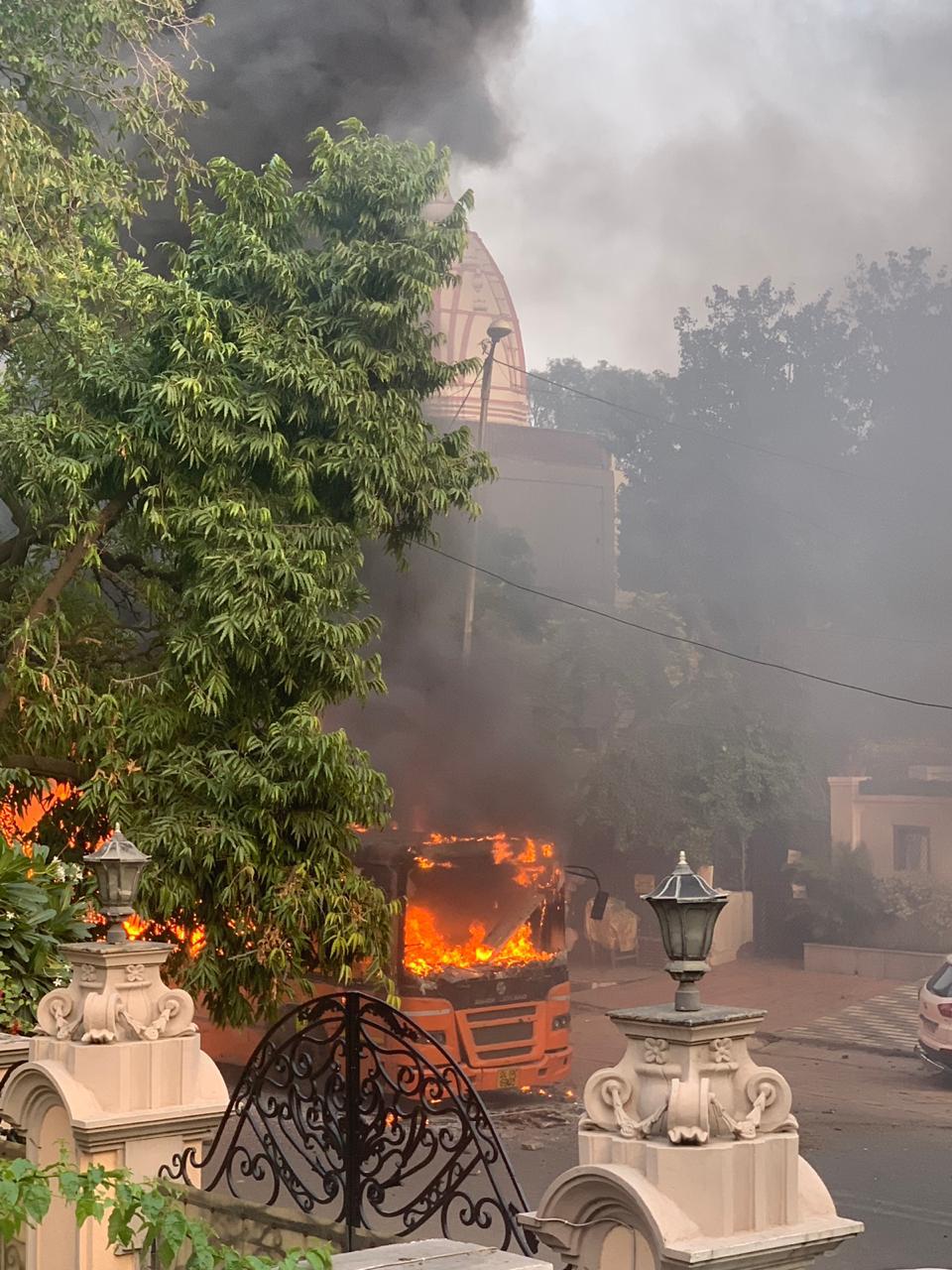
Some heart-wrenching glimpses of protests
Image result for caa trains brunt"
Just peacefully burning the trains?

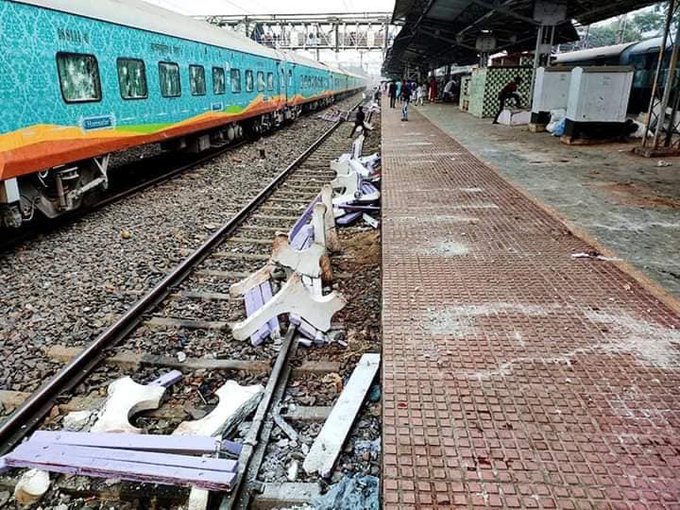
The protests appeared to have started peacefully. But then the obvious thing happened. The violence. The gruesome pictures of mob violence sent shivers down the spine of the country. Trains are torched, railway stations are vandalised, buses are set on fire, etc. The Azadi slogans started surfacing. And thanks to social media. It’s all on twitter for people to see.

A logical question in the minds of the majority of Indians now: when the CAA does not deal with any of the existing citizens of India, what exactly are these “Indian Citizens” protesting?

Image
Vandalized railway stations

As people try to find their own answers, after seeing this violence, it is possible that the public opinion is now slowly turning in favor of not only CAA but also NRC. Indians are realizing that they are sitting on a volcano of anti-social elements, who can unleash violence at the drop of a hat.  This happened several times since 1947 (e.g. 1984, 2002). The main difference between now and the past is that the nationalism interest in Indians, perhaps is at an all-time high, since independence struggle. These protests will be handled effectively in Phase Three.

Image
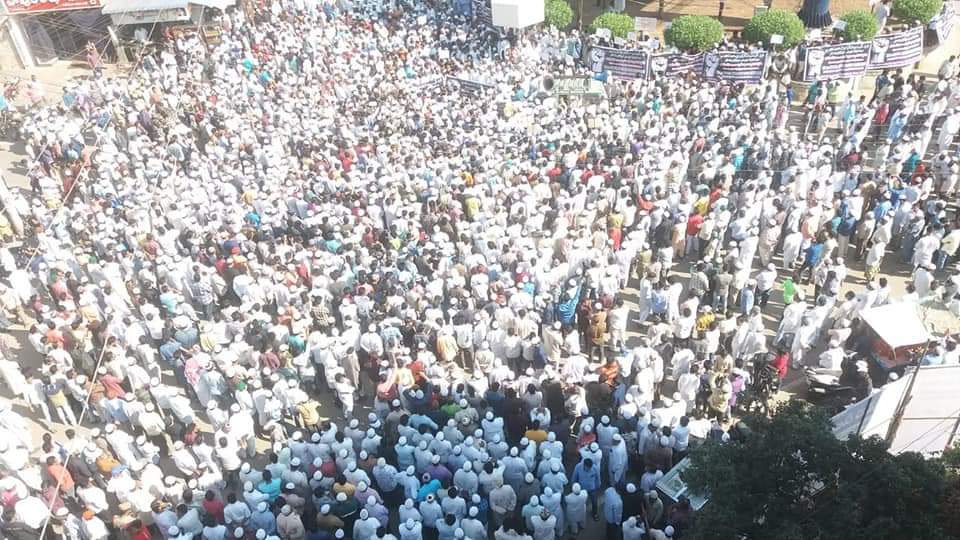
The ‘Protesters’ in their uniform

The very law that the protesters are trying to oppose, because of the ‘nature of their protests’, is being considered as a must-have by the public of the country. And that’s phase four.

There you go! The perverse effect of unintended consequences!

Obtaining balanced assessment of the Bill rather than relying on public rhetoric and fear mongering

0

“How in any way does EQUALITY with other people equate to ‘religious persecution? Does the survival of a religion depend on the vilification and desecration of the humanity of others?”-
Christina Engela (Dead Man’s Hammer)

The above quote explains how religious persecution dehumanizes a particular religious group at a societal level.

The Constitutional Amendment Bill (now Citizenship Amendment Act, 2019) was given the assent of the President on 12.12.2019. The Act amended the Citizenship Act, 1955 in order to grant Indian Nationality to Hindus, Sikhs, Buddhists, Jains, Parsees and Christians coming to India after facing religious persecution in Pakistan, Bangladesh and Afghanistan.

Contents and History of the Amendment Act

Coming to the legislative history, in 2015, there were some notifications which were dealing with these 3 countries and 6 communities, then in 2016, the bill was introduced which sought to amend the Citizenship Act, 1955 to make illegal migrants who are Hindus, Sikhs, Buddhists, Jains, Parsis and Christians from Afghanistan, Bangladesh and Pakistan, eligible for citizenship provided that people belong to these communities as mentioned above coming from the mentioned 3 countries. The Bill was referred to the Select Committee who in its recommendation gave some dissent note and stated that the Bill does not clearly explains the reason of introducing the bill. The Bill also talked about the registration of Overseas Citizen of India (OCI) cardholders which may be cancelled if they violate any law of land.

Since the bill only passed through Lok Sabha and not through Rajya Sabha, therefore it got lapsed and now it has been brought up again in 2019 with more clarity, wherein the Statement of Object and Reason, paragraph 2, mentions our neighboring countries and their Constitution where a State religion has been talked about, and the people not following (minority) particular State religion are facing difficulties, therefore the Act has been brought upon the given basis. The process of acquiring Citizenship through naturalization which demands 11 years of stay in the country (1955 Act), the 2019 Act has reduced it to 5 years which was 6 years in the 2016 Bill.

Another thing is regarding the OCI, that the Central Government will prepare the list of laws, violation of which will result in the revocation of OCI card.

Also, this Act doesn’t apply on 6th Schedule areas (areas where there is a large number of tribal population and if people from outside started living in their areas, then their indigenous nature which consists of their language, culture and way of living would get affected) and North East states. Talking about 6th schedule, there are 4 states, Assam, Meghalaya, Mizoram and Tripura and other states where Inner Line Permit is required. To save this, the provision has been added in 2019 Act which was not there in 2016 bill.

Decoding the Dispute

The issue with this Act is that a large section of people and organizations in the North East have opposed the Act and many major parties like Congress, Communist party of India have steadfastly opposing the bill claiming that Citizenship can’t be given on the basis of religion. So before forming any opinion, let’s understand why is there a need to change the Citizenship act of 1955?

Illegal migrants face difficulty during their categorization and recognition even when they’ve been living on the Indian soil for generations as India does not have a refugee mechanism and what we follow is a Standard Operating Procedure issued by Ministry of Home Affairs in 2014 which is primarily based on a clearance given from the security agencies on the basis of whether or not a particular group is persecuted in the country, followed by application of the principle of non-refoulement, in turn followed by the test of whether they pose a threat to India’s security. Once these 3 questions are answered in positive and affirmative, we end up giving clearance to them.

The yardstick used for promulgation of the 2019 act was who or which community constitutes a minority in the neighboring countries so chosen (which are predominantly Muslim countries), one could come to the conclusion that such Community would be non Muslims. However what’s been left out of the light is the predicament of minorities which are Muslim themselves yet face persecution? For instance the Ahmadiya Muslims in Pakistan facing sectarian violence. But if India seeks to open its gates for them, it needs to be a bit more careful as we have seen the case in the States of North East like Assam, Tripura who have faced the brunt of it.

Therefore the Citizenship act must be looked at in the context of a continuum of the existence of a two nation theory which continues to be alive and kicking in other parts of the world.

The fears of the demographic change especially in the northeastern states as a result of this Act, are very much genuine as seen in the case of Tripura where Bengali Hindus outnumbered the indigenous people living in Tripura after the violence in East Pakistan.

Now what happens to the Assam Accord and to the rights of the indigenous people? Here the government has to see who all people are illegal immigrants, or say, who came to India for better economic opportunities and the people who do not have any other place to go because the place where they lived has become an inferno for religious persecution. Since the people who are here because of religious persecution see India as their natural homeland rightly so therefore, they should be allowed here in India. The Government should construct a balance between the constitutional promises which are made to the States of the Northeast with respect to the protection of their indigenous identity and the civilizational duty to people who are being persecuted in the neighborhood.

The government while addressing this particular issue should share the burden with other states which are in a better position to accommodate these people, for instance, if we look at Pakistan Hindu refugees who came from Pakistan, they are largely in Delhi, Rajasthan and some part of Haryana. Here Rajasthan has been welcoming them because they don’t see a problem as far as their indigenous identity is concerned because it’s largely not same as the tribal identity in the North East so perhaps the Government should ask for the help of other states which are in a better position to absorb this particular community.

Also, the Inner Line Permit area should be relooked into, the Government should extend the Inner Line Permit for the political and socio economic development of the region.

There are concerns whether the act of 1955 could not be tweaked with some administrative action within the ambit of the Act to take care of these issues instead of enacting an Act like this and bringing religious elements into it? Also discussions about the violation of Article 14 have taken place at a large scale.

Let us understand this that when somebody is being targeted on the basis of religion to actually say that let us actually turn a blind eye to the motivation behind the particular persecution is to insult that particular person who is already at the receiving end of the rough end of the stick. Also, assuming that we have made a change to the citizenship act on mass and then introduced a religious element into it that would have been deeply problematic and that would have opened it up to a lot more constitutional challenges however here it has actually limited the scope of the particular exercise to 3 specific countries which has a specific religious identity by virtue of their Constitution and there is a religious minority in that particular community that is being targeted because of its religion which is precisely why there is an amendment which is specific to that particular area so to address that particular audience.

Now talking about the constitutionality of this Act w.r.t Article 14, we have to see the concept of Articles 5 to 11 under the Constitution and what it actually stands for existing citizens and citizens under article 5 to 11 cannot be discriminated against on the basis of their religion in the eyes of the law but vesting of Citizenship is different from existing citizens, which means when somebody chooses to enter a particular country, the country has a right to actually impose certain conditions. Several Judgements clearly states that when it comes to vestation of status of refugees or when an outsider enters the country, the country has the right to apply its discretionary filters in terms of granting both the status of refugees as well as citizenship.

The US Commission for International Religious Freedom alleged that the Citizenship (Amendment) Bill enshrines a pathway to citizenship for immigrants that specifically exclude Muslims, setting a legal criterion for citizenship based on religion.

India in its response to the strongly worded statement, Ministry of External Affairs has termed it ‘neither accurate not warranted’. The bill seeks to meet the basic human rights of persecuted religious minorities already in India from certain contiguous countries and the statement of U.S. panel is guided only by the prejudice and biases on a matter on which it clearly has little knowledge and no locus standi.

Every country as sovereign state whether it’s a civilizational state or a nation state has right to apply its security considerations before it applies the principle of non-refoulement. One has to see what are the facts and what is the Constitutional issue. Facts are that the scope of this particular act is limited to 3 countries which have a specific Islamic character, therefore, when they choose to enter into India, it is applying a certain filter of persecution on the basis of religion, one cannot take away that aspect from the calculus altogether because if we do so, we’re not allowing the person who is suffering the particular persecution to tell you the cause of the particular persecution.

Concluding remarks

It can be said that what all things are happening is due to legacy of partition, as the partition was based on religious ground. The newly formed states which can also be termed as theocratic states gave a particular religion an upper hand. One has to see that the concessions which are being given to the minority community in those theocratic states are needed or not. This should be seen as a continuation of the partition as people who were left behind in those theocratic states should be given the concessions because of the atrocities that were taking place upon them since the partition which can be seen by looking at the downfall in the population of the minority communities in these states.

Basically this is a step for addressing the problems that are there because of the legacy of the partition and second because of the civilizational responsibility which India has and has been upholding for a very long time. This Act is not based on the Religion, this should be seen as an Act which talks about the people who are persecuted on religious grounds.