Home Blog Page 351

Contract farming ordinance isn’t enough

0

The present government passed an ordinance, “The Farmers (Empowerment and Protection) Agreement on Price Assurance and Farm Services Ordinance, 2020“. To give a context, contract farming is an agreement between the producer and buyer for the future purchase of the goods produced at the agreed-upon price and quality. Contract farming is existing in India for a long period of time but the recent ordinance can be viewed as means of legal backing. Even before this ordinance, many states have passed a law concerning contract farming. 

Policymakers argue that contract farming has not picked in India because the farmers were allowed to sell only to licensed traders. These licensed traders were largely APMC, and thus other players in the market were not able to enter into contract farming. This problem was existing in India from the 1950’s, and the APMC was initially set up by the government across the country as guidance to the farmers to market there produce. But the result was that APMC turned into a monopoly and controlled the price of the market in India.

To solve this issue government came up with multiple ordinances and even the recent ordinance on contract farming was aimed at infusing more capital into this sector. There are two main problems that are still unaddressed for contract farming to pick up in India.

First is that the central government has successfully made the ordinance, but they have to convince the state government to implement this at ground level. The traders who are part of APMC have a lot of political influence, and thus whenever the state government comes up with a law to modify APMC rules, there is a huge backlash. They not only have political influence but also have the market power since they control more than 90% of the market in India. Pareto rule can be applied to these traders as 20% of the trader’s control 80% of the wholesale market in India. Thus the voice of this handful of traders is so loud, and even state governments are bound to listen.

Second is that the contract farming is not business-friendly in the way it is drafted. Contract farming largely protects the farmers and not the buyers. When a corporate company enters into a contract farming with farmers, they agree upon many rules based on the price and quality. Farmers demand all the produce grown in the particular set of land to be procured by the buyer as a part of the agreement. The logic for such a claim is that if the farmers break the relationship with APMC and enter into an agreement with corporates which is willing to take a fraction of produce, then the farmers won’t be able to sell the rest of his produce anywhere. Thus, the farmers demand the corporates take entire produce from a particular piece of land under contract farming. But corporates are uninterested in contract farming because,

  • When the price of the goods in the market high compared to the agreed-upon price with corporate, then the farmers will try selling their produce to the market and convey to corporates that there was a crop failure
  • When the price of produce is less in the market than the contract price, then the farmers will buy extra produce from other farmers at the market price and sell it to corporates. Farmers say the reason as bumper crop and demand the corporate to procure all the goods according to the contract.

The above two arguments are valid only when there is a demand for the farmers’ produce. Thus there is a risk of the above two problems with local vegetables and fruits. But PEPSICO is successful in contract farming. PEPSICO enters into contract farming with farmers for producing a special variety of potato, which can be used only for making chips. These potatoes have different price and quality compared to local potato. Thus, they don’t have any demand in the market, and therefore the farmers can’t use the above tricks in this contract. Therefore from the business angle, contract farming is not profitable and sustainable.

For policymaking, it is important to listen to all the stakeholders, but the government has failed to take into consideration of the business community. Relaxing the regulations on APMC and drafting rules for contract farming alone is not enough. The government has a bigger role to play on the implementation, which has a lot of operational difficulties.

कुछ महापुरुषों का क्या इलाज़ है?

0

आप महापुरुष कुनाल कामरा को तो जानते ही होंगे, जो आये दिन अपनी बेइज़्ज़ती करवाते रहते हैं। वैसे तो खुद को स्टैंड अप कॉमेडियन कहते हैं लेकिन आज हम जानेंगे की वो असल में हैं क्या।

अगर आप भी मेरी तरह एक युवा हैं तो आपने अवश्य ही यूट्यूब पे कॉमेडी वीडियो देंखे होंगे, जो शो टीवी पे आते हैं वो तो थोड़े ठीक हैं लेकिन जो सिर्फ ऑनलाइन आते हैं उनमे अधिकतर शो केवल राजनीती पे आधारित होते हैं।

कोई भी ऐरा गैरा स्टैंड अप कॉमेडियन बन जाता है और फिर कॉमेडी के नाम पे केवल देश, धर्म और राजनीती के बारे में अपने गंदे विचार भाड़े के दर्शको को सुनाता है और दर्शक भी इतने सस्ते होते हैं की किसी भी वाहियात चुटकुले पे हंस पड़ते हैं।

सच तो यह है जो व्यक्ति इन्हे कॉमेडियन समझते हैं और इन्हे सोशल मीडिया पे फॉलो करते हैं वो या तो अँधेरे में जी रहे हैं या तो वो कुनाल जैसे ही हैं। जैसे जौर्नालिस्ट के भेष में इस्लामिस्ट होते हैं वैसे ही कॉमेडियन के भेष में वाम पंथी होते हैं। इनका निशाना आप या मैं नहीं हु जो इनकी सारी चाले समझ सकते हैं, इनका निशाना आम लोग हैं जो मनोरंजन के लिए इन्हे देखते हैं। मनोरंजन के नाम पर ये लोग राष्ट्र विरोधी सोच बेच रहे हैं।

ज़हरीले पौधों को हटाने का उपाय:

ये लोग केवल जनता का ध्यान आकर्षित करने के लिए और व्यूज पाने के लिए ऐसे काम करते हैं, जिस दिन जनता इन्हे ध्यान देना बंद कर देगी उस दिन ये गुमनाम हो जायेंगे।

सबसे पहली चीज़ अगर कोई हम कर सकते हैं तो वो है हम इन्हे देखना बंद कर दें और सोशल मीडिया पे भी उनफ़ोल्लोव कर दें। अगर आपको किसी कारण वश इनका वीडियो देखना भी पड़े तो बिना डिस्लाइक किये ना छोड़े। अपने दोस्तों को भी ऐसा करने बोले।

अगर आपको इनका कोई भी पोस्ट या वीडियो आपत्ति जनक लगे तो उसे तुरंत रिपोर्ट करें। धीरे धीरे करके सारा कचरा साफ़ किया जा सकता है।

लोकतंत्र तो अधिकार देता है पर उदारवादी नहीं

आज हम उस समाज में जी रहे हैं जिसे अपने दोहरे चरित्र का प्रदर्शन करने में महारत हासिल है। वो समाज जो एकतरफ अपने उदारवादी होने का ढोंग करता है, महिला अधिकारों, मानव अधिकारों और अभिव्यक्ति की स्वतंत्रता के नाम पर बड़े बड़े आंदोलन और बड़ी बड़ी बातें करता है लेकिन जब इन्हीं अधिकारों का उपयोग करते हुए कोई महिला या पुरूष अपने ऐसे विचार समाज के सामने रखते हैं तो इस समाज के कुछ लोगों को यह उदारवाद रास नहीं आता और इनके द्वारा उस महिला या पुरुष का जीना ही दूभर कर दिया जाता है। वो लोग जो असहमत होने के अधिकार को संविधान द्वारा दिया गया सबसे बड़ा अधिकार मानते हैं वो दूसरों की असहमती को स्वीकार ही नहीं कर पाते।

हाल ही के कुछ घटनाक्रमों पर नज़र डालते हैं।

1.हाल ही में अलीगढ़ मुस्लिम यूनिवर्सिटी की एक छात्रा को सोशल मीडिया पर धमकी दी गई है कि यूनिवर्सिटी खुलने के बाद उसे जबरन पीतल का हिजाब पहनाया जाएगा। उसका कुसूर ये था कि उसने कॉलेज में छात्राओं को जबरन हिजाब पहनने के मसले पर अपनी राय रखी थी जिसके बाद स्नातक के एक छात्र ने उसके लिए अभद्र भाषा का प्रयोग करते हुए उसे धमकाया।

2.कुछ दिन पहले ही मुंबई स्थित मानखुर्द में एक हिंदू लड़की ने मस्जिद में अजान के समय लाउडस्पीकर से आने वाली आवाज से परेशान हो कर उनसे नियमों का पालन करने की गुजारिश की थी, तो उसे कट्टरपंथियों के गुस्से का सामना करना पड़ा था। इतना ही नहीं, पुलिस और प्रशासन भी उन कट्टरपंथियों के आगे बेबस और बौना नज़र रहा था।

3,जब इस लड़की के समर्थन में सोशल मीडिया पर एक अन्य लड़की ने आवाज उठाने की हिम्मत दिखाई तो उसे भी बेहद अभद्र भाषा का प्रयोग करते हुए उसका बलात्कार करने की धमकी तक दे दी गई। यह मामला इंदौर का है जहाँ इस लड़की की गुस्ताखी यह थी कि उसने उपर्युक्त लड़की के समर्थन में सोशल मीडिया पर एक प्लेकार्ड की फोटो शेयर की थी जिसमें लिखा था कि अज़ान करो पर आवाज कम करो,लाउडस्पीकर से क्या साबित करना चाहते हो।

लेकिन इन लड़कियों के समर्थन में कोई आवाज नहीं आई और ये अपनी लड़ाई में अकेली खड़ी हैं। दरसअल इन लड़कियों की गलती यह थी कि ये तीनों उन बातों को सच मान बैठी थीं जो इन्होंने तथाकथित उदारवादियों के मुँह से सुनी थीं। वो भूल गईं थीं कि भले ही इस देश का लोकतंत्र उन्हें “असहमत होने का अधिकार” देता है और इस देश का संविधान इन्हें अभिव्यक्ति की आज़ादी भी देता है लेकिन ये तथाकथित उदारवादी नहीं। क्योंकि इनका उदारवाद चयनात्मक है सार्वभौमिक नहीं। कुछ समय पहले इन्हीं शब्दों की आड़ में देश के लोकतंत्र की दुहाई देकर और संविधान की रक्षा के नाम पर सी ए ए के विरोध में समुदाय विशेष की महिलाओं द्वारा अनिश्चितकालीन विरोध प्रदर्शन और धरना दिया जा रहा था जिसे देश भर में इन उदारवादियों का समर्थन प्राप्त था । ज्यादा पुरानी बात नहीं है, तब उस प्रर्दशन के दौरान लोकतंत्र के नाम पर प्रदर्शनकारियों की तानाशाही और संविधान की रक्षा के नाम पर संविधान सम्मत कानून का गैरकानूनी विरोध पूरे देश ने देखा। लेकिन महिला अधिकारों लोकतंत्र में असहमत होने के अधिकार और संविधान द्वारा प्रदत्त विरोध करने के अधिकार के नाम पर प्रशासन के हाथ बांध दिए गए।

इसी प्रकार दिल्ली दंगों की साज़िश रचने के आरोप में जामिया मिल्लिया इस्लामिया की एक छात्रा को पुलिस द्वारा गिरफ्तार किया गया। वो सी ए ए के विरोध प्रदर्शन में भी शामिल थी और उसे भी सोशल मीडिया पर ट्रोल किया गया था। उस समय उसके समर्थन में महिला अधिकारों की बात करने वालों की झड़ी लग गई थी। प्रिंट मीडिया से लेकर सोशल मीडिया पर एक महिला जो कि एक छात्रा भी है उसके साथ होने वाले अत्याचारों के खिलाफ और उसके सम्मान के लिए आवाज उठाने वाले महिला और वामपंथी संगठन सामने आ गए थे। सही भी है चाहे वो अपराधी हो, पर महिला होने के नाते वो एक आत्मसम्मान की अधिकारी है जिसकी रक्षा किसी भी सभ्य समाज में की जानी चाहिए। लेकिन आज जब हिजाब के खिलाफ आवाज उठाने वाली छात्रा हो या लाउडस्पीकर पर अजान का न्यायसम्मत विरोध करने वाली महिला हो या फिर इसके समर्थन में उतरी एक अन्य छात्रा हो, इनके समर्थन में महिला अधिकारों की बात करने वाले उपर्युक्त किसी उदारवादी संगठन की कोई आवाज क्यों नहीं सुनाई दी। जिन वामपंथी संगठनों के महिला सशक्तिकरण के विषय में लंबे चौड़े भाषण विभिन्न मंचों पर अनेकों अवसरों पर देखे और सुने गए आज वो यथार्थ में बदलने के इंतजार में हैं।

अगर आप सोच रहे हैं कि यह दोगला व्यवहार केवल महिलाओं के साथ किया जाता है तो आपको साल के शुरुआत में कन्नूर यूनिवर्सिटी में आयोजित भारतीय इतिहास कांग्रेस के मंच पर केरल के राज्यपाल आरिफ मुहमम्द खान के साथ इतिहासकार इरफान हबीब की बदसलूकी याद कर लेनी चाहिए।

 24 मार्च 1943 को भारत के अतिरिक्त गृहसचिव रिचर्ड टोटनहम ने वामपंथियों पर टिप्पणी करते हुए लिखा था कि “भारतीय कम्युनिस्टों का चरित्र ऐसा है कि वे किसी का विरोध तो कर सकते हैं, किसी के सगे नहीं हो सकते सिवाय अपने स्वार्थों के।”

दरअसल जो वामपंथी मानवाधिकारों, दलित अधिकारों, अभिव्यक्ति की स्वतंत्रता, महिला अधिकारों के नारे बुलंद करते हैं उनका सच यह है कि जब 1979 में उन्हीं की सरकार पश्चिम बंगाल में दलितों का भीषण नरसंहार करती है या 1993 में विरोध प्रदर्शन कर रहे युवा कार्यकर्ताओं पर खुले आम गोलियां चलवाती है जिसमें13 लोग मारे जाते हैं या फिर जब बंगाल के वामपंथी कार्यकर्ता 2006 में तापसी मलिक नाम की एक नाबालिग लड़की का बलात्कार कर जला कर मार डालते हैं तो इनकी उदारवाद मानव अधिकार महिला अधिकार की बातें खोखले नारे बन कर रह जाते हैं। लेकिन अब शायद समय आ गया है जब इन उदारवादियों के सिलेक्टिव लिब्रलिस्म से पर्दा उठने लगा है।

डॉ नीलम महेंद्र

(लेखिका वरिष्ठ स्तंभकार है)

Khadi: The pride of Indian weavers

0

Clothes are an  integral part of human identity. The clothes we wear play an essential role throughout the life. They reflect the personality of individuals and can be used as a marker of a group, community, family, region and even country. A new era has started that is urging people to go back to their roots and realise the value of sustainability, nature and purity. People around the globe are looking for things that connect them to their roots i.e. food,yoga,handicraft clothes. Khadi is one of such numerous examples that can guide us back and connect us to our roots. Khadi has proved itself as a fabric that is ecologically right and socially cool.

Weaving has been one of the most primitive activities that were carried out by artisans. Different parts of the world developed different weaving practices through civilization. Khadi developed in India as a traditional form of weaving that not just involve handloom weaving but also involves hand spinning of the yarn. Thus Khadi refers to the hand spun and hand woven fabric of India. Indian khadi fabric, also known as khaddar, is made by spinning threads on an instrument called charkha. It is woven and spun by hand, which is a time-consuming process. Before Independence, khadi manufacturing gained momentum under Mahatma Gandhi’s leadership as a movement to boycott British clothes.
Characteristics of khadi

Khadi can be made from cotton, silk or wool. It ranges from being fine muslin cloth to thick like a dhurrie. It is soft as our body. So Khadi can be worn as a cloth of comfort and convenience. Khadi has a unique property of keeping the wearer warm in winter and cool in summer. The more it is washed the better it looks and feel. So this is comfortable in characteristics as well as price also. Khadi is the most used handlooms in India.

Uthhan is the first initiative in India where you got original artistic work at reasonable prices. The profit from artifacts sales goes directly to artisans with out any middlemen. Artist themselves decide the value of their artistic value. Uthhan has displayed original khadi clothes at cheaper rate. Indian crafts are always in trend because of their eco friendly and unique nature. Through Uthhan many of the traditional Khadi weavers are earning their bread with out the exploitation of middlemen

Tears of Assam

0

Assam is crying! Assam has been historically flood-prone, but a combination of natural and man-made factors have made the situation direr after independence. The infamous 1950 earthquake set the stage for worse floods in the decades ahead by making the Brahmaputra river more unstable and leading to greater soil erosion on its path. The quake changed the region’s topography and made the Brahmaputra valley more susceptible to deluge thereafter. As much as 40 per cent of the state’s land is prone to damage by floods, with Brahmaputra valley accounting for nearly one-tenth of India’s total flood-prone area. Over the years, successive state governments have built hundreds of embankments on rivers, but many of these structures have weakened considerably. Ironically, for a state that sees so much flooding, Assam has also seen periods of drought in recent years. Some environmentalists link these unpredictable patterns to climate change.

In the month of May the river Brahmaputra swelled up and has been in spate ever since. More than 35 lakh people in 26 districts of the state have been affected. Nearly 90 per cent of the Kaziranga National Park is reportedly submerged. Floods are a recurrent feature during the monsoons in Assam. In fact, ecologists point out that flood waters have historically rejuvenated croplands and fertilised soil in the state’s alluvial areas. But it’s also a fact that for more than 60 years, the Centre and state governments have not found ways to contain the toll taken by the raging waters. The state has primarily relied on embankments to control floods. This flood control measure was introduced in Assam in the early 1950s when the hydrology of most Indian rivers, including the Brahmaputra, was poorly understood.

There is, today, a substantial amount of scholarly work that has highlighted the problems of using large walls to check the Brahmaputra’s flow. The river changes course frequently and it’s virtually impossible to contain it within embankments. Moreover, the pressure of the surging water takes a toll on these walls and they need constant reinforcement — by all accounts, that hasn’t happened in Assam. Several of the state’s embankments were reportedly breached by the floods this year. Large parts of Assam are under water. Entire Assam has led to severe encroachments in the wetlands, low lying areas, hills and shrinkage of forest cover. The denuded hills and loss of wetlands lead to artificial floods. In fact, authorities in all the states that share the Brahmaputra basin need to urgently put their heads together to resolve the perennial problem of floods in Assam.

The Assam State Disaster Management Authority said that over 14.95 lakh people were affected in 2,197 villages in 21 districts of the state. The six deaths were recorded from Dhubri, Nagaon, Barpeta and Nalbari. Besides this, a 50-year-old from Cachar district died as a result of a landslide. The cause of death was “electrocution due to uprooted tree falling on power line as a result of landslide”, the State Disaster Management Authority said. Crops in over 87,000 hectares have been affected due to inundation. The Brahmaputra River was flowing above danger level at Nimatighat in Jorhat, Tezpur, Guwahati, Goalpara and Dhubri. Lots of schools were also submerged and  Severe damage to infrastructure and roads was reported from several districts. 

In Kaziranga National Park and Tiger Reserve, a swamp deer and one wild boar drowned in the floodwaters. A total of 107 of the 223 camps used by forest personnel in the park area had recorded 49% inundation and six of them had to be vacated . As many as seven hog deer died after being hit by vehicles while trying to cross the national highway. Flooding was also reported at the Rajiv Gandhi Orang National Park. As per a release by the Central Water Commission on Wednesday, the reduction in rainfall has led to a decline in the level of most rivers. Some of them, however, continue to be in the “severe flood” state.

“River Brahmaputra has started falling in all the districts in Assam,” a release from the Central Water Commission stated. “Since rainfall is likely to continue with lesser intensity during the next four to five days, the ‘Above Normal’ to ‘Severe Flood’ situation is likely to continue with slow falling trend in the states of Arunachal Pradesh, Assam and Sub- Himalayan West Bengal during the next three to four days.” Assam with its vast network of rivers is prone to natural disasters like flood and erosion which has a negative impact on overall development of the state.

The Brahmaputra and Barak River with more than 50 numbers of tributaries feeding them, causes the flood devastation in the monsoon period each year. The flood and erosion problem of Assam is singularly different from other states so far as extent and duration of flooding and magnitude of erosion is concerned and is probably the most acute and unique in the country. Various Records show that average annual area affected by flood is 9.31 Lakh Hectares. The flood prone area of the country as a whole stands at about 10.2 % of the total area of the country, but flood prone area of Assam is 39.58 % of the area of the state. It signifies that the flood prone area of Assam is four times the national mark of the flood prone area of the country.

As much as 40 per cent of the state’s land is prone to damage by floods, with Brahmaputra valley accounting for nearly one-tenth of India’s total flood-prone area. Authorities have used dredgers to deepen the Brahmaputra, but environmentalists say that such engineering solutions should follow a careful environmental assessment. At least 28 of Assam’s 33 districts have been declared as flood-affected and more than 45 lakh people impacted by the rising waters of the Brahmaputra and other rivers that flow through the state. To put this in perspective, Assam is home to a little over 3 crore people – so nearly one in every six persons has been affected by the floods.

It is particularly disheartening that the death and destruction caused by the floods are entirely predictable because they are an annual affair once the monsoon rains swell the rivers. But the floods of 2020 are also a warning that combating them during an existing crisis like the COVID-19 pandemic can put enormous pressure on the state’s mitigation capacities. While the Covid-19 crisis has been accepted as a pandemic worldwide as also in the nation, the annual miseries compounded by the other two calamities are limited to the state. 

Keeping aside the previous years, even in the current year, while the pandemic has affected the lives of thousands, the annual floods have already marooned many areas without succor. Leave aside the rest of the state, the flood havoc caused in the Kaziranga National Park, home to two-thirds of the world’s one-horned rhino population and different species of birds and animals, and the gradually decreasing landmass of the world’s largest riverine island Majuli (that has reportedly been reduced to less than half of its actual size) due to erosion, has failed to acquire the sympathy of the Centre.

It is the reality of Assam that  millions being affected every year, neither flood nor erosion is called ‘National Calamity.’

Irony dies a painful death everytime you flunk in your mother tongue

0

When it comes to learning a language, our senses respond most effectively to stimuli from what is called the first and the unofficial school- home. While it is true in the words of Tahar Ben Jelloun that the universe can be expressed in words and syllables not belonging to our mother tongue, it is equally true that we are the most vulnerable (or honest) version of ourselves when approached in our first language. 

Although polyglots are up for grabs these days and among the most sought after tribes in the neoteric world, examination at a granular level reveals that such a trend is the outcome of a deal clinched with the monolinguals, who allow themselves to be caricatured for not stepping out of their comfort zones.

Before anyone starts questioning the need for bringing the plight of monolinguals to light, let me do the honors by telling you the truth of a fiasco in the recently declared results of examinations conducted by UP board. As per data released by UP education department, 18.3% of 28.75 lac test-takers from class X and 11.3% of 23.72 lac examinees from class XII have flunked in Hindi, which happens to be the matribhasha of 43.63% of the total population residing in 12 Indian states.

Multilingualism has become synonymous with wearing all the hats. Thanks to the voracious appetite for growth and development occasioned by cut-throat competition, people now face Hobson’s choice to broaden their horizons by exploring new cultures, and therefore, languages. But, slogging to learn a second language when you are miserably poor at your first one, is not a good idea.

Time is nigh for us to start embracing the mother tongue and getting rid of our obsession with ‘the other tongue’.

Menace of Indian stand-up wags (comedians)

0

Standup Wags – since Comedian is a professional term – are hate filled adults with a traumatic childhood grown infested with mental morbidity.

Their being given a platform is a way to outburst vague grievances against the political and societal structure by the dark forces hell bent on destroying everything that rustic believes in, has faith in.
Their denigrating Hinduism is a premeditated attempt at turning away the coming generation of Hindus from their roots, their culture and their way of life and push them into an ‘utopian world of equality’.

These knobheads are phony comedians and hypocrite of a different level. In the name of standup comedy all they do is objectify women, normalize rape, trivialize abusive language and fill the minds of spectators with hate for a particular religion and its customs by mocking its gods, while at the same time choose not to do the same to Islam and Christianity knowing very well that the terrorist forces among Muslims and extremist groups among Christians won’t leave no stone unturned to punish their misdemeanors.

These buffoons are useful idiots of the Communists who are convenient atheists. Like their masters they proclaim themselves as atheists while mocking Hinduism but dons a religious cloth while face backlash from Hindus to claim victimhood.

However, this is not the case when there is a backlash from Muslims or Christians. In that case they simply ask for forgiveness for sin they have committed because no Muslim or Christian is as tolerant and forgiving as a Hindu. With the awakening Hindu pride and a Hindu centric party’s coming to power and retaining it has augmented the intensity of their abusing Hindus and their customs many folds.

Importance of indoor air quality as WHO warns against airborne COVID-19

0

Earlier the preventive measures for fighting against the novel COVID-19, commonly known as Coronavirus, was majorly focused on avoiding large infection carrying droplets when an infected person sneezes or coughs, while ensuring the surrounding surfaces and objects are disinfected. However as airborne transmission of coronavirus has become a widely debated topic among various medical researchers and experts, more light has been shed on the possibility of airborne COVID-19 transmission.

Scientists now believe that are scientific evidences that suggest airborne transmission of coronavirus is possible. The transmission can happen in the form of tiny microscopic droplets known as aerosols. The latest guidance from WHO has recognized the imminent threat of coronavirus infection by exposure to aerosols in crowded indoor spaces.

Seeing the rising risk of airborne COVID-19, indoor air quality in buildings has become crucial. ASHRAE has released a thorough guidance on how to improve indoor air quality thus reducing the risk of infections. The guidance is mainly focused on:

  • Increased outdoor air ventilation, with zero air recirculation.
  • Upgrading air filters to medical grade, which means MERV 13 or better.
  • Use of Ultraviolet Germicidal Irradiation, or UVGI, for air and surface disinfection.

ASHRAE Guidance for Controlling Airborne COVID-19 Transmission

  • The chances of airborne transmission are more likely to happen in indoor spaces with high occupancy and deficient ventilation. Higher indoor occupancy directly translates to higher risk of transmission if the viral microscopic droplets are not removed by an efficient ventilation system.
  • Ventilation system improvements depend upon the existing HVAC installation. Although some systems can be easily reconfigured to the desired settings, others may need component upgrades for efficient ventilation. It has become more and more evident that increasing outdoor air supply and elimination recirculation of air is one of the most effective ways of tackling virus transmission.
  • Since aerosols are such tiny droplets, filter upgrades and UVGI can provide additional protection against airborne transmission. Medical grade air filters with MERV rating of 13 or higher coupled with UVGI systems with UV-C light capable of killing germs by destroying their DNA are highly recommended. Building owners are thus recommended to use right products.

Adapting to Best Air Quality Measures for Buildings

  • Depending upon the type of ventilation system and HVAC configuration, the most effective measures can vary. Thus, a thorough professional assessment of the property is highly recommended and is the best starting point for improving indoor air quality. Building Automation System (BAS) can be used as they eliminated the need manual adjustments making it easier to reconfigure HVAC systems.
  • Weather conditions also need to be considered as they can limit the effectiveness of outdoor airflow. For example, air conditioning systems or space heating systems may be overwhelmed if the outdoor air is too hot or cold. This may lead to unsuitable indoor temperatures for indoor occupancy.
  • Fan inspection is highly recommended before upgrading air filters or you might end up installing air filters that restricts airflow. This can have a detrimental effect on the building. UVGI must be deployed by professionals as UV lights are capable of causing skin or eye damage.

To conclude, the importance of indoor air quality has become imperative more than ever considering the growing threat of coronavirus.

How CCP is gripping over south China Sea

0
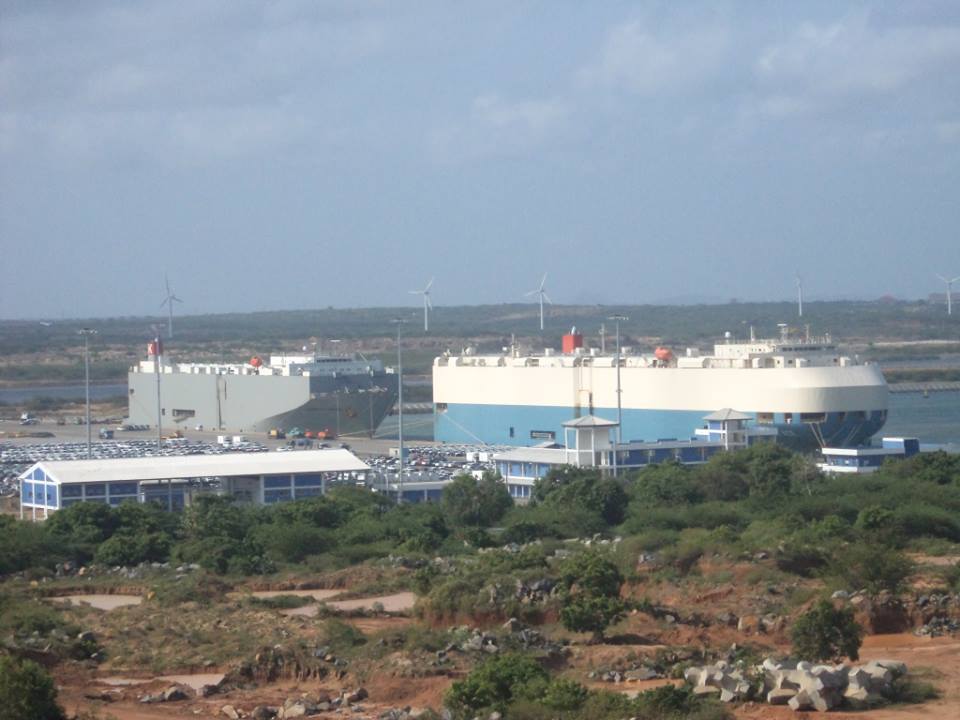
Port of Hambantota in 2013

What is cabbage strategy?

In wiki words: Cabbage strategy is designed to occupy a larger Maritime zone for a particular nation, in order to gain exclusive national rights over certain bodies of water. The strategy involves building large amounts of man-made islands in the middle of a large body of water, building them up until they have enough land mass to claim a local sea under the UN’s “Law of the Sea”.


How China is using it in South China Sea and how effectively

China’s claim over islands in the South China Sea is of centuries old. However, the first official claim in the modern period dates back to 1947, wherein it demarcated its claims with a U-shaped line made up of eleven dashes on a map. In the early 1950s’, two dashes of the proposed line around the Gulf of Tonkin were removed to pacify the Communist Government in Noth Vietnam. Subsequently, the nine-dash line has emerged as the new flashpoint, which covers two groups of islands — Spratlys and Paracels — within its ambit.

In cabbage strategy it’s basically covering the area by multiple layers and denying access to enemy entities until you establish your military base on that region.

Let us explain it through a real life example: which includes Shri Lankan and Vietnamese ports

Step 1: Blocking trade

As per an estimate, over USD 5 trillion worth trade passes through the region in a year. India’s trade through the Malacca Strait and the South China Sea has been steadily increasing over the past few years due to the growing trade ties with Singapore, Malaysia, Indonesia, Japan, the USA, Australia and South Korea.

So China has to acquire the access and control over the ports involved in it. And how will China do it? By taking legal control over the ports.

Step 1.1 : Provide unpayable amount of loans with visibly less interest rate.

Step 1.2 : After they couldn’t repay, provide they extension period with additional unpayable loan with new and malicious terms and conditions.

Step 1.3 : As those countries can’t pay the loan, take some percentage direct control over the port.

Step 1.4 : Increase Chinese workers in port construction more than locals.

Step 1.5 : Go to international courts, win a legal battle as what those signed agreements were meant for.

Step 2 : Blocking foreign transitions

Step 2.1 : Introduce more Chinese labour force on the location.

Step 2.2 : Manipulate local labour force to function as of with peer pressure or any unethical way.

Step 2.3 : Initiate protests/riots in CCP’s favouring thoughts.

Step 2.4 : Showing local’s interest in banning no Chinese foreign trade and thus legally doing it then after

Step 3 : creating artificial islands

Once the shore and ports are aquired it’s not that difficult.

Step 3.1 : deliberately showing the necessity of trading checkpoints at Strategic locations and commercial necessity if required.

Step 3.2 : Deploying big ships as checkpoints for trading operations.

Step 3.3 : Showing it’s not economically beneficial to use ships and is necessary to build artificial islands.

Step 3.4 : Building artificial islands under economic reasons.

Step 4 : deploying military

Step 4.1 : Showing that the trade or trade federation is in dander.

Step 4.2 : Showing that costal guards are unable to handle the situation neither the local police

Step 4.3 : Crying crocodile tears on internet about it.

Step 4.4 : Snoopingly deploying military for counter actions and showing it as last option to counter threats.

Impact of COVID-19 on our daily lives

In a short time span, this deadly virus has spread across the world like a wild fire. The entire world community has come under the strangle-hold of this unknown, invisible monster. There is no country which isn’t impacted by this virus. Number of affected people world over is more than 14 million and the death rate is fast approaching 5 percent of the total.

Little more than six months ago, China gave birth to this Bhasmasura named COVID-19. Some even called this “China virus” or “Wuhan virus” in the beginning. Opinion of the scientists, including Luc Antoine Montagnier, the French virologist who’d won the 2008 Nobel Prize in Physiology or Medicine, in this matter is that this virus was manufactured in a lab by Chinese government with ulterior motive of using it as a bioweapon on enemy countries.

Every field and section of human community is severely affected by the impact of this virus. Many of the other corona viruses we’ve witnessed in the recent past, have been specific to a particular geographical or certain climatic conditions. But this corona virus, COVID-19, is all pervasive and seems impervious to any of climatic changes or conditions. Due to this unforeseen and quite frankly, unprecedented viral outbreak, the global economy has all but come to a grinding halt. No activity in the Industrial sector. Small and medium-scale businesses haven’t been able to cope with the losses. Real estate grounded. Manufacturing units have become mute. This pandemic has even brought chaos in health sector, because of the continuous rise in number of cases and a general lack of common-sense.

We Indians don’t observe any formality in human relations. ‘Athithi devo bhava’ is the common mentality that’s seen in the general public. But after this virus outbreak, everything has changed. A kind of skepticism has set in. A lot of infected people are asymptomatic. Anybody who comes to your house or meets you on the road may be a carrier of virus. So, everybody is scared of everybody. A sense of fear, particularly of the unknown and the invisible, has become the norm. Mass-media has played a major role in creating this, with their regular programs feeding the frenzy by constantly showing chaos.

No social contact is possible in this atmosphere. You fear everybody including your own family members. Social gathering has become thing of the past. Children, who can’t quite comprehend the seriousness of the situation, are confused and agitated by these new restrictions. When you go out for purchasing of essentials you try to avoid accidental body contact. Work places have been empty. Everybody inthe family crammed in to house all the 24 hours. This has lead to psychological impact resulting in frustration, anger, mental pressure and other stress related symptoms.

Particularly, with children, this has been a wild change. Kids, who were used to just mucking around without a care in the world are now expected to follow the same rules as the adults. Wow, what a mess. It seems that we are living in an era where untouchability has become the way of life. Mask is another cause of irritation. You can’t communicate properly when you wear a mask. But since the point of wearing a mask is to avoid infecting others while talking or communicating otherwise, it’s essential. Anyhow, with everybody wearing a mask, it reminds of Hanumanji. They had natural mask and we are now adopting it. Often times, when you go out for purchasing, half-way through you realize that you’ve forgotten the mask. You curse the government, and you rush back home.

Maintaining social distance is one more embarrassment. Unknowingly we break this practice. Sometimes people take you for being oversensitive. When PM Modi started Swachh Bharath Abhiyan many ridiculed his idea. They said it not the PM’s job to do this drama. Now the nature has compelled everyone to follow his call for cleanliness. The obvious joke here is that TUBE LIGHTS are late in lighting up, and some Sodium vapor lamps are still clueless.

People working from home indefinitely, school and college students attending online classes. People are even dismissing maids out of fear. Everybody is stuck in their house, waiting, hoping. Naturally mobiles, TV, computers, laptops, iPhones and all other electronic gadgets are always ON. This has further created a divide amongst the various generations in families.

Usually, when people get bored of office work or the home atmosphere, they plan for a vacation. But with virus spreading everywhere, where do you go? It is a self-imposed house arrest. It gets so annoying you rage out without any reason with anybody who comes across. YOU ARE FREE, BUT YOU ARE NOT FREE.