Home Blog Page 107

आर्यभट: प्राचीन भारत की महान खगोलीय प्रतिभा

0

आर्यभट प्राचीन भारत के सर्वाधिक प्रतिभासंपन्न गणितज्ञ-ज्योतिषी थे। वर्तमान में पश्चिमी विद्वान भी यह स्वीकार करते हैं कि आर्यभट प्राचीन विश्व के एक महान वैज्ञानिक थे। यद्यपि हम आर्यभट का महत्व इसलिए देते हैं क्योंकि सम्भवतः वे ईसा की पांचवी-छठी सदी के नवीनतम खगोलिकी आन्दोलन के पुरोधा थे। और आर्यभट की ही बदौलत प्राचीन भारत में वैज्ञानिक चिन्तन की सैद्धांतिक परम्परा स्थापित हो पाई।

कभी-कभी हम आर्यभट को ‘आर्यभट्ट’ नाम से भी संबोधित करते हैं। परन्तु उनका सही नाम आर्यभट था। सर्वप्रथम भारतीय चिकित्सक एवं पुरातात्विक विद्वान डॉ. भाऊ दाजी ने यह स्पष्ट किया  था कि उनका वास्तविक नाम आर्यभट है, नाकि आर्यभट्ट। आर्यभट को आर्यभट्ट लिखने के पीछे कुछ विद्वानों का तर्क है कि आर्यभट ब्राह्मण थे, अत: भट्ट शब्द का उपयोग किया जाना चाहिए। परंतु कुछ विद्वान ‘भट’ शब्द का अभिप्राय भूलवश ‘भाट’ समझतें हैं, मगर भट शब्द का वास्तविक अभिप्राय ‘योद्धा’ से है। वास्तविकता में आर्यभट ने एक योद्धा की ही भांति धर्मशास्त्रों और प्राचीन लोकविचारों तथा परम्पराओं से धैर्यपूर्वक मुकाबला किया। गौरतलब है कि उनकें ग्रंथ आर्यभटीय के टीकाकारों तथा अन्य पूर्ववर्ती ज्योतिषियों ने उन्हें ‘आर्यभट’ नाम से ही संबोधित किया है।

जन्म, काल तथा संबंधित स्थान
प्राचीन भारत के असंख्य पोथियों में उनके रचयिता तथा रचनाकाल के बारे में स्पष्ट जानकारी नही प्राप्त होती है। मगर महत्वपूर्ण बात यह है कि आर्यभट ने अपने समय के संबंध में सुस्पष्ट जानकारी दी है। आर्यभट ने अपने क्रांतिकारी कृतित्व ‘आर्यभटीय’ में यह जानकारी दी है कि उन्होनें इस ग्रंथ की रचना 23 वर्ष की आयु में कुसुमपुर में की थी। आर्यभटीय के एक श्लोक में वे बताते हैं कि

‘‘कलियुग के 3600 वर्ष बीत चुकें हैं और अब मेरी आयु 23 वर्ष है।’’

भारतीय ज्योतिषीय काल गणना के अनुसार कलियुग का आरंभ 3101 ईसा पूर्व में हुआ था। कलन से विद्वानों ने यह निष्कर्ष निकाला कि आर्यभटीय की रचनाकाल 499 ई. है। इससे यह स्पष्ट होता है कि आर्यभट का जन्म 476 ई. में हुआ होगा। अपने जन्मकाल की सुस्पष्ट सूचना देने वाले आर्यभट प्राचीन भारत के संभवत: पहले वैज्ञानिक थे।

हमें आर्यभट के माता-पिता, भाई-बहन, गुरु इत्यादि के बारे में कोई जानकारी नही प्राप्त है। यहाँ तक कि उनके जन्म स्थान के बारे में भी विद्वानों में आपसी मतभेद है। पहले विद्वानों का यह मत था कि आर्यभट का जन्म या तो पाटलिपुत्र (वर्तमान पटना) में हुआ था या कुसुमपुर (पुष्पपुर) में। कुछेक विद्वानों के मतानुसार पाटलिपुत्र ही कुसुमपुर था। ऐतिहासिक स्रोतों से ज्ञात होता है कि पाटलिपुत्र के निकट आर्यभट की वेधशाला थी। आर्यभटीय के टीकाकार नीलकंठ सोमयाजी के अनुसार आर्यभट का जन्म आश्मक जनपद में हुआ था। नीलकंठ और भास्कर प्रथम के अनुसार आर्यभट आश्मक जनपद (वर्तमान में महाराष्ट्र) से पाटलिपुत्र आए थे। आश्मक जनपद से होने के कारण उन्हें ‘आश्मकाचार्य’ और उनकें ग्रंथों को ‘आश्मकतंत्र’ के नाम से भी जाना जाता है।

उत्कृष्ट कृति : आर्यभटीय
ज्ञातव्य ऐतिहासिक साक्ष्यों के अनुसार आर्यभट ने कुल तीन ग्रंथों की रचना की थी। जिनमे से तीन ग्रन्थ दशगीतिका, आर्यभटीय एवं तन्त्र के बारे में वर्तमान में जानकारी उपलब्ध हैं। कुछ विद्वानों के मतानुसार उन्होंने ‘आर्यभट सिद्धांत’ नाम से एक और ग्रन्थ की रचना की थी, परन्तु वर्तमान में इस ग्रन्थ के मात्र 34 श्लोक ही उपलब्ध हैं। इन 34 श्लोकों में आर्यभट ने खगोलीय यंत्रों के बारे में जानकारी दी है। कुछ इतिहासकारों के अनुसार आर्यभट ने एक-दो ग्रन्थों की रचना और की थी। बहरहाल, आर्यभट की सर्वाधिक प्रसिद्ध एवं क्रांतिकारी कृतित्व ‘आर्यभटीय’ है। इस कृति के लेखन के बाद पद्य शैली और सूत्र शैली में होने के कारण इसका खूब प्रचार हुआ। परन्तु मध्यकाल तक आते-आते कई सदियों तक आर्यभटीय ग्रन्थ लुप्तप्राय रहा। वर्ष 1865 में डॉ. भाऊ दाजी ने आर्यभटीय की तीन ताड़पत्र पांडुलिपियों को ढूढ़ निकाला। डॉ. भाऊ दाजी ने आर्यभट एवं आर्यभटीय पर गहन अध्ययन एवं शोध करने के पश्चात ‘जर्नल ऑफ़ रॉयल एशियाटिक सोसाइटी’ में एक शोधपत्र प्रकाशित करवाया। तब जाकर लोगों को आर्यभट और उनके कृति के बारे में प्रथम प्रामाणिक जानकारी प्राप्त हुई। यूरोपीय विद्वान हैंड्रिक केर्ण ने आर्यभटीय की मलयालमी पांडुलिपियों का उपयोग करके पहली बार वर्ष 1874 में नीदरलैंड से, मुद्रित एवं परमेश्वर के टीका सहित प्रकाशित करवाया। वर्ष 1930 में शिकागो यूनिवर्सिटी प्रेस ने फ्रांसीसी भाषा में आर्यभटीय का प्रकाशन किया। पण्डित बलदेव मिश्र ने हिंदी व्याख्या सहित आर्यभटीय को वर्ष 1966 में पटना में प्रकाशित करवाया।

आर्यभटीय संस्कृत काव्य रूप में रचित गणित एवं खगोलशास्त्र का एक छोटा-सा विशुद्ध ग्रंथ है। आर्यभटीय को विद्वान और प्रसिद्ध विज्ञान लेखक गुणाकर मुले प्रथम ‘पौरुषेय’ ग्रंथ मानते हैं।

प्रसिद्ध विज्ञान लेखक गुणाकर मुले प्रथम ‘पौरुषेय’ ग्रंथ मानते हैं। यहाँ पौरुषेय से अभिप्राय है मनुष्य द्वारा रचित, जबकि आर्यभटीय से पहले के ग्रंथ ‘अपौरुषेय’ थे, यानी आचार्यों द्वारा न लिखा होकर दैवीय प्रेरणा से मुग्ध होकर लिखे गए ग्रंथ। आर्यभट पुरानी अवैज्ञानिक मान्यताओं को तोड़ने वाले क्रांतिकारी गणितज्ञ और खगोलशास्त्री थे। आर्यभटीय में वर्णित सिद्धांत नवीन होने के साथ-साथ दूरदर्शी यथार्थ परिकल्पना भी थी।

आर्यभटीय में कुल 121 संस्कृत श्लोक हैं, जो चार पादों या भागों में विभाजित हैं। ये चार भाग हैं – दशगीतिकापाद, गणितपाद, कालक्रियापाद और गोलपाद।

दशगीतिकापाद : यह आर्यभटीय के चार भागों में से सबसे छोटा भाग है। इसमें कुल 13 श्लोक हैं। इनमें से 10 श्लोक गीतिका छंद में है, इसलिए इस भाग को ‘दशगीतिका सूत्र’ के नाम से भी जाना जाता है। इस भाग के प्रथम श्लोक में ब्रह्म और परब्रह्म की वंदना है। आगे के एक ही श्लोक में आर्यभट अक्षरों द्वारा संख्याओं को लिखने की अपनी नवीन अक्षरांक पद्धति को प्रस्तुत करते हैं। शेष श्लोकों में आर्यभट ने सूर्य, चन्द्रमा, पृथ्वी, शनि, बृहस्पति, शुक्र और बुध के चक्कर (भगण) और कल्प, महायुग एवं त्रिकोणमिति इत्यादि की चर्चा की है।

गणितपाद : इस भाग में अंकगणित, बीजगणित और रेखागणित पर संक्षिप्त में चर्चा की गयी है। इसमें कुल 33 श्लोक हैं। इसके श्लोकों में वर्ग, वर्गमूल, घन, घनमूल, त्रिभुज का क्षेत्रफल, त्रिभुजाकार शंकु का क्षेत्रफल, वृत्त का क्षेत्रफल, वृत्त की त्रिज्या, गोले का आयतन, समान्तर श्रेणी, चार दशमलव अंकों तक पाई (π) का शुद्ध मान आदि का गणितीय विवेचन किया गया है।
कालक्रियापाद : कालक्रियापाद का अभिप्राय है – काल गणना। इस भाग में कुल 25 श्लोक है। इसमें काल एवं वृत्त के विभाजन और मासों, वर्षों, युगों, महायुगों के सम्बन्ध में बताया गया है। इसके 20 श्लोक ग्रहीय गतियों तथा खगोलशास्त्र सम्बन्धी अन्य विषयों पर केन्द्रित है।
गोलपाद : यह सर्वाधिक प्रसिद्ध, सबसे बड़ा एवं ग्रंथ का अंतिम भाग है। इस भाग में कुल 50 श्लोक हैं। इसमें खगोल के विभिन्न वृत्तों को समझाया गया है और ग्रहों, चन्द्रमा और पृथ्वी के गतियों को स्पष्ट किया गया है। इसी भाग में आर्यभट ने ग्रहणों के सही कारण एवं अन्य नवीनतम खगोलीय अवधारणाओं को प्रस्तुत किया है। जिसके बारे में आगे चर्चा करेंगें।
आर्यभट की क्रांतिकारी अवधारणाएं

आर्यभटीय के रचयिता के रूप में, आरंभ में आर्यभट का बहुत सम्मान रहा। उनके ग्रंथ में नवीन एवं युगांतरकारी अवधारणाएं थी, जिसके कारण आर्यभट बहुत जल्द ही मशहूर हो गये। आइए, आर्यभट की कुछ प्रमुख अवधारणाओं पर चर्चा करते हैं-

आर्यभट ने हजारों वर्ष पुराने इस विचार का खंडन कर दिया कि हमारी पृथ्वी ब्रह्माण्ड के मध्यभाग में स्थिर है। आर्यभट ने भूभ्रमण का सिद्धांत प्रस्तुत किया, जिसके अनुसार पृथ्वी अपने अक्ष पर घूर्णन करती है। इसका विवरण आर्यभट गोलपाद में निम्न प्रकार से देते हैं-
अनुलोमगतिनौंस्थ: पश्यत्यचलम्‌विलोमंग यद्वत्‌। अचलानि भानि तद्वत्‌ समपश्चिमगानि लंकायां॥

संख्याओं को अक्षरों के समूहों में निरुपित करने की नई अक्षरांक पद्धति को जन्म दिया। उन्होनें इसी शैली में आर्यभटीय की रचना की है। आर्यभटीय के एक श्लोक से यह भी स्पष्ट है कि वे नई स्थानमान अंक पद्धति से परिचित थे। अत: वे शून्य से भी परिचित थे।

आर्यभट ने वृत्त की परिधि और उसके व्यास के अनुपात π (पाई) का मान 3.1416 कलित किया जोकि दशमलव के चार अंकों तक ठीक है। आर्यभट यह जानते थे कि π एक अपरिमेय संख्या है, इसलिए उन्होनें अपनें मान को सन्निकट माना।

आर्यभट ने गोलपाद में बताया कि जब पृथ्वी की विशाल छाया चन्द्रमा पर पड़ती है, तो चन्द्र ग्रहण होता है। उसी प्रकार, जब चन्द्रमा सूर्य एवं पृथ्वी के बीच आ जाता हैं और वह सूर्य को ढक लेता है, तब सूर्य ग्रहण होता हैं। आर्यभट ने ग्रहणों की तिथि तथा अवधि के आकलन का सूत्र भी प्रदान किया।
आर्यभट ने महायुग अर्थात्, सतयुग, त्रेता, द्वापर और कलियुग को चार समान भागों में विभाजित किया। उन्होनें मनु की भांति 4 : 3 : 2 : 1 में नही विभक्त किया। उन्होनें 1 कल्प में 14 मन्वन्तर और 1 मन्वन्तर में 7 महायुग माना। एक महायुग में चारों युगों को एकसमान माना।

आर्यभट गोलीय त्रिकोणमिति की अवधारणाओं से भलीभांति परिचित थे। उन्होनें अर्धज्याओं के मान 3°45 के अंतर पर दिए, जो आधुनिक त्रिकोणमिति के सिद्धांतों के काफी अनुरूप हैं। वर्तमान में प्रचलित ‘साइन’ और ‘कोसाइन’ आर्यभटीय के ‘ज्या’ और ‘कोज्या’ ही हैं। आज सम्पूर्ण विश्व में जो त्रिकोणमिति पढ़ाया जाता है, वास्तविकता में उसकी खोज आर्यभट ने की थी।

आर्यभट ने ब्रहमांड को अनादि-अनंत माना। भारतीय दर्शन के अनुसार अग्नि, जल, वायु, पृथ्वी और आकाश इन पांच तत्वों के मेल से इस सृष्टी का सृजन हुआ है। परन्तु आर्यभट ने आकाश को तत्व नही माना। इत्यादि !

आर्यभटीय पर टीकाएं और अलोचनाएं
आर्यभटीय ग्रंथ दुरूह एवं संक्षिप्त है और सूत्रबद्ध शैली में लिखा होने के कारण टीका (भाष्य) बिना समझना बहुत कठिन है। इस ग्रंथ की रचना के बाद समकालीन तथा परवर्ती ज्योतिषियों ने 12 टीकाएँ लिखीं। आर्यभटीय की सबसे प्राचीनतम टीका जो हमारे पास उपलब्ध है वह है – भास्कर प्रथम का ‘आर्यभट तंत्र भाष्य’, जिसे उन्होनें 629 ई. में, वलभी (वर्तमान महाराष्ट्र) में लिखा। आर्यभट के शिष्यों के बारे जानकारी देते हुए भास्कर ने लिखा है कि पांडुरंगस्वामी, लाटदेव (महान गणितज्ञ) और नि:शंकु ने आर्यभट के चरणों में बैठकर ज्योतिष विद्या अर्जित की थी। भास्कर के बाद भारत में कई गणितज्ञ-ज्योतिषी हुए मगर उनके मुकाबले का कोई भी नही हुआ।

Pradhan Mantri Sanghralaya: Why troublemaking all the time?

Image
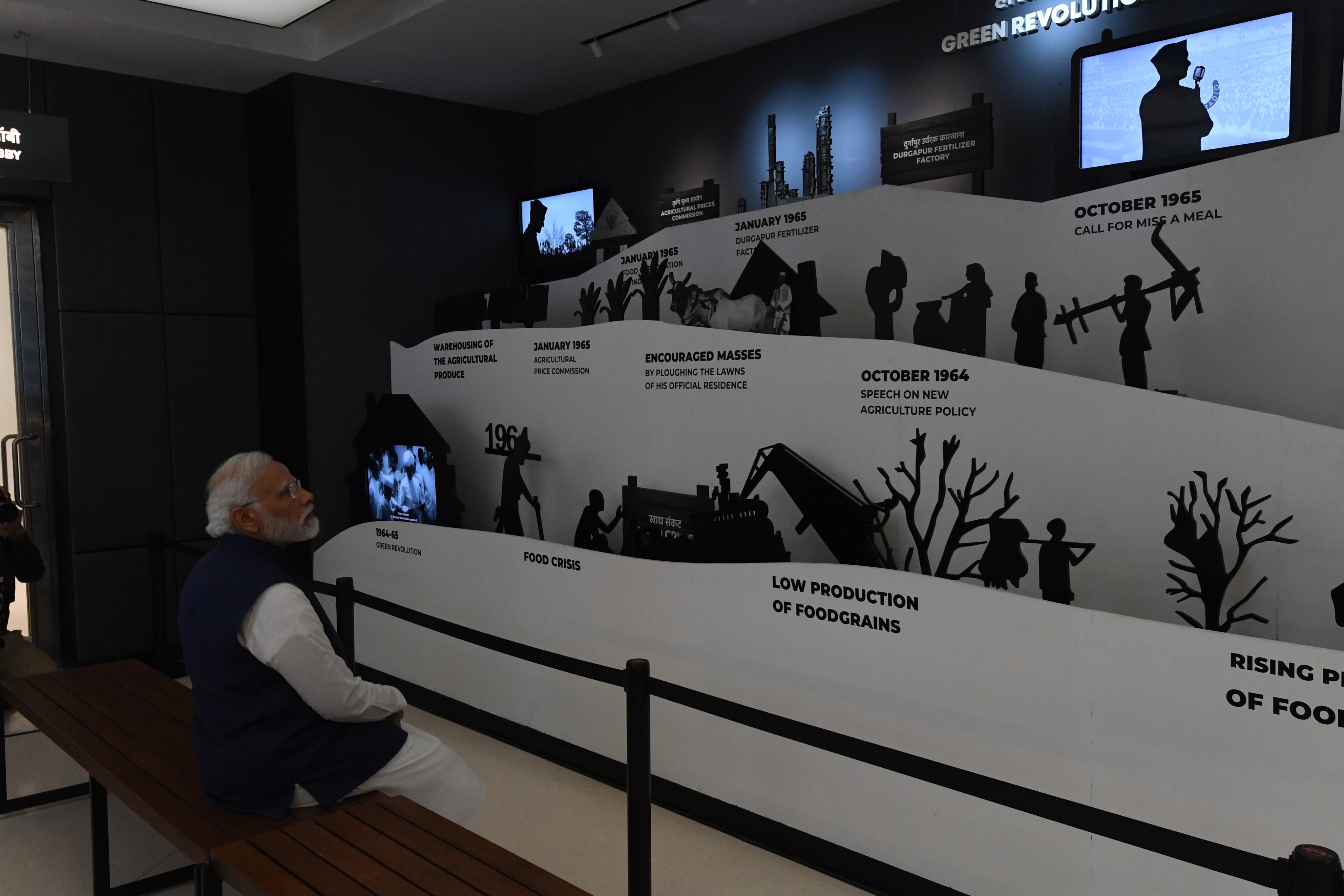
Prime Minister Narendra Damodardas Modi Visiting Lal Bahadur Shashtri Gallery https://twitter.com/narendramodi/status/1514575371249012738/photo/1

From galleries telling the stories of the lives, achievements and challenges faced by Prime Ministers to virtual walks or selfies with a PM, the new Museum on Prime Ministers that will open to the public on April 21 would give visitors a glimpse into the world of Prime Ministers.

The museum will become the source of inspiration for the youth who will be able to witness the hardships each PM faced and how they overcame them to lay the foundations of a new India, the PM said. He added that the museum will reflect the shared heritage of each government.

The project to build the new museum faced stiff opposition when the government announced its plan in 2018. The Congress alleged that the new museum was an attempt to dilute the legacy of India’s first PM Jawaharlal Nehru, a charge rejected by the Centre.

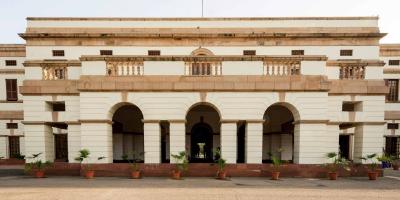
The Teen Murti Bhawan, the site of the new museum, was the official residence of Jawaharlal Nehru, the first Prime Minister. The Nehru Memorial Museum and Library (NMML) was set up in his memory on its premises as an autonomous institution under the Union Culture Ministry.

A political controversy erupted after the Centre announced its plan to set up a museum for former Prime Ministers at the complex. At the 43rd annual general meeting of NMML in 2018, the NMML Society considered a proposal for the PMs museum on the campus. The proposal was cleared by the then Home Minister Rajnath Singh.

The Congress leaders opposed the government’s decision and called it an attempt to dilute the legacy of Jawaharlal Nehru. The Centre, however, maintained that the move was not to undermine the legacy of the first PM.

Former PM Dr Manmohan Singh even wrote to Prime Minister Narendra Modi as he urged him to leave the Teen Murti complex “undisturbed”.

Raising concerns over the government’s decision to change the “nature and character” of the Nehru memorial, the former PM and senior Congress leader said, “I recall that during the six-year tenure of Atal Bihari Vajpayee Ji as prime minister, there was absolutely no attempt to change the nature and character of the NMML and the Teen Murti complex in any way. But sadly that it seems to be part of the agenda of Government of India now,” Mr Singh noted.

He added, “Let us respect this sentiment and keep Teen Murti as a memorial to our first prime minister Pandit Nehru. This way we will be respecting both history and heritage.”

“Jawaharlal Nehru belongs not just to the Congress but to the entire nation. It is in this spirit that I have written to you,” Mr Singh wrote in the letter.

Opinion

As Mr Singh said that Mr Nehru belonged to the nation. Logically, his house would also be of the nation. His even was officially government property. Then, why did he and his colleagues need to protest?

Even if they considered the house sacred, why can’t they peacefully let government build a museum that honours all former and present Prime Ministers? What’s the problem? He was the first Prime Minister of India. But, we can’t just sit chant ” Jai Nehru”.

We have to move ahead for a nation in which all the people live like these great wanted. Why do you want to create trouble in all government policies? Yes, you are the opposition but, morally you should be responsible.


Ambedkar- The economist

0

“History shows that where ethics and economics come in conflict, victory is always with economics. Vested interests have never been known to have willingly divested themselves unless there was sufficient force to compel them.”-Dr. B.R. Ambedkar

Dr. Ambedkar is a personality that has an impressive footprint in the history of modern India. What we all know about him is that he was the one who worked extensively hard to give India a better Constitution which must deal with all the contemporary problems of the country. We know him as a learned jurist, a freedom fighter, a man who stands and fight for the people of India and especially for the Untouchables and downtrodden. This is what we have been told since childhood. Unfortunately, what we were not been told was that he was the Economist both by heart and by profession until he entered the social and political life. What is the reason behind such a grave mistake, that is altogether a different matter? The people of India had been very unfortunate in this regard. There is no hesitation in saying that WE THE PEOPLE OF INDIA have not done ‘Justice’ to the personality who fought throughout his life for the Justice, by not celebrating him as an Indian Economist.

B.R. Ambedkar does not require any introduction, his name is enough to understand the greatness of this great man. But we think there are some little-known facts, which should be discussed here.

Ambedkar’s original name was Ambavadekar, it was his teacher, Mahadev Ambedkar who changed his name in school records from Ambavadekar to Ambedkar.

Not only Ambedkar is the first Indian to pursue an Economics doctorate degree abroad, but he is also the first Ph.D. in Economics and the first double doctorate holder in Economics in South Asia. He was also among the highest-educated Indians of his generation.

He played an important role in the establishment of the Reserve Bank of India in 1935.

The Mahad Satyagraha(1927) was his first important crusade.

The change in the working hours in India from 14 hours to 8 hours was done by Dr. Ambedkar.

His autobiography is used as a textbook at Columbia University.

Dr. Ambedkar opposed Article 370 of the Indian constitution.

He was the main force and fought for 3 years to get the comprehensive Hindu Code Bill passed by which women got several important rights.

Dr. Ambedkar was the first to suggest the division of Bihar and Madhya Pradesh.

His efforts were pioneering in the development of India’s national policy for water and electricity.

Ambedkar as an economist-

He worked extensively on contemporary economic problems during his days as a student. He earned a Master’s degree and Ph.D. in economics from Columbia University, the USA in 1915 and 1917 respectively. His pragmatic approach toward the Indian Economy could be understood from the first time in his 42- page research paper namely ‘Administration and finance of the East India Company as the dissertation for his M.A.(Economics) degree in 1915. This was the first account where Dr. Ambedkar had shown the world his mettle. His thoughts in this book reflected the historical account of the administration and finances of the East India Company and brought out economic and legal implications that ran counter to the interest of Indians. 

For his first writing, he marshaled the data from 1792-93 to 1857-58 which shows that the economic policies of Britain had been ruinous for the masses. He brought to the focus of the world the dual face and policies of Britishers when he critically analyzed the difference between what the 1858 Act talks about and what the Britishers did. He opined in this research paper how the entire debt accumulated by the East India Company during the conquest of India was simply transferred to the people conquered, who were already reeling under destruction and poverty when the Company raj ended. He was equally concerned about the issue of wealth drainage from the country to Britain like Dadabhai Naoroji who was the flag bearer of the criticism of the unfair policies of British rule. Ambedkar did opine on many issues but he was the man who believes in action. He always gave suggestions on the issues he raised.

In his opinion finance of a country is to be judged from the viewpoint of development expenditure and within its public works. But the record of the Britishers on this front was terrible. He also criticized the expenditures of the Britishers on foreign wars in the service of the Empire. 

Another service to India was his Ph.D. thesis namely, ‘The Evolution of The Public Finance in British India’ in 1917 which was later published in book form in 1925. It was considered to be a basic contribution to the theory of public finance. He analyzed the relationship between the Centre and the Provinces from 1823 to 1921. He identified the main reason as the diarchy where the law-making and revenue collecting powers were concentrated at the Centre but it was the provinces that were primarily responsible for most of the public expenditure. This was a great contribution to public finance and more specifically to the theory of federal finance. He laid down the basic principles which later helped the country to establish the Finance Commission of India after independence.

In this book, he also brought forth the flaws in the revenue policies of British rule. The burden of taxation fell mainly on the poor instead of the rich and the public expenditure was geared towards maintaining the privileges and conspicuous consumption of the elite instead of public welfare. He also pointed out that due to the extraction policies of the British and flawed taxation policies, the base of taxpayers was shrinking and it was a major reason for the shortfall in revenue collection.

He was a firm believer in India having a better currency system according to the economic situation of the Country. Dr. Ambedkar’s third highly celebrated book is ‘The Problem of Rupee: its origin and its solution’. The second edition of the book was published in 1947. In this book, he delved into the evolution of the currency system in India. Ambedkar was interested in the stability of the value of the currency. He argued that nothing stabilizes the currency without stabilizing its purchase power. While giving the idea of an Indian currency system he sharply differs from the idea of John Maynard Keynes in this regard.

Ambedkar argued in favor of Gold-standard whereas Keynes was of the view that the Gold-exchange standard would be best for Indian conditions. Ambedkar supported his views with the argument that in this system the supply of currency cannot be so easily made and as such it better ensures the stability of prices so that poorer sections would get relief. In short, Ambedkar’s conclusion is clearly toward price stability through conservative and automatic monetary management.

The poor and underprivileged were at the center of Ambedkar’s idea whereas the idea of Keynes was more related to the rich ones. For devaluation, he favored a moderate devaluation which would be beneficial to the cause of the Indian Industry. His views in this book show that he was the authority on economic policy and currency problems.

Contributions to India in the area of economics-

The problem of Rupee: Gold Standard versus Gold Exchange Standard

Contributions to Public Finance-

       (a) Evolution of Provincial Finance in British India 

       (b) Abolition of Khoti System

       (c) Ambedkar‟s Canons of Public Expenditure

3.   Contribution in Agriculture Economics: Problem of Small Holdings in India

4.   Caste system is the major hurdle in the economic development of India

5.   Other Contributions to the Economic Development of India

       (a) New water and power policy

       (b) Contributions to labor laws

       (c) State Socialism

Conclusion-

Dr. B.R.Ambedkar with double doctorate degrees was the highest intellectual person of his time. He was a highly trained economist but the problem was that his contributions to economics were not recognized in mainstream economics. The main reason behind this was that Babasaheb stopped practicing economics after India got independence and devoted most of his time to politics and law. Therefore, he got more popularity as a political leader rather than as an economist. But whatever he has contributed to the field of economics is remarkable and should be appreciated.

This article has discussed the important contributions made by Ambedkar in the field of economics. He discussed in detail the evolution of provincial finance under British rule. While discussing how to spend the public funds he said that the spending should be based on the rules and regulations because the public has immense faith in government thus it should wisely use these funds in order to achieve the optimal results.

Dr. Ambedkar was in favor of the consolidation of small landholdings in India by the state and without any discrimination, it should distribute this consolidated land into a standard size to the original cultivators. He suggested that the land is only one factor of production, it is the mixture of all the factors which is responsible for the low production of the land. Dr. Ambedkar wanted that heavy industries should be owned by the public sector and the private sector should only fill the gaps. He was a strong supporter of State Socialism.

He said the caste system is a hindrance and this hindrance in the mobility of labor due to the caste system directly impacts the economic development of India. And there were many other contributions of Babasaheb whether it was the development of multipurpose water and power projects, restructuring the labor laws or women empowerment, all are imperative in the economic development of India.

Story of South Asian countries: ‘Bangladesh’ a ‘miracle story’ while Sri Lanka and Pakistan ‘disaster tales’

0

The South Asian island nation of Sri Lanka is currently going through an extreme economic crisis. Foreign exchange reserves have fallen so low that school examinations have been closed indefinitely due to a lack of imported paper. In addition to cooking gas, there has been a shortage of kerosene or petrol. Blackout has started due to a lack of electricity.

The situation is so dire that due to inflation, high unemployment, and shortages of almost all necessities, many Sri Lankans are fleeing their country in the hope of a better life abroad. Countless Sri Lankans are now being forced to do something other than their main occupation as not everyone can afford to leave the country. Or living an inhuman life. The suffering of the people of that country is coming up in the world media.

The country has never been in such a bad situation since independence in 1947. To cope with the situation, the Sri Lankan government has asked for a new loan of 1.5 billion US dollars from neighboring India. When Sri Lanka faced problems, Bangladesh provided 250 million in currency assistance for the first time. This was the first loan from Bangladesh for any country. They again asked for a loan from Bangladesh. Besides, they have been repaying loans of different countries through the exchange of goods.

Sri Lanka was quite capable of human resources and internal prosperity. Then why their situation? In this regard, economic analysts have brought forward various factors, from which different countries can learn lessons in their current and future plans.

Sri Lanka has undertaken several mega projects in their country for more than a century. These include seaports, airports, roads, and other projects that are currently considered unnecessary and redundant. Different governments of Sri Lanka have taken loans from different sources at home and abroad. As a result, their foreign exchange reserves gradually run out. According to the country’s economists, there has been little foreign direct investment in Sri Lanka in the last 15 years. Instead of foreign investment, various governments have focused on borrowing.

The country’s government has issued sovereign bonds since 2007 to raise money. This type of sovereign bond is sold when the expenditure is more than the income of a country. Such bonds are sold in the international capital market to raise money. That is what Sri Lanka has done. But he did not give much thought to how the money would be paid. At present, Sri Lanka has a debt of 12.5 billion for that bond alone. Besides, the government has also borrowed from domestic sources.

The once-self-sufficient country is also in dire straits due to tax cuts, reduced income from tourism remittances, and unplanned decisions in agriculture. Different countries including Bangladesh have to learn from this situation. The world economic situation has begun to change rapidly since the Russia-Ukraine war, at which time any country could fall into a new crisis. Although our foreign exchange reserves are in a good position so far, the situation in Sri Lanka can be kept in mind in future state plans. At the same time, we are hopeful that friendly Sri Lanka will soon be able to return to normalcy with the help of various countries and organizations around the world.

On the other hand, the economy of these 220 million countries (Pakistan) is in turmoil. Pakistan is in debt, amounting to 130 billion USD. At the same time, inflation seems to have picked up speed (12 percent). Over the past three years, Pakistan’s progress has stalled.

the recent political instability has created a crisis in Pakistan. The recent political unrest has shaken the business and industrial sectors. The country’s economy is already fragile due to the depreciation of the rupee, declining reserves, rising commodity prices, and revenue shortfalls.

Not only has the currency depreciated, but the wheel of Pakistan’s economy has slowed down over the past three years. The recent political unrest has shaken the business and industrial sectors. The instability in Pakistan’s politics is showing no signs of abating anytime soon. A few days before the fall of the government, it affected the economy. The Pakistani rupee is depreciating. The rupee depreciated against the dollar on Thursday, hitting a new record. 188 Pakistani rupees are available for one dollar. Never in the history of Pakistan has the rupee depreciated so much.

The biggest challenge for Imran Khan’s government was the economic crisis and he claimed that he would change the country’s economy. He won’t go to the IMF, reduce debt, and bring down inflation.

During his tenure, there has been an increase in the amount of debt, ranging from inflation, to a record fall in the value of the Pakistani currency, with the finance minister changing it three times. According to Prime Minister Imran Khan, despite the improvement in the economic situation, the Corona epidemic broke out and global inflation soared.

On the other hand, the small size of Bangladesh is currently a wonder of development. The implementation of big projects is now just a matter of time. City facilities have also been ensured in the villages. Visible flyovers on most of the roads in the capital. Metrorail will be launched in a few days. The long Padma bridge is not a dream now, it is real. Economists speculate that the GDP growth rate could rise to one percent for the bridge. This bridge has given new hope to the people of the south. The implementation of such a project with the government’s own funding was at one time unimaginable. The country is moving forward with a sound plan.

The present government in Bangladesh has shown great prudence and foresight in the progress of Bangladesh. For this reason, there is nothing to be afraid of seeing the situation of any country as a nightmare. For example, the mega project Padma Bridge and Metrorail utility and how much is already known to everyone. 100 economic zones are being formed. Investment is coming from different countries. Foreign exchange reserves are adequate (45 billion USD, January 2022), and remittances are satisfactory. It can be said that every economic foundation of Bangladesh is still in a strong position.

During the Sri Lankan corona, the tourism industry was almost destroyed by giving more importance to the health sector Unnecessary development projects have been done with loans, the return of which has not come the organic agriculture sector has come to a standstill and the tax on public welfare has been greatly reduced but the economy of Bangladesh was also active in Covid emphasis has been laid on revenue collection and the agricultural sector of Bangladesh is very strong

 According to him, Bangladesh is in a positive position in terms of foreign exchange reserves, remittances, and export earnings.

Bangladesh’s foreign exchange reserves now stand at more than 45 billion, despite rising import costs. With which we will be able to meet the import cost of six months. Sri Lanka, on the other hand, is less than two billion dollars. It is not possible to meet the cost of one week’s import. So, Bangladesh cannot be compared with Sri Lanka.

On the other hand, Bangladesh’s growth rate was way above Pakistan, even before the pandemic; in 2018-19 it was 7.8% compared to Pakistan’s 5.8%. Various international organizations, including the World Bank, the World Economic Forum, and the Economic Intelligence Unit, have identified Bangladesh’s economic development as a “wonderful puzzle.”. while the current economy of Bangladesh is 410 billion, the size of Pakistan’s economy is about 260 billion.

Bangladesh has improved its quality of life, economic strength, prosperity, education, and research in every field. Due to the global coronavirus pandemic, Bangladesh’s growth has slowed down. But where the growth of all the developed countries of the world was negative in these years, the achievement of Bangladesh was also noticeable.

Successful statesman Sheikh Hasina has achieved full potential to move from a least developed country to a developing country. It has been possible because of People’s hard-working, strong leadership. Political stability, the flow of FDI, empowerment of women, unique poverty alleviation model, inclusivity of economy, etc. That is the story of South Asian countries: ‘Bangladesh’ is a ‘miracle story’ while Sri Lanka and Pakistan are disaster tales.

पत्रकारिता; कल, आज और कल

0

पत्रकारिता शब्द अंग्रेजी के ‘जर्नलिज्म’ का हिन्दी रूपांतरण है। ‘जर्नलिज्म’ शब्द ‘जर्नल’ से निर्मित है और इसका अर्थ है ‘दैनिकी’, ‘दैनंदिनी’, ‘रोजनामा’ अर्थात जिसमें दैनिक कार्यों का विवरण हो। आज जर्नल शब्द ‘मैगजीन’, ‘समाचार पत्र‘, ‘दैनिक अखबार’ का द्योतक हो गया है। ‘जर्नलिज्म’ यानी पत्रकारिता का अर्थ समाचार पत्र, पत्रिका से जुड़ा व्यवसाय, समाचार संकलन, लेखन, संपादन, प्रस्तुतीकरण, वितरण आदि होगा। हमेशा परिवर्तित होनेवाले जीवन और जगत का दर्शन पत्रकारिता द्वारा ही सम्भव है। परिस्थितियों के अध्ययन, चिन्तन-मनन और आत्माभिव्यक्ति की प्रवृत्ति और दूसरों का कल्याण अर्थात् लोकमंगल की भावना ने ही पत्रकारिता को जन्म दिया। पत्रकारिता लोकतन्त्र का अविभाज्य अंग है।

पत्रकारिता की परिभाषा

पत्रकारिता को अलग-अलग शब्दों में परिभाषित किया गया है। पत्रकारिता के स्वरूप को समझने के लिए कुछ महत्वपूर्ण परिभाषायें इस प्रकार हैं:-

न्यू वेबस्टर्स डिक्शनरी : प्रकाशन, सम्पादन, लेखन एवं प्रसारणयुक्त समाचार माध्यम का व्यवसाय ही पत्रकारिता है।

डॉ. अर्जुन : ज्ञान आरै विचारों को समीक्षात्मक टिप्पणियों के साथ शब्द, ध्वनि तथा चित्रों के माध्यम से जन-जन तक पहुँचाना ही पत्रकारिता है। यह वह विद्या है जिसमें सभी प्रकार के पत्रकारों के कार्यों, कर्तव्यों और लक्ष्यों का विवेचन होता है। पत्रकारिता समय के साथ-साथ समाज की दिग्दर्शिका और नियामिका है।

डॉ. बद्रीनाथ : पत्रकारिता पत्र-पत्रिकाओं के लिए समाचार लेख आदि एकत्रित करने, सम्पादित करने, प्रकाशन आदेश देने का कार्य है।

सी. जी. मूलर : सामायिक ज्ञान का व्यवसाय ही पत्रकारिता है। इसमें तथ्यों की प्राप्ति उनका मूल्यांकन एवं ठीक-ठीक प्रस्तुतीकरण होता है।

जेम्स डब्ल्यू कैरी : संस्थाओं या लोकतंत्र की भावना के बिना, पत्रकार; प्रचारक या मनोरंजन करने वाले बन जाते हैं। लोकतंत्र के लिए जुनून एक आवश्यक बंधन है जो पत्रकारों का जनता के साथ होना चाहिए, क्योंकि वे परस्पर संवैधानिक संस्थाएं हैं।

भारत में पत्रकारिता

भारतवर्ष में आधुनिक ढंग की पत्रकारिता का जन्म अठारहवीं शताब्दी के चतुर्थ चरण में कलकत्ता, बंबई और मद्रास में हुआ। 1780 ई. में प्रकाशित हिके (Hickey) का “कलकत्ता गज़ट” कदाचित् इस ओर पहला प्रयत्न था। हिंदी के पहले पत्र उदंत मार्तण्ड (1826) के प्रकाशित होने तक इन नगरों की ऐंग्लोइंडियन अंग्रेजी पत्रकारिता काफी विकसित हो गई थी।

1873 ई. में. भारतेन्दु ने “हरिश्चंद मैगजीन” की स्थापना की। एक वर्ष बाद यह पत्र “हरिश्चंद चंद्रिका” नाम से प्रसिद्ध हुआ। वैसे भारतेन्दु का “कविवचन सुधा” पत्र 1867 में ही सामने आ गया था और उसने पत्रकारिता के विकास में महत्वपूर्ण भाग लिया था।

पत्रकारिता का स्वरुप (कल, आज और कल)

पत्रकारिता कई बदलावों से गुज़री है, जबकि पत्रकारिता की अभिव्यक्ति का मूल हमेशा मौजूद रहा है। अपने परिश्रम के साथ एक माध्यम से दूसरे माध्यम में विकसित होते हुए वर्तमान की पहचान बनाई है, छपाई से लेकर आगे तक का सफर इसी कड़ी का हिस्सा है। पत्रकारिता हमारे समुदायों का बुनियादी ढांचा है, था और हमेशा रहेगा। जैसे-जैसे सोशल मीडिया का प्रचलन बढ़ रहा है, पत्रकारिता एक और नया रूप लेती जा रही है।

कल की पत्रकारिता : इतिहास पर नजर ड़ालें तो स्वतंत्रता के पूर्व की पत्रकारिता का मुख्य उद्देश्य स्वतंत्रता प्राप्ति ही था। स्वतंत्रता के लिए चले आंदोलन और स्वतंत्रता संग्राम में पत्रकारिता ने अहम और सार्थक भूमिका निभाई है। उस दौर में पत्रकारिता ने परे देश को एकता के सूत्र में बांधने के साथ-साथ पूरे समाज को स्वाधीनता की प्राप्ति के लक्ष्य से जोड़े रखा। आजादी के बाद निश्चित रूप से इसमें बदलाव आना ही था।

आज की पत्रकारिता : आज इंटरनेट और सूचना अधिकार ने पत्रकारिता को बहु-आयामी और अनंत बना दिया है। आज कोई भी जानकारी पलक झपकते ही प्राप्त की जा सकती है। पत्रकारिता वर्तमान समय मे पहले से अधिक सशक्त, स्वतंत्र और प्रभावकारी बन गई है। अभिव्यक्ति की आजादी और पत्रकारिता की पहुंच का उपयोग सामाजिक सरोकारों और समाज के भले के लिए हो रहा है लेकिन कभी-कभार इसका दुरुपयोग भी होने लगा है।

अब स्नैपचैट, फेसबुक, इंस्टाग्राम और ट्विटर का जमाना है ये सभी ऐसे प्लेटफॉर्म हैं जो अब पत्रकारिता की दुनिया को काफी प्रभावित कर रहे हैं तथा उसे नये तरीके से चला रहे हैं। हालांकि सोशल मीडिया जनता के लिए आसानी से उपलब्ध तो है, पर इसका मतलब यह बिल्कुल नहीं कि यह सच्ची पत्रकारिता करता है। ऐसा लगता है कि अब पत्रकारिता उन लोगों के लिए एक साधन बन गई है जो विनाशकारी सोच के साथ काम करते हैं तथा अपनें काम में गपशप, घोटालें, तथा मनोरंजन जैसी चीजों का समावेश करते हैं और जो गंदगी में लिपटे रहना चहाते हैं। पत्रकारिता मुक्त होनी चाहिए।

परन्तु अभी भी कई ऐसे प्रकाशन और पत्रकार हैं जो लोगों के लिए सच्ची और प्रामाणिक खबरे तैयार करते हैं। उन्हें दर्शकों के रूप-रंग, उनके रहन-सहन, जाति आदि से कोई फर्क नहीं पड़ता।

भविष्य की पत्रकारिता : पत्रकारिता को लोकतंत्र का चौथा स्तंभ भी कहा जाता है। इसने लोकतंत्र में यह महत्वपूर्ण स्थान अपने आप हासिल नहीं किया है बल्कि सामाजिक जिम्मेदारियों के प्रति पत्रकारिता के दायित्वों के महत्व को देखते हुए समाज ने ही यह दर्जा इसे दिया है। लोकतंत्र तभी मजबूत होगा जब पत्रकारिता सामाजिक जिम्मेदारियों के प्रति अपनी सार्थक भूमिका का पालन करे। पत्रकारिता का उद्देश्य ही यह होना चाहिए कि वह प्रशासन और समाज के बीच एक महत्वपूर्ण कड़ी की भूमिका निर्वाह करे।

पत्रकारिता मर नहीं रही है वह अपना स्वरूप बदल रही है अब वह दूसरे आयाम में जा रही है। कल की पत्रकारिता बीत चुकी है, आज की पत्रकारिता चल रही है और विकसित हो रही है और कल की पत्रकारिता अभी बाकी है।

बाबा साहेब एक विचार

ईश्वर को जब लगा कि मैं अकेला हूं और बहुत रूपों में प्रकट हो जाऊं अर्थात उन्होंने ” एकोहम बहुस्यां” का जब संकल्प लिया तभी से इस संसार का निर्माण हुआ। इस सिद्धांत को मानते हुए हम यह मानते हैं कि इस संसार में सभी जड़ चेतन आदि में वही ईश्वर तत्व है। सभी में समान रूप से ईश्वर तत्व है। किंतु किसी किसी में ईश्वर तत्व का प्रकटीकरण कम होता है तो किसी किसी में अधिक होता है। मनुष्यों में भी ऐसा ही है। जब किसी मानव में सामान्य से अधिक ईश्वर तत्व का प्रकटीकरण होता है तब हम कहते हैं कि वह कोई अवतार है। किसी कार्य विशेष के लिए जब कोई अवतार होता है तो हम इसे नैमित्तिक अवतार कहते हैं। मुगलों से संघर्ष के काल में जो नैमित्तिक अवतार हुए हैं वह सभी भक्ति आंदोलन के सूत्रधार थे और वह समय की मांग भी थी।

अंग्रेजों से संघर्ष के काल में जो अवतार हुए वे दो प्रकार के थे।

  1. राजनैतिक स्वाधीनता की लड़ाई लड़ने वाले
  2. सामाजिक जागरण द्वारा एवं शिक्षा के माध्यम से खोई हुई स्वतंत्रता को पुनः स्थापित करने वाले।
    इनमें से बाबा साहेब का कार्यक्षेत्र दोनों तरह का दिखाई देता है।
  • भारतीय इतिहास के एक ऐसे ज्योतिपुंज जिन्होंने अंधियारी सदियों को प्रकाशित किया- वे थे बाबासाहेब
  • भारत में जिन्होंने संतप्त और पीड़ित मानवता के कल्याण के लिए स्वयं के शरीर को चंदन की तरह घिसा है- वह थे बाबासाहेब
  • व्यक्ति स्वतंत्र्य और शिक्षा के द्वारा समता और न्याय प्राप्त करने के लिए संघर्ष करते हुए स्वर्ण की तरह जिन्होंने स्वयं को तपाया है- वे थे बाबासाहेब
  • वंचितों के लिए अधिकार न्याय, समता, स्वतंत्रता और शिक्षा के महान यज्ञ में समिधा बनकर स्वयं को जिन्होंने जलाया है -वे थे बाबासाहेब
    हिंदू विचार जो “बहुजन हिताय” से कहीं आगे “सर्वजन हिताय” की बात करता है किंतु काल के प्रवाह में विकृति ने संस्कृति को प्रतिस्थापित कर दिया इसका परिणाम यह हुआ कि समाज व्यवस्था में विषमता का विष घुलता गया। अन्याय, अवमानना, उपेक्षा की सोच ने अपने ही समाज बंधुओं को दलित बना दिया। इस दौरान दलित समाज की चेतना कुंठित तो हुई किंतु समाप्त ना हुई। समाज ने फिनिक्स पक्षी की तरह अपनी ही राख से पुनः उत्पन्न होकर जीवन जीने का प्रयास निरंतर जारी रखा।
    स्वातंत्र्य पूर्व के 30- 40 वर्ष तक भारत में चार व्यक्तित्व भारत की जनता को प्रमुखता से प्रभावित करते रहे। यह चारों ही पाश्चात्य शिक्षा से शिक्षित व्यक्तित्व थे।
  1. मोहम्मद अली जिन्ना- यह अलगाववादी सांप्रदायिक मुस्लिम मानसिकता का ईंधन के रूप में उपयोग करते हुए अवसरवादी राजनीति के द्वारा अपनी राजनीतिक महत्वाकांक्षा को साधने में सफल रहे।
    किंतु शेष तीन महानुभाव महान विभूतियां जिन्ना से भिन्न थी। वे थी महात्मा गांधी, स्वतंत्र वीर सावरकर एवं डॉ बाबासाहेब भीमराव अंबेडकर। इनके लिए देश की स्वाधीनता एक स्वप्न था जिसे वे पूरा करने में लगे थे। तीनों को लगता था कि भारत को आजादी मिलने के साथ ही भारतीय समाज व्यवस्था का आधुनिकीकरण होना चाहिए। किंतु यह कैसे हो इस पर उनके विचार भिन्न-भिन्न थे।
  2. महात्मा गांधी परंपराओं के ताने-बाने को बिगाड़े बिना सत्याग्रह के द्वारा व्यक्ति के आत्म तेज को जगा कर देश में चैतन्य जागरण करना चाहते थे और उन्होंने यह किया भी। उनका मानना था कि जो सबल है वे मानवता के नाते दुर्बल की सहायता करें। सावरकर और बाबा साहेब के विचार इनसे भिन्न थे।
  3. सावरकर जी के चिंतन का केंद्र बिंदु राष्ट्र था। एक राष्ट्र के सभी नागरिक सम्मान हैं, संस्कृति समान है, पूर्वज समान है, सुख दुख भी समान है। इस नाते दुर्बल का उत्थान सबल का परम कर्तव्य है।
  4. बाबा साहेब का मानना था कि व्यक्ति मानवतावादी होकर सोचने की अपेक्षा बुद्धिनिष्ठ होकर विचार करें। उनका निश्चय विचार था कि संसार में जन्मे व्यक्ति को स्वयं के गुणों के आधार पर उन्नति करने का अधिकार है। यदि कोई समाज व्यवस्था उसे इस अधिकार से वंचित करती है तो वह समाज व्यवस्था तोड़ दी जानी चाहिए।
    बाबासाहेब ने व्यक्ति स्वातंत्र्य और व्यक्ति विकास को अपना जीवन कार्य का केंद्रबिंदु माना। उनकी आंखों के सामने वंचित समाज था। जिसमें उन्होंने जन्म लिया और जिसमें भेदभाव को दमन को साक्षात स्वयं अनुभव किया।
    हालांकि दलित मुक्ति संघर्ष से बाबासाहेब का नाम जुड़ गया। देश के करोड़ों लोगों ने उनको देवत्व प्रदान किया। यह भी एक विडंबना ही है कि उनके जैसे महान व्यक्तित्व को सीमित क्षेत्र में बांध दिया गया। उनका दलित मुक्ति का संघर्ष उनके व्यापक संघर्ष का केवल एक भाग था। जैसे स्वाधीनता संघर्ष के सत्याग्रह के पीछे महात्मा गांधी की भूमिका वैश्विक तत्वज्ञान की थी और इसी कारण उनके व्यक्तित्व के बारे में एक कुतूहल है। उसी तरह डॉक्टर अंबेडकर के संघर्ष की भूमिका भी वैश्विक भूमिका थी। दलित संघर्ष तो उसका एक अंश मात्र था।
    यूरोपीय चिंतन में व्यक्ति स्वतंत्रता और बाबा साहेब के व्यक्ति स्वतंत्रता में मूलगामी अंतर है। यूरोपीय विचारक धर्म संकल्पना को व्यक्ति स्वतंत्रता में बाधक मानते हैं।किंतु डॉक्टर अंबेडकर ऐसा नहीं मानते हैं। यूरोपीय चिंतन की व्यक्ति स्वतंत्रता व्यक्ति को समाज से विमुख बना देती है। जबकि बाबासाहेब स्वतंत्रता और नैतिकता के बीच समन्वय चाहते हैं। जो कि बिना धर्म के संभव नहीं है। इसीलिए उन्होंने दलित आंदोलन को राजनैतिक आंदोलन न बनाकर धार्मिक आंदोलन बनाया। उन्होंने इसे बौद्ध धर्म से जोड़ा।
    उनके अनुसार लोकतंत्र के चार स्तंभ है स्वतंत्रता, समता, बंधुता और न्याय। इन सब में सबसे महत्वपूर्ण देश में रहने वाले लोगों के बीच बंधुता का भाव है। जिस पर वे सबसे अधिक जोर देते दिखाई देते हैं। आज के समय में यह सब से प्रासंगिक विषय है कि समाज में रहने वाले सभी व्यक्तियों के प्रति सभी वर्गों के प्रति बंधुता का भाव विकसित किया जाए।
    ऐसे बहुत सारे लोग होते हैं, जिन्हें अपने अधिकारों पर कुठाराघात तो नजर आता है, लेकिन रोजमर्रा की जद्दोजहद व बुनियादी आवश्यकताओं की उलझन में अधिकारों के लिए आवाज उठाने साहस नहीं जुटा पाते।
    ऐसे असहाय वर्ग के लिए बाबासाहब एक अवतार बन कर आए थे। उस समय हिंदू समाज में अनेक कुरीतियां, छुआछूत और ऊंच-नीच की प्रथायें प्रचलन में थीं। जिसके लिए उन्होंने अथक संघर्ष किया। वे स्वयं दलित वर्ग से सम्बन्धित थे। छुआछूत के दंश को, समाज में व्याप्त सामाजिक असमानता, जाति-व्यवस्था, शूद्रों के साथ होने वाले अमानवीय व्यवहार को उन्होंने अपने बाल्यकाल से देखा-जाना और भोगा था। उस भोगे हुए जीवन-यथार्थ से उन्हें सब प्रकार की सामाजिक असमानता के लिए आवाज उठाने की प्रेरणा मिली। उनका मानना था कि “छुआछूत गुलामी से भी बदतर है।”
    सन 1927 तक डॉ. अंबेडकर ने छुआछूत के विरूद्ध एक सक्रिय आंदोलन प्रारंभ किया। सार्वजनिक आंदोलन, सत्याग्रह और जुलूसों के माध्यम से पेयजल के सार्वजनिक संसाधन समाज के सभी वर्गों के लिए खुलवाने का प्रयास किया।
    उन्होंने भारतीय समाज व्यवस्था, जाति व्यवस्था, धर्म का, अर्थ-तंत्र, वंचित वर्ग के अधिकार, मजदूरों और कामगारों का हित, महिला-अधिकार, व्यवस्थापिका, कार्यपालिका एवं सरकारी सेवा में दलित वर्ग के स्वाभाविक प्रतिनिधितत्व के साथ ही शिक्षा, ज्ञान-विज्ञान आदि मुद्दों पर सर्वाधिक तार्किक ढ़ंग से अपने निष्कर्षों को सबके सामने रखा। वे एक बहुपठित और बहुज्ञ व्यक्तित्व के स्वामी थे. उनका वैचारिक-पक्ष न्यायोचित एवं मानवीय था। उनका सम्पूर्ण जीवन और वैचारिक-भूमिका भारतीय समाज और चेतना में समरसता को स्थापित करने हेतु न्यायोचित परिवर्तन के लिए समर्पित रही। उन्होंने अपने श्रमसाध्य ज्ञानात्मक प्रयासों से यह पाया कि भारतीय समाज व्यवस्था में निहित संरचनाएं, जैसे, जाति-व्यवस्था, वर्ण-व्यवस्था, अस्पृश्यता, ऊंच-नीच, शोषण, अन्याय आदि बाद के दिनों में आये विभिन्न गतिरोधों एवं विकृतियों की उपज हैं न कि प्राचीन भारतीय समाज-व्यवस्था का मूल स्वभाव।
    भारतीय समाज व्यवस्था, आर्थिक तंत्र, राजनैतिक प्रक्रियाओं एवं सभ्यता की उपलब्धियां तथा दुविधाओं के प्रति बाबा साहेब की समझ अतुलनीय रही है। अपनी इसी विशिष्ट प्रतिभाओं के चलते वे स्वतंत्र भारत के प्रथम विधि एवं न्याय मंत्री बने। वह भारतीय संविधान के जनक एवं भारतीय गणराज्य के निर्माताओं में से एक थे। उनके भारतीय संविधान के अभूतपूर्व योगदान के लिए उन्हें ‘भारतीय संविधान का पितामह’ कहा जाता है। सन् 1951 में उन्होंने ‘भारत के वित्तीय कमीशन’ की स्थापना की। डॉ. अम्बेडकर कहा करते थे, “हम शुरू से लेकर अंत तक भारतीय हैं और मैं चाहता हूँ कि भारत का प्रत्येक मनुष्य भारतीय बने, अंत तक भारतीय रहे और भारतीय के अलावा कुछ न बने।”

ऐसे युग निर्माता के 131वें जन्मदिवस पर हम सभी भारतीयों के लिए उनका संदेश “शिक्षित बनो, संगठित बनो, संघर्ष करो” प्रेरणा के स्रोत बने। भारतीय संविधान में बहुमूल्य योगदान इस देश को एक नई दिशा देने वाले बाबा साहेब समता, स्वतंत्रता और समरसता के सौन्दर्य के स्वाभाविक प्रतीक पुरुष को कोटिशः वंदन।

the Difficulties of practising hindu culture at JNU

0

The history of religious atrocities in JNU is one of the most overlooked facts of the campus. In previous years, especially since the 2010s a series of religious atrocities have taken place. 

· Leftist student organizations celebrated Mahishasura Divas during Navratri-s and insulting posters of Maa Durga were pasted on the walls in the name of artistic freedom.

· An effigy of Bhagwan Ram was hanged from a tree near K.C. market.

· Leftist student-hooligans attacked Durga Pooja Pandal in Kaveri Lawn.

· A Havan, organized by students of Jhelum Hostel was desecrated by a card holder Marxist Burton Cleetus in 2015.

· Abusive and derogatory slogans about Maa Durga were raised by the Leftist goons on the eve of Dussehra in 2014.

· Students of SES were brutally attacked and beaten up, because the common students organized Saraswati Pooja in the campus in 2018.

The Recent Incident of Atrocity on the integrity and celebration of Hindu-Muslim festivals

Some of the examples above clearly show the cost of being a practicing Hindu in the so-called Left Bastion of the Country. This also shows the hypocrite nature of the so called Leftist liberals and Intellectual Brigade, which in practice is nothing but a deadly nexus of brain-washed semi-literate folks filled with contempt for Hindus and their cultural practices and the violent leftist hooligans, stooping down on violent means to disturb and destroy the inclusive fabric of the campus. The question however is, what do they actually want and what makes them hate the cultural practices of this country so much that these students and scholars do not hesitate to become goons? Is this the way of achieving the utopia, about which they make tall claims? The recent event which took place yesterday is an exemplar of their so-called leftist utopia, where people ‘can be’ (though the real incidents imply ‘must be’) beaten up, ostracized, canceled and what not, if they don’t toe the Party-Line. This is exactly what happened yesterday:

The Anti-Hindu Pattern was repeated by the Naxalite goons to disturb the communal harmony of the JNU Campus. The residents of Kaveri hostel organized Ram Navami Pooja on 10th April 2022 at 03 PM. Simultaneously, Iftar was organized and Muslims along with their friends of other faith were enjoying a pleasant conversation. This inclusive and all-welcoming nature of the campus, and this instance of the Kaveri hostel pained the leftist no end. After all, how can the followers of ‘Religion is an Opium of the Masses’ gallop the fact that Indian Culture has been the most tolerant and inclusive society in the world, which built the first mosque of the world. This is the society which believes in Vasudhaiva Kutumbakam. 

It was their hate for Hindu Tradition and Indian Cultural practices that leftist students showed their true colors, and left no stone unturned in disturbing the peaceful organization of Pooja. First the Leftist leaders threatened the organizers, when the organizers did not budge, they were beaten up for practicing what is their very root. However, the organizers preferred the Pooja over the goons and started the Pooja around 05 PM. While the Pooja was taking place and common students started gathering for Aarati, the Leftist cabal was collecting stones and sticks to attack their fellow university students. The magnitude of their frustration could be seen by the fact that they added the MEAT-ANGLE to this whole thing, and threatened the Meat Vendor and made him run away. The Hostel Mess-Secretary, an AISA leader, became the catalyst when he canceled the Non-Veg food in the hostel and blamed the ABVP for the same, while factually there are 18 hostels, of which 17 hostels served Non-Veg without any issue, whatsoever. These Lord of Lies tried their best to peddle the discourse that the ABVP was against Meat in the hostel. The fact however doesn’t support their argument. 

Around 08 PM the Leftist Goons gheraoed the Kaveri Hostel and attacked the students with the slogans of Lal Salaam. While the ABVP students became the prey to these brain-washed vultures, the female students were made subject to their violence and anti-feminist sloganeerings. The most unfortunate was the situation of freshers, who have come to JNU with a hope of inclusive and just campus, saw the leftist leaders transforming into stone-pelters. Yes, the SFI President was pelting stones on his fellow students when the students refused to accept his demand to stop the Pooja and asked him to stop the misogynist remarks that he was making on fellow girls. 

ABVP assures the students community that it stands firm with the student community of this university. It believes in a peaceful campus and peaceful co-existence of different faiths and different cultures, and it would strive towards making this campus a Centre of academic excellence. ABVP will try its best to save the campus and the inclusive nature of this campus through discussion and dialogue. At the same time, ABVP will leave no stone unturned in opposing the Leftist hooligans from attacking and destroying the university, its premises and its stake-holders, as the university belongs to the student community and not to the Leftists leaders who are real threat to the inclusive nature of this campus. I spent my glorious three years in BHU where every community shares their views without any hesitation, but JNU still has a monotonous mindset which can’t accept hindu culture . JNU is India’s top versity it must accept the rich diversity of our nation.

Russia-Ukraine crisis, reasons & its consequences explained- Unbiased

0

It’s been more than a month since Russia started its “Special Military Operation” against Ukraine and there aren’t any signs of de-escalation until now. Every coin has 2 sides to it and either one of the sides is deliberately hidden by the media in order to support their side. Since Geopolitics and History are one of my favorite topics, I really thought that I need to make an UNBIASED blog post on the Russia-Ukraine crisis. Today I’ll be mentioning the perspectives of both sides and the challenges that arise from the Russia-Ukraine crisis.

RUSSIA-UKRAINE HISTORY

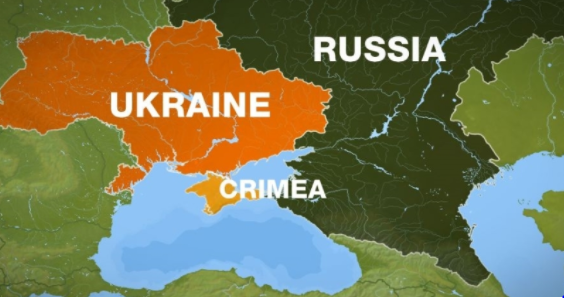
OBSERVE THE MAP FOR A BETTER UNDERSTANDING

Ukraine and Russia share hundreds of years of cultural, linguistic, and familial links. For many in Russia and in the ethnically Russian parts of Ukraine, the shared heritage of the countries is an emotional issue that has been exploited for electoral and military purposes. As part of the Soviet Union, Ukraine was the second-most powerful Soviet republic after Russia, and was crucial strategically, economically, and culturally. Ukraine including many other countries we’re part of the USSR but after the disintegration of the USSR in 1991, Ukraine became a sovereign country.

RUSSIA’S DILEMMA PRE 1991 AND POST 1991

OBSERVE THE MAP FOR A BETTER UNDERSTANDING

After WW2, Western countries like the US, Uk started a new grouping called North Atlantic Treaty Organization(NATO) in order to tackle USSR. In order to counter NATO, USSR also formed a grouping called “WARSAW PACT” which majorly consisted of West Asian and Central Asian Countries. This was the classic narrative of “Europe vs Asia” built by the USSR so that they can take the leadership of Asia and rally the Asian countries behind it when required.

However, the disintegration of the USSR in 1991 clearly changed everything for Russia, Russia lost some of its lands and with it the resources. Germany wanted to reunify its territory and many counties like Poland had their own National Interests to look after, due to this unrest Russia had to suffer one more decisive blow, as the “WARSAW PACT’ was formally dissolved but NATO didn’t dissolve and continued its grouping.

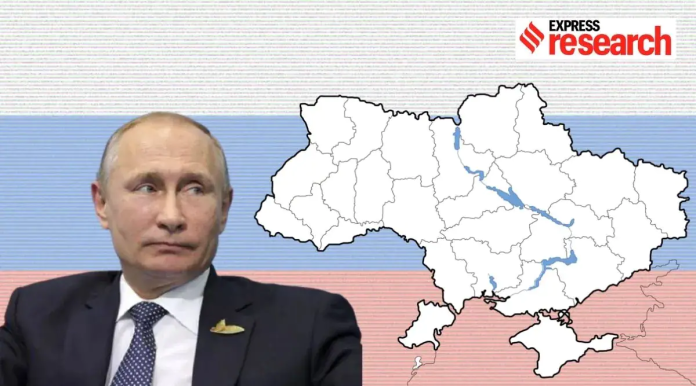
Now! The real game begins here. Since the warsaw pact was dissolved, former Warsaw pact countries slowly started joining the NATO and this is also the time when Mr. Vladimir Putin steps into Russian Politics

Mr. Vladimir Putin was a former KGB Agent and when he stepped into Russian Politics, Russia’s view regarding NATO changed quite a lot. Russia under Mr. Putin was always hostile regarding NATO and when former USSR and Warsaw Pact members started joining NATO, Russia started facing the heat and claimed that NATO is expanding eastwards (Russia points out that in1991 the US had promised that NATO will not expand even an inch towards the east, but there aren’t any official documents regarding those claims)

UKRAINE’S BID FOR NATO MEMBERSHIP, ANNEXATION OF CRIMEA BY RUSSIA

OBSERVE THE MAP FOR A BETTER UNDERSTANDING

The balance of power in the region, Ukraine being a crucial buffer between Russia
and the West, Ukraine’s bid for NATO membership triggered Russia to capture the Crimean Peninsula in 2014 which was a part of Ukraine. In order to have a monopoly over the black sea and also to keep an eye on Ukraine, Crimea was a strategic point. By 2014, Russia under Mr. Putin had become aggressive regarding NATO and also had warned NATO not to include Ukraine as its member.

IMPORTANCE OF UKRAINE

OBSERVE THE MAP FOR A BETTER UNDERSTANDING

As you can clearly see in this map, Ukraine acts as a buffer for both the West & Russia and Ukraine joining NATO will effectively bring NATO’s weapons to Russia’s border. As mentioned earlier, Russia thinks that it’s being cornered by NATO, and Ukraine joining NATO is the last thing that Russians want. Let’s think like this, if Russia had a military pact with Belarus, Ukraine, and Poland, then it would effectively bring Russia’s weapons to Germany’s border, no country would like this sort of situation when it comes to their National Security, the very same logic applies to Russian Mindset.

NATO assured security guarantee for Ukraine and Russia warned Ukraine of severe consequences if they join NATO. Neither Russia nor the West has made clear efforts to sort this COMPLEX issue through dialogue and diplomacy and Today Ukraine is paying the price for it. It’s quite easy to make propaganda and take sides on this issue. The national interests of both Russia and the West lie with Ukraine and Until a suitable solution is found, Russia will tamper with Ukraine just like the US tampered with Iraq, Syria, and Lybia

RUSSIA-UKRAINE WAR ACCORDING TO THE RUSSIAN PERSPECTIVE

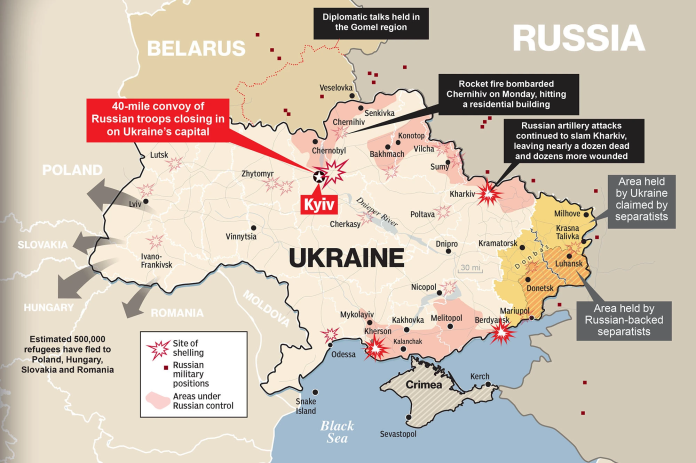
OBSERVE THE MAP FOR A BETTER UNDERSTANDING

Since Russia thinks that Ukraine joining NATO is against their National interest, their plan probably is to cut Ukraine’s connectivity from the Azov sea and Black sea. They’re trying to achieve it by controlling Odesa in Southwest UkraineSevastapol in Crimea, and Mariupol in SouthEast Ukraine. Since Ukraine was once a part of the USSR, it still consists of an ethnically Russian-speaking population in Eastern Ukraine who consider themselves a part of Russia. Eastern Ukraine which is also called as Donbas region primarily consists of the Luhansk and Donetsk regions who’re identified as ethnically Russian-speaking regions. This is probably how Russia is planning for a short span after Ukraine’s forces resisted severely, which Russians probably wouldn’t have expected.

RUSSIA-UKRAINE WAR ACCORDING TO EUROPEAN PERSPECTIVE

Russia has escalated the war in Ukraine and the whole of Europe has united against Russia by slapping heavy sanctions. Although many European countries are still dependent on Russia for Gas and Oil, Europe probably would like to decrease its dependency on Russia and thereby not funding Russia. Apart from Unilateral economic sanctions, Europe has refrained from participating in this war since the world economy hasn’t quite recovered from Covid impacts. But one thing is clear, the World order will change, and the whole of Europe will target Russia as they targetted USSR during the Cold war. With the highest no of sanctions from the west, Russia will probably align itself more towards Asian countries like China and India, 2 important countries which are predicted to be on the list of the global superpowers by 2050

IMPACT ON THE WORLD ECONOMY

Crude oil prices have started rising abnormally but just not that, Ukraine which has steppes grasslands AKA “food basket of the world” will face food shortage and humanitarian crisis. Russia which has resources like Neon is important for Chip manufacturing and with Russia facing sanctions, it’s evident that the current chip shortage around will increase even more. With Covid-19 taking on new forms and now with the ongoing Russia- Ukraine War, brace yourselves, people! It’ll be a roller coaster ride for the World economy.

If you like this post, kindly share this with your friends and give it a thumbs up!

Image/Video credits belong to the respective owners, images used here are only for the purpose of understanding

Visit my blog- Grow Through Life

https://growthroughlife7.wordpress.com

Germany and Japan: Pacifism to re-militarization

0

Growing Chinese assertiveness, the recent Russian invasion of Ukraine, nuclearisation of the Korean peninsula by north Korea, and emerging trends of militarisation & proliferation of weapons at the global level have forced nations like Germany and Japan to shed their weak shield of pacifism to manifest their interest and defend their sovereignty.

How did Germany and Japan turn Pacifist?

World war 2 turned these nations of the brutal military into pacifist spectators. Both nations suffered a large number of fatalities with more than 350,000 germans & approximately 31,00,000 Japanese being killed, two japan cities of Hiroshima and Nagasaki were devasted by the nuclear bombing of the US.Two plus four agreements signed after WW2 barred Germany from the acquisition of nuclear weapons and limited its armed forces personnel to 374,000 of whom not more than 345,000 are allowed in the navy and airforce. The current status of Bundeswehr{german military} is catastrophic due to meager spending of just 1.2% of GDP. Military readiness is below 50%.

On another hand, Japan just after ww2 adopted a pacifist constitution in which article 9 ‘The peace clause’ prohibits the nation from the use of threat or force as means of settling international disputes. Japan does not possess nuclear weapons rather it relies on US extended nuclear deterrent.

Events that forced the nations to shed their pacifist nature

Germany


1. Putin’s dream of ‘Greater Russia’: Recent invasion of Ukraine by Russia has raised the alarms for its neighbors like Moldova and Georgia. Moscow’s actions have posed a huge question mark over European Security architecture. Re-militarization of Germany is aimed at countering Russian expansionism, preparing berlin for self-defense, and reduction of its dependence on the US. 

Japan

2. Russia-china Belligerence: China and Russia have stepped up military cooperation in recent years against US-led regional partnerships. In October 2021, a fleet of 5 warships each from china and Russia circled japan as they traveled through the pacific. Recently, Russia deployed a coastal defense missile system near disputed islands off the northern coast of Hokkaido. China and Russian warplanes flew together near japan’s airspace causing Japanese fighter jets to scramble.
3. China’s assertiveness in the South China sea: Recently four Chinese coast guards entered Japanese waters on senkaku island. Currently, japan controls senkaku island, claimed by china which calls it ‘diaoyu island’. Beijing has started to militarize disputed islands of the south china sea, it has set up a military base in the fiery cross reef, Subi Reef, and Mischief reef.
4. Threats from North Korea: Korean peninsula shares a historical rivalry with japan. The weakened military of japan further triggered threats from North Korea. In 2017, one of North Korea’s missiles flew over Hokkaido and landed in the pacific. In September 2021, another missile fell within the 200-nautical mile Exclusive economic zone off northwestern japan. As of 2020, North Korea possesses an arsenal of approximately 30-40 nuclear weapons.

Beginning of New-era: Re-militarization

Germany

German chancellor Olaf Scholz just after the Russian invasion of Ukraine said: It’s time to start preparing berlin for self-defense to not only defend our sovereignty but also to strengthen European security. He announced €100bn of investment in defense. He further added that Germany will increase its GDP spending to 2% on the military & acquisition of modern-era weapons.


List of weapons berlin will add to its arsenal:
1. F-35 combat aircraft: US-built aircraft are at the top of Bundeswehr’s shopping list. It can carry all types of weapons and its design and coating make it difficult for radar to detect it.
2. Arrow 3: Israeli anti-missile shield which compliments the iron dome to protect Israel from rockets. It can shoot down long-range ballistic missiles. It will greatly boost the air defense of berlin.
3. New heavy-lift transport helicopters: These will replace berlin’s age-old Sikorsky ch-53s helicopters built in the 1960s.
But, the list of what the Bundeswehr needs to be competitive in the 21st century is a long one from navy ships to radio equipment and ammunition. Clearing the Backlog of berlin’s defense caused by decades of underfunding will take some time.

Japan

According to Global firepower, japan’s defense budget ranked 6th in the 2021 ranking of 140 countries. Japan’s newly elected prime minister Fumio Kishida vowed to double the defense budget in Tokyo. The Japanese cabinet recently approved $6.8bn in extra spending to bolster its military capabilities. In 2021, japan’s defense spending amounts to $53.2bn, a jump of 15% from 2020. Tokyo is also buying 147 F-35 aircraft, including 42 F-35Bs from the united states.
Former Prime minister Shinzo Abe’s reinterpretation of Article 9 of the Japanese constitution in 2015 through ‘japan military legislation’ allowed Tokyo to send its soldiers outside in foreign conflicts to help out allies. In 2018, the Japanese Marines were reactivated which was disbanded since WW2. In, 2019 Tokyo further developed supersonic glider bombs and hypersonic missiles.

SUMMARY

While re-militarization of Germany and Japan will surely deter warmongering china and Russia but will put the globe at much greater risk of world war 3. Boost to berlin’s military will skyrocket nato’s military strength but at the same time, Moscow’s resistance will lead to confrontation and conflict. Japan’s increase in the defense budget will further strengthen the quad in indo-pacific while Chinese assertiveness will pull the region into disputes. Nobel laureate Rabindranath Tagore said ‘the nation which acquires dangerous weapons is more at risk than its enemies’ seems to be the truth of the time.

China eyeing the North Eastern states of India: An insight

0

The Tawang and Anjaw district has been the focus for the Chinese troops. The geographical positioning makes the area a strategic importance for both China and India. The Tawang and Anjaw district has been the focus for the Chinese troops. Bhutan borders Tawang to the west whereas Tibet to the north and Anjaw borders China on the north. The National Highway 13, a part of the Arunachal highway network connects the Warlong cantonment of the Anjaw district in the south west and to the Tawang district in the northwest. The Indo-China border is around 25KM from the Warlong Cantonment which again lies near the banks of river Lohit. The river is transboundary river rising from Tibet which later on transcends as the tributary to the river Brahmaputra. However, over the past few years it has been noticed and reported that these river routes are being used by the Chinese troops to enter Indian territories.

Activities of these troops have also witnessed a steady growth in the Tawang district. Back in 1962, when the India-China War was being bought in two frontiers-Ladakh and Arunachal Pradesh, it was already evident during those times that the Tawang region provides a smooth entry for foreign troops into the Brahmaputra valley and other north-eastern states. Therefore, the positioning of Tawang had been exposed to the Chinese making their obsession for the region to only grow in bounds even decades later.

The historical claims which the ‘dragon’ time and again reiterated lies between the Tawang monastery and the Lhasa monastery of Tibet. The 6th Dalai Lama (Tsangyang Gyatso) was born in Tawang, hence giving the region a religious attachment. The autonomy of Tibet was captured by China and given the proximity between India and China via Tawang, the target set by the Chinese troops seems crystal clear. During the 1914 Shimla Conference, China and Tibet decided the status of Tibet and the conclusion drawn out of it was the demarcating line known as the Mac Mohan line between Tibet and the then British India. Since then, India has always respected it as legal border quite contrary to the Chinese, who have rejected the Mac Mohan line. The story presented by China has always remained the same whereby Tibet not being a sovereign state cannot have the power to accept conditionalities of any treaty.

Apart from the religious attachments, the cultural aspects are high to remain unnoticed. Tribes like Tagin, Nyishi and Galo have similar lineages to the Tibetan people as they are the descendants of the Mongolian race. But the presence of these tribes in Arunachal Pradesh could be a possible threat to China, given the pro-democratic movements quite prevalent in the northern region of Dharamshala. There will always be a fear with regards to the present Dalai Lama and the Tibetan government in exile. As easy it may appear for the Chinese troops to enter vicinities of Indian territory, the reality could be a complete opposite.

Arunachal Pradesh provides security to the Bhutan from the Eastern side, so if China captures Tawang then Bhutan will be surrounded by China on both eastern and western side. On western side of Bhutan, China has constructed a motorable road G204 which connects the Chinese National Highway G318 near India-China-Bhutan tri-junction border. In 2017 the Doklam incident took place near this area. Tough Doklam is a part of Bhutan but India as a part of Operation Juniper supports Bhutan’s claim in this incident.  China’s road extension towards Bhutan will also impose a security threat for India. As it has also put the Siliguri corridor under check. China has also led some railway development which can be used for military and other logistic supplies near Arunachal Pradesh border. This could turn unfavourable for both India and Bhutan’s security. To expand the intrusion further China wants to shift its tri-junction corridor to further south so that it can move more closer to the Siliguri corridor.

The Siliguri corridor is nearly 25KM which connects mainland India from North-Eastern states, popularly known as the ‘Chicken’s neck’. South to the Siliguri corridor we have Bangladesh and north of the corridor is Nepal. With the recent developments in the geopolitics concerning India, Nepal in particular has not showcased any friendly treat given the Chinese have invested a lot there and not to mention the Pithoragarh fiasco between India and Nepal last year. Therefore, bearing in mind, the strategic importance of the Siliguri corridor, China has also funded some anti state elements in Bangladesh and West Bengal, whereas the North-eastern states has been negotiating with Indian government for their own demands. All these internal tensions, might assist China to plan further for any further intrusion into Indian Territories.

India-China relation has always been on a high pitch, which led to many wars and stand-offs in the past. Even border technicalities have been a constant contentious factor in this bilateral relationship over the last seven decades. Something which has changed between the two is the temperament of the current regimes, which focus more on national strength and integrity. The cultural and economic relations between India and China dates from the Silk Route Era and even till date, this same route is being pursued. In 1980s both the countries have successfully rebuilt diplomatic and economic ties and in 2008 China became India’s largest trading partner and the two countries have also extended their strategic and military relation. Given all the these, to assess the bilateral relation between the two maybe a difficult introspection, but normalization is all that can be expected.