Home Blog Page 138

कॉंग्रेस अध्यक्षा सोनिया गांधी जी के नाम खुला पत्र

आदरणीय काँग्रेस अध्यक्ष श्रीमति सोनिया गांधी जी,

आशा है आप और आपका परिवार सकुशल होंगे। आप एक ऐसी पार्टी की राष्ट्रीय अध्यक्ष हैं जिसने ना सिर्फ महात्मा गाँधी, सरदार पटेल, लाल बहादुर शास्त्री जैसे ईमानदार नेता इस देश को दिये हैं बल्कि भारत के कई प्रधानमंत्री इस पार्टी से ही बने हैं। तीन पूर्व प्रधानमंत्री तो आपके स्वयं के परिवार से रहे हैं। 1885 मे अंग्रेज़ ए.ओ. हयूम द्वारा बनाई गयी पार्टी ने ‘गरम दल-नरम दल‘ से लेकर देश मे सबसे ताकतवर दल होने तक का समय देखा है। लेकिन अस्सी के दशक से अपनी तुष्टीकरण की नीतियों, परिवारवाद और भ्रष्टाचार के कारण काँग्रेस पार्टी हाशिये पर चली गयी। आज माननीय प्रधानमंत्री श्री नरेंद्र मोदी जी की सुरक्षा को लेकर आपकी पंजाब सरकार द्वारा की गयी बड़ी चूक के संदर्भ मे मुझे यह पत्र आपको लिखना पड़ रहा है।

पूर्व प्रधानमंत्री माननीय अटल बिहारी वाजपेयी जी ने जब देश को ‘सर्व शिक्षा अभियान‘, चौतरफा सड़क-इंटरनेट के जाल और अन्य मूलभूत सुविधाओं से जोड़ना शुरू किया तथा भारतीय संस्कृति को भी साथ लेकर चले, तभी देश की जनता को बीजेपी के रूप मे एक राजनैतिक विकल्प देश मे दिखाई देने लगा था जिसकी परिणीती 2014 मे पूर्ण बहुमत से प्रधानमंत्री श्री नरेंद्र मोदी जी के जीतने के साथ हुई। प्रधानमंत्री मोदी जी ने विगत 7 वर्षों मे ‘शौचालय और पीएम आवास‘ जैसी मूलभूत सुविधाओं से लेकर इसरो के सेटेलाइट कार्यक्रम तक देश मे कई योजनाओ का सफल क्रियान्वयन किया। आज ना सिर्फ देश के लोग बल्कि विदेशों मे बैठे अप्रवासी भारतीयों का भी सीना भारत की उपलब्धियों को देखकर गर्व से फूल गया है। देश अब बार्डर पर जहाँ सर्जिकल स्ट्राइक करने की हिम्मत रखता है वहीं स्वयं की स्वदेशी वैक्सीन बनाकर दुनिया की मदद करने की भी क्षमता रखता है।

लेकिन अफ़सोस की आपके नेतृत्व मे विपक्ष को हर काम मे सिर्फ कमियाँ ही दिखती हैं। आपकी पार्टी ने जहाँ हमारे वैज्ञानिकों द्वारा बनाई गयी स्वदेशी वैक्सीन पर सवाल उठाए, वहीं सेना के द्वारा अद्भुत शौर्य दिखाकर की गयी सर्जिकल स्ट्राइक को भी विपक्ष के नेताओं ने फर्जी बता दिया। CAA बिल के विषय मे जहाँ अल्पसंख्यक लोगों मे झूठ फैलाया गया वहीं देश विरोधी नारे लगाने वालों की पैरवी करने वालों के साथ आपकी पार्टी खड़ी रही। यही नहीं नई संसद को प्रधानमंत्री का घर बन रहा है बोलकर जनता को भ्रमित करना हो या मोदी जी के सूट और विदेशी यात्राओं को लेकर मुद्दे बनाना – आपकी पार्टी विपक्ष से ज्यादा रामायण की पात्र मंथरा के रूप मे अधिक नज़र आई।

एक समय था जब अटल जी जहाँ देश के अहित मे हुये फैसलों का विरोध तो करते ही थे परंतु जब काँग्रेस कुछ अच्छा कार्य करती थी तो उसकी सराहना भी करते थे। 1962 का चीन युद्ध हो या 1965 और 1971 के युद्ध, हर समय प्रधानमंत्री भले ही काँग्रेस दल के थे किन्तु ‘राष्ट्रीय स्वयं सेवक संघ‘ के कार्यकर्ताओं ने देश मे विपरीत स्थिति को संभालने के लिए मदद करने मे कोई कसर नहीं छोड़ी थी। भाजपा के पहले जनसंघ ने भी हर राष्ट्रीय मुद्दे पर देश की सरकार का समर्थन किया और जहाँ बात देश के अहित या देश की संप्रभुता से समझौते की आई वहीं विरोध किया।

किन्तु आज हालात कुछ अलग हैं। आज के विपक्ष को देश हित से अधिक चिंता सत्ता मे रहने की है। इसलिए पुलवामा जैसे हमलों पर आपकी पार्टी के नेता वही बयान देते सुने गए जो पाकिस्तान के मंत्री दे रहे थे। सर्जिकल स्ट्राइक और चीन सीमा विवाद पर भी भारत सरकार के अधिकृत पक्ष को रखने की अपेक्षा विपक्ष और आपकी पार्टी पाकिस्तान और चीन को लुभाने वाले बयान देती दिखाई दी। आपकी ही पार्टी के बड़े नेता पूर्व मे भी मुंबई पर हुये आतंकी हमले को आरएसएस की साजिश तथा आतंकियों को ओसामा जी बता चुके हैं। “सिर्फ विरोध के लिए विरोध” या “सिर्फ सत्ता प्राप्ति हेतु विरोध” के इस कार्यक्रम मे आप लोग इतने अधिक आगे बढ़ गए की देश की जनता, आपके वोटर और फिर देश कहीं बहुत पीछे छूट गया।

हद तो तब हो गयी की पंजाब मे प्रधानमंत्री नरेंद्र मोदी जी के काफिले को एक पुल पर बहुत देर तक ऐसी जगह रुकना पड़ा जो पाकिस्तान से सिर्फ कुछ किलोमीटर दूर थी। एक प्रधानमंत्री के राज्य मे आने पर आपके मुख्यमंत्री, उनके चीफ सेक्रेटरी तथा डीजीपी को प्रोटोकॉल के तहत पहले से रास्ता खाली करवाना था तथा प्रधानमंत्री जी के साथ जाना चाहिए था किन्तु सभी नदारद थे। ऐसे समय मे यदि प्रधानमंत्री जी के साथ कुछ अनहोनी घटना हो जाती तो इसका जिम्मेदार कौन होता? आपके स्वयं के परिवार के 2 प्रधानमंत्रियों के बलिदान देश मे हो चुके हैं इसके बाद भी प्रधानमंत्री मोदी जी की सुरक्षा मे इतनी बड़ी चूक आपके मुख्यमंत्री द्वारा कैसे हो गयी?

दिल्ली मे किसान आंदोलन मे चंद दिनो पहले एक व्यक्ति को लटकाकर उसका हाथ काट दिया गया था तथा लाल किले पर तिरंगे का अपमान हो गया था। कुछ लोगों ने सरेआम देशविरोधी नारे भी लगाए थे तथा किसान आंदोलन के नेताओं ने उन्हे बाहरी बता दिया था। ऐसी परिस्थितियों मे प्रधानमंत्री जी की सुरक्षा मे इतनी बड़ी चूक आखिर गलती से हो गयी या जानबूझकर की गयी यह देश जानना चाहता है।

क्या होता यदि वहाँ प्रधानमंत्री जी के काफिले पर हमला हो जाता तो? क्या होता यदि दो समुदायों के बीच देश मे झगड़े प्रारम्भ हो जाते तो? आपकी पार्टी ने 1984 मे कितनी बेशर्मी से “बड़ा पेड़ गिरने” वाला बयान दे दिया था और लाखों सिक्खों की हत्याए देश मे हो गयी थीं। आप ही की पार्टी के नेताओं पर आज तक इस बात के मुकदमे चले हैं, जिनमे से एक नेता को तो आपके द्वारा मेरे मध्यप्रदेश का मुख्यमंत्री तक बना दिया गया था। देश के सभी लोग यह जानते हैं की पंजाब मे उग्रवाद को किसने हवा दी थी तथा बाद मे उसे मिटाने के नाम पर कैसे अमृतसर के स्वर्ण मंदिर को आपकी ही पार्टी द्वारा चलायी जा रही सरकार ने लहू से लाल कर दिया था। और आज आप उस प्रधानमंत्री नरेंद्र मोदी का विरोध पंजाब मे करवा रहे हैं जिसने सिक्खों को पाकिस्तान, बांग्लादेश और अफ़ग़ानिस्तान मे नरसंहार से बचाने हेतु ना सिर्फ सीएए बिल को संसद मे पास किया बल्कि अफगानिस्तान मे हुये तालिबानी कब्जे के बाद कई सिख परिवारों को वहाँ से बचाकर वापस भी लाये। आपकी पार्टी को शर्म आनी चाहिए अपने आपको एक जिम्मेदर विपक्ष कहते हुए।

जिम्मेदार विपक्ष का कार्य होता है संसद मे गलत नीतियों का विरोध करना किन्तु सही नीतियों के पक्ष मे सर्वदा देश के साथ खड़े रहना। इसके अलावा संविधान द्वारा पारित नियमानुसार चुनी गयी सरकार के प्रधानमंत्री का सम्मान करना एवं एक मर्यादा मे रहते हुये विरोध प्रदर्शन करना। आपकी पार्टी तो ऐसे आंदोलन खड़े करने का निर्देश देती है जो लंबे चलें। सिर्फ विरोध के लिए विरोध करती है तथा अब जब किसी बात से बात नहीं बनी तो प्रधानमंत्री जी की सुरक्षा तक पर बात आ गयी। किस स्तर तक और गिरेगी अब विपक्ष की राजनीति? क्या आपकी सत्ता की महत्वाकांक्षा राष्ट्र से ऊपर चली गयी है? क्या सिर्फ सत्ता पाने के लिए विपक्ष आतंकी हमलो को सरकार द्वारा प्रायोजित बताएगा?, क्या अब अपने देश की सरकार को हराने के लिए हम पड़ोसी दुश्मन मुल्क से मदद मांगेंगे? क्या जिसे हराया नहीं जा सकता उस नेता को इस तरह पुल पर घेरकर समाप्त करने के षड्यंत्र किए जाएंगे? इन सभी सवालों के जवाब देश आपसे जानना चाहता है।

क्या विपक्ष से सदाचारी तथा राष्ट्रभक्त होने की उम्मीद करना गलत है? यदि हाँ तो अच्छे लोगों को राजनीति तथा सामाजिक जीवन छोड़ देना चाहिए। यदि नहीं तो आप छोड़ दीजिये “लोगों को बेवकूफ बनाना”- क्योंकि नया भारत युवाओं का भारत है और यह आपके मायावी भ्रमजाल मे नहीं फँसने वाला। आशा है आप विपक्ष के नेताओं की कड़वी जुबान तथा गलत कार्यों पर लगाम लगाएँगी तथा देश को एक बेहतर विपक्ष का चेहरा भविष्य मे देखने को मिलेगा।

धन्यवाद।

शुभम वर्मा

(नीति एवं शोध प्रभारी, भाजयुमो – मध्यप्रदेश)

वाराणसी के 21 वर्ष के सुयश सिंह का कहना है कि योगी आदित्यनाथ के समर्थन में युवा पीढ़ी सबसे आगे

0

2022 विधानसभा चुनाव को लेकर राजनीति दलों के साथ साथ युवा पीढ़ी भी काफी उत्साहित नजर आ रही है।

उत्तर प्रदेश चुनाव में के बारे में वाराणसी के सुयश सिंह का कहना है कि युवा पूरे जोश के साथ योगी आदित्यनाथ का प्रचार प्रसार करने में लगी है। आप को बता दे कि वो युवा जो न तो किसी राजनीतिक दल से है न ही राजनीति में सक्रिय सदस्य है। लेकिन उनका कहना है कि उत्तर प्रदेश में 2017 के बाद से योगी आदित्यनाथ द्वारा किए गए कार्यों से प्रदेश न बल्कि पूरे देश के युवा योगी आदित्यनाथ के समर्थन में है।

उत्तर प्रदेश में कानून व्यवस्था में सुधार हो या घर घर तक बिजली देने का कार्य या इंफ्रास्ट्रक्चर की और डेवेलपमेंट की बात हो तो उत्तर प्रदेश ने योगी सरकार के बाद से नई उड़ान भरी है और युवाओं और प्रदेश की जनता को ये बताया है कि एक संन्यासी से बेहतर शासक नहीं हो सकता। सुयश सिंह का कहना है कि जो केवल हम रामायण में पढ़ते थे रामराज्य के बारे में उसकी कल्पना भी करना उत्तर प्रदेश में कठिन था लेकिन जब से योगी आदित्यनाथ ने उत्तर प्रदेश की बाग ड़ोर को संभाला है तो ये कहना गलत नही होगा कि हम राम राज्य की ओर चल रहे है और इसे पूर्ण सार्थक करने के लिए प्रदेश की जनता को 2022 के विधानसभा चुनाव में पूर्ण बहुमत के साथ योगी आदित्यनाथ को लाना होगा।

मात्र 21 वर्ष की आयु में सुयश सिंह अनेको संगठनो से जुड़े है और राष्ट्रवाद की आवाज को बुलंद करने में कार्यरत है। इनका कहना है कि यही वाराणसी पहले और अब में खुद जनता फर्क देख सकती है। यकीनन ये योगी आदित्यनाथ के द्वारा किए गए कार्य की वजह से ही संभव है कि प्रदेश की जनता और युवा पीढ़ी समर्थन में खुद आगे आकर कार्य कर रही है।

Anti-Conversion Laws: Fair & square

0

India is a diverse country with a wide range of religious, ethnic, and cultural groups living within its borders. Unsurprisingly, it is also the birthplace of four major world religions – Hinduism, Buddhism, Sikhism, and Jainism. Over the course of its history, foreign invaders have often attempted to annex large portions of India. The indigenous people of India have also seen forced religious conversion by coercion, which has instilled distrust in their minds.

This vital issue was even acknowledged by Sardar Vallabhbhai Patel during the Constituent Assembly Debates; in his words, It is well known in this country that there are mass conversions, conversions by force, conversions by coercion and undue influence, and we cannot disguise the fact that children also have been converted, that children with parents have been converted and that orphans have been converted.

The issue of mass religious conversion is not new rather ages old; Bharuch, Gujarat Religious Conversion is one such recent example, where hundreds of Hindu tribal families were converted into Islam which sparked a nationwide furore. Foreign funding and false Hindu identities were reportedly utilized to proselytize the impoverished tribals by promising them money, food, employment, clothing, and education.

Anti-conversion law has been around in India for a long time; Odisha (then Orissa) was the first state to enact the law in 1967. Anti-conversion laws may also be found dating all the way back to the British period when Hindu princely states enacted anti-conversion laws in order to protect the Hindu religious identity from Christian missionaries. Kota, Bikaner, Jodhpur & Raigarh are such princely states.

With Independence came a series of anti-conversion law, none of which were passed by the Indian Parliament owing to lack of support. The first was the Indian Conversion (Regulation and Registration) Bill that was introduced in 1954, which didn’t get enough votes in the Parliament to pass. This was accompanied by the introduction of the Backward Communities (Religious Protection) Bill in 1960, which attempted to prevent Hindus from converting to ‘non-Indian religions,’ which included Islam, Christianity, Judaism, and Zoroastrianism, as defined in the Bill. Later, in 1979, the Freedom of Religion Bill was introduced, aiming to officially restrict inter-religious conversion. All these bills failed to get parliamentary support and were not passed.

The Indian government attempted to pass national anti-conversion law in recent years, but it was thwarted since the Constitution assigns responsibility to maintain law and order to the states. Therefore, this responsibility was taken up by the states and aftermath Jharkhand, Uttarakhand, Himachal Pradesh, Uttar Pradesh, and recently Karnataka passed the law which prohibits and criminalizes unlawful conversion from one religion to another by force, fraud, or allurement. Some of these laws also involve the practice of religious conversion only for the sake of marriage. Although there are minor differences amongst state laws, the substance and structure of each are essentially similar.

Article 25 of the Constitution grants the citizen freedom of conscience and free profession, practice, and propagation of religion; however subject to public order, morality, and health. The phrase ‘propagate’ was extensively debated in this context during the case of Rev Stainislaus v. State of Madhya Pradesh, in which the Supreme Court considered whether the freedom to practice and propagate one’s religion included the right to convert. The court ruled that “restrictions [by states, notably Odisha and Madhya Pradesh] on attempts to convert are constitutional since such attempts impede on ‘freedom of conscience’ and ‘public order.’” Furthermore, the Court determined “propagation” did not include the right to convert and that the term solely applied to non-coercive means of persuasion/exposition.

According to the naysayers, these laws are a threat to India’s secularism, which is unsubstantiated because it has been established that the right to propagate doesn’t quite entail the right to convert, and since there is no right to convert, these laws can be used to tackle the issue and prevent future mass conversions that arise due to luring or forcing the impoverished sections of the community. However, the ideologies of certain organizations may be so strong that they would go to any length to upset law and order to achieve their ends.

Owing to the fact that every previous law enacted with regard to religion has been perceived only as a threat to secularism and not through the lens of upliftment and protection, it is no surprise that these laws have been the topic of much discussion and controversy. These laws have been misconstrued as outright bans on conversion, whereas in fact they merely serve to safeguard the conversion process to prevent impoverished people from being abused. The anti-conversion law, like other laws that regulate specific processes, should be understood in this light as well, therefore regulating the conversion process.

In no way should the Article 25 of the Indian Constitution be subverted or twisted to suit a detrimental agenda pleasing some sections of the society. The anti-conversion law in India must be regarded and viewed from this perspective. Anti-conversion law is based on the notion that people are coerced or influenced to change their religion, and that this should be prohibited. Such laws can assist to prohibit religious organizations from forcing or enticing individuals to change to any religion, such as Hinduism, Islam, Christianity, etc. In the Lok Sabha, Naidu has echoed this sentiment, and even in the Constituent Assembly debates, Sardar Patel acknowledged the problem of religious conversions.

Under the Foreign Contribution (Regulation) Act, 2010 (FCRA), the Ministry of Home Affairs (MHA) has released new regulatory instructions to banks. However, while the amount of foreign aid received annually has increased by almost twofold between 2010 and 2019, the aid is not being put to good use. When reports surfaced that almost 13 NGOs were evangelizing in tribal regions, notably in Jharkhand, the FCRA suspended and blocked their registration to collect foreign contributions for ‘religious’ purposes, and their bank accounts were frozen in September 2020.

It was in September of 2021 that the Home Ministry revoked the licenses of six non-governmental organizations, including Christian evangelist groups and Islamic charities tied to religious conversion for misappropriation of money. The basic focus behind conversion from one religion to another religion, as pointed out by Delhi High Court, is to seek God from another platform but unfortunately, today proselytization is increasingly done for reaping benefits. The High Court further said that a legislative intervention in this regard seems imperative to curb the controversies and court battles arising on the premise of the convert’s religious status in matrimonial cases.

To summarise, anti-conversion laws implemented in several states do not outright forbid conversions, but rather offer a protective mechanism for the impoverished from being exploited by religion converter who receive foreign funding for this unlawful purpose. Since the Constitution does not provide the right to convert, anti-conversion law is lawful and solely tries to halt the rising number of cases of ‘forced’ religious conversions carried out by ensnaring the poor in their net.

For clarity’s sake, it should be pointed out that the one’s will to choose any religion for conversion still remains open. For what reason is there so much outcry since there is no prohibition on wilful conversion? The answer is clear: Some organisations may have loathsome views that make them willing to break the law to achieve their unlawful goals. Lastly, it is our responsibility as citizens to weigh in on controversial issues, but we must do so with an open mind and free conscience, rather than blindly echoing the chorus of naysayers.

Akhilesh Yadav’s SP will struggle to win 50 seats in the upcoming UP Elections 2022

0

I know what you must be thinking; this guy has gone crazy or is far away from the reality or maybe is an andh-bhakt. You might be thinking, hasn’t this guy seen any of the opinion polls? Literally everyone other than the people associated with BJP is claiming that it is a very tough, neck to neck election. In my defense, I would just say, please hear me out before jumping to conclusions and after reading the complete article decide for yourself.

In 2014, when BJP won a majority in Lok Sabha elections, a lot of intellectuals, liberals and media houses said it was a black swan moment, it was a fluke and would never happen again. India’s oldest political party had failed to win even 50 seats.

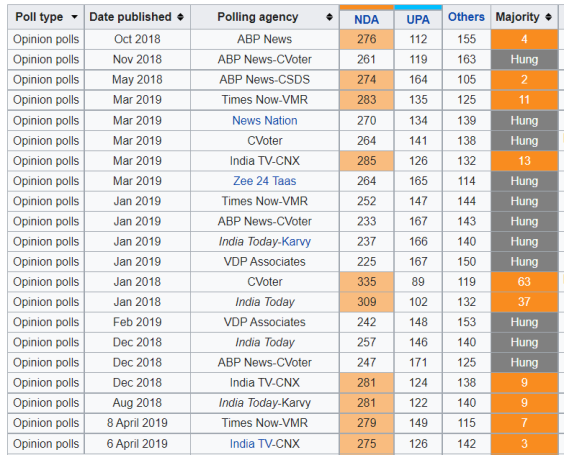
When in 2017 the state of Uttar Pradesh went for elections, the very same media houses, intellectuals and liberals were speaking on the very same lines. It would be a tough election, neck to neck. Have a look at the opinion polls:

Before the elections it was a Lynching in Dadri and this time it is a rape in Hatharas. Once the election results came out BJP had a clear cut majority with 312 seats and Akhilesh Yadav was restricted to 47 seats. Why? What happened?

Of course the intellectuals, liberals and media houses said it was vote bank polarization or simply, “it was a Modi Wave”.

Fast forward to 2019 General elections in India. This time, BJP at the center under the leadership of PM Modi had completed full five years and BJP in UP under the leadership of CM Yogi had completed half of its tenure. The media houses, intellectuals and liberals had the very same rant. This is going to be the end of the Fascism era or BJP at the very least would not get a majority. There would be a coalition government, BJP has already saturated its seats in its “Cow Belt”. Moreover, the same tactic of highlighting either a crime against a Muslim or against a Dalit was formed as a basis of entire opposition’s campaign. If you remember, it was Kuldeep Singh Sengar whose rape charge was being used as a basis for the entire campaign.

The opinion polls said the very same thing, a very tough election and hung assembly:

And what happened? Everyone knows that BJP increased its tally to 303 and Congress was restricted to 52. Why? What happened?

Fast forward to 2022. It still is the exact same story, exactly the same, no difference. Pick one case and run the entire political campaign. The result will also be exactly the same. BJP will improve its tally from 312 and Samajwadi Party would be hovering around 50.

How can I say that?

Before 2019, everyplace PM Modi and the then party president or current Home Minister Amit Shah would visit, they would say only one thing which these intellectuals, liberals and media houses tried their level best to down play. Where ever they would go, they will say that we have directly helped, connected to and changed lives of crores of people by various means. Various means for example, by providing LPG Gas connections to more than 10 crore families including 4 crore of them being free; by connecting more than 33 crore people to the banking systems via Jan Dhan accounts helping these people receive financial benefits directly in their accounts etc. etc. The list is quite long. You could have a look at my blog that I wrote at that time: Why this Kolaveri Di?

The results of 2019 General elections authenticated the veracity of their claims. Didn’t it? It does not need any validation any more. People voted for five years work.

And just so that you know, law and order prevailed in Unnao as well with Kuldeep Singh Sengar being sentenced to jail for the rest of his life in December of 2019. By the way, BJP also won the Bangarmau constituency which was Kuldeep Singh Senger’s constituency before he was expelled.

The point being, picking up one case and making a mountain out of it helps in building a fake narrative on media be it social media or mainstream media but people who have been witnessing a change in their lives always vote for the party or person who made that positive change happen. People in those constituency where the case actually happened and the culprit went to the jail voted for the party. Of course, media, intellectuals and liberals very conveniently forget to tell the complete story. What happened to the people who lynched Akhlaq? They were imprisoned, but media, intellectuals and liberals very conveniently forget to tell that. If you have been following my blogs, you would know I never forget to follow up on such cases. That’s how I keep myself abreast with the true picture of the state.

Coming back to 2022, Some things are being claimed by CM Yogi and other BJP leaders before the elections, which media houses, intellectuals and liberals are trying their best to downplay. For example there was a question answered in Loksabha on 05.08.21 about the number of households electrified in UP since 2017. Snapshot for the the states of UP and Punjab (I added Punjab just to give a comparison as to how nice Congress rule in Punjab was, I won’t be surprised if Congress gets single digit there too, but that’s another topic):

Out of these, 21,27,011 (twenty one lakh twenty seven thousand and eleven) households were BPL. The point here is that these 91 lakh households and if we assume four adults in a house at the very least these 2 crore new voters will be voting for BJP. They don’t care about what news channels are saying or what is the idea of India or what is the difference between Hindutva and Hinduism; they care only about if their living condition has improved or not. Just to give you a perspective as to how impactful 2 crore voters can be, in 2017, SP and BSP both had less then 2 crore votes, 1.8 crores and 1.9 crores respectively; BJP had 3.4 crores votes casted in its favor. This is just one Saubhagya Scheme. There are several other schemes in place too, which will give similar results. Add all of them and subtract the overlapping voters, you get the exact number of voter that will vote for BJP. Amit Shah before 2019 claimed BJP will get at least 20-25 crore votes on exactly the same basis and BJP did win 22 crore votes. Following picture would better show the electrification drive in UP:

Electricity and these new voters is the one of the big reasons why Akhilesh Yadav reacted the way he reacted once Election Commission announced new set of rules keeping Covid in mind like barring physical rallies/road shows and allowing virtual rallies along with a maximum of five people for door to door campaign among some other. He complained that BJP is a big party, has a well developed infrastructure and can conduct virtual rallies. Somebody should ask him a question, “what infrastructure is required? or what should people have, to be a part of a virtual rally?” Electricity connection, a smartphone and internet. That’s it. Right? Is there anything else required?

Also read: Remembering some of the iconic work by Akhilesh Yadav during his days

There are two majors problems for Akhilesh Yadav now. First, virtual rallies and digital campaigns would bring Modi’s and Yogi’s schemes to the forefront. No matter how hard the media, intellectuals and liberals try to mock the schemes, people would know these schemes are effective. People know that it was BJP’s government in UP that made it a reality for people even in the far fetched villages of UP to access electricity.

And second, Samajwadi Party is a family business, it does not have party workers that can go door to door and buy the voters by gifting them some goodies. Large rallies were easy way to do so. If these rules stay the same for the entire duration, 50 seats would also be a mammoth task.

Also read: Atrangi Bhaiya Ji

So, my dear readers, now you could judge if I am crazy or an andh-bhakt. You just have to add all the schemes and then add all the users that used facilities provided by the government in the last five years. You will come to the same conclusion that BJP will win more than 312 seats time. By the way, don’t forget free stuff like ration etc. during covid time. Why would the people whose lives changed towards betterment not vote for BJP and vote for SP? Even Yadavs will vote for BJP.

Don’t go by what the media says, if media would say that it is a one sided election, who would watch the news or the tv debates? They actually have a business to run.

Thanks for reading! Please do share it with your friends.

मद्रास उच्च न्यायालय: एक ऐजेण्डे के रूप में सामूहिक धर्म परिवर्तन स्वीकार्य नहीं

मद्रास उच्च न्यायालय।
एक ऐजेण्डे के रूप में सामूहिक धर्म परिवर्तन स्वीकार्य नहीं।
जी हाँ मित्रों उपर्युक्त कथन कि पृष्ठभूमि कुछ इस प्रकार है:-

मित्रों तमिलनाडु के कन्याकुमारी नामक स्थान से आप सभी परिचित होंगे। यँहा पर क्रीप्टो क्रिश्चियन (अर्थात वो लोग जो धर्म परिवर्तन करके ईसाई बन गए हैं पर अभी भी अपनी पहचान छुपा कर हिन्दू बने हुए हैं ताकि सरकारी योजनाओं का लाभ ले सके) समुदाय के लोग बहुसंख्यक अवस्था में पहुंच चुके है। क्रिश्चियन कि संख्या अधिक होने के कारण वंहा पर हिन्दू देवी देवताओं का अपमान चर्च के पादरीयों के द्वारा आम बात है।

ऐसे हि कन्याकुमारी में ही स्थित एक चर्च के पादरी हैं जिनका नाम है Mr. P George Ponnaiah. इस पादरी ने अरुमनाइ नामक स्थान पर एक और क्रिश्चियन स्टेन स्वामी के मौत के अवसर पर ईसाइयो और हिंदुओ कि एक सभा को जुलाई, २०२१ में सम्बोधित करते हुए, भारत माता, प्रधानमंत्री श्री नरेन्द्र मोदी जी, गृह मंत्री श्री अमित शाह जी और वंहा कि देवी “भू माता” के बारे में अत्यंत अपमानजनक और धार्मिक भावनाओं कप आहत करने वाली बातें कहीं थी और पूरे जोश में कहा था कि हम सबको ईसाई बनाएंगे और कोई भी हिन्दू इसे रोक नहीं पायेगा।

अब इस पादरी Mr. P George Ponnaiah के विरुद्ध एक FIR भारतीय दंड संहिता की धारा १४३, २६९, ५०६(१), १५३अ, २९५अ और ५०५(२) तथा महामारी रोग अधिनियम, १८९७ की धारा ३ के अन्तर्गत पंजीकृत कर लिया गया।

अब अपनी गिरफ्तारी से बचने के लिए ईसाई पादरी Mr. P George Ponnaiah ने मद्रास उच्च न्यायालाय के मदुरई खंडपीठ के समक्ष याचिका प्रेषित कि और प्रार्थना की कि उनके विरुद्ध दर्ज कि गई FIR को रद्द किया जाए।

न्यायमूर्ति जी आर स्वामीनाथन ने मामले कि सुनवाई करते हुए जो अवलोकन प्रस्तुत किया वो पूर्णतया भारतीय समाज को झकझोर कर उठाने या जगाने का एक अमूल्य प्रयास है, न्यायमुर्ति ने मामले पर सुनवाई करते और अपना अवलोकन प्रस्तुत करते हुए कहा कि:-

१:- किसी एक व्यक्ति द्वारा किये जाने वाले धर्म परिवर्तन का विरोध नहीं किया जा सकता है और न ही किया जाना चाहिए;

२:- परन्तु एक एजेंडे के रूप पूरे समूह के धर्म परिवर्तन को स्वीकार नहीं किया जा सकता है;

३:- संविधान के संस्थापको ने धर्मनिरपेक्षता को देश के मार्गदर्शक सिद्धांत के रूप में अपनाया और अपने धर्म को स्वतंत्र रूप से मानने और प्रचार करने के अधिकार को मौलिक अधिकार बना दिया। इसलिए, यदि कोई व्यक्ति व्यक्तिगत विश्वास के कारण अपना धर्म बदलना चाहता है, तो उसकी पसंद का सम्मान किया जाना चाहिए, “लेकिन धर्म परिवर्तन एक समूह एजेंडा नहीं हो सकता।” हमारा संविधान मिश्रित संस्कृति की बात करता है। इस चरित्र (स्थानों के धार्मिक जनसांख्यिकीय प्रोफाइल सहित) को बनाए रखा जाना चाहिए।

४:-न्यायाधीश ने क्रिप्टो ईसाइयों (अनुसूचित जाति के हिंदू जो ईसाई धर्म में परिवर्तित हो गए हैं, लेकिन आरक्षण का लाभ उठाने के लिए रिकॉर्ड पर हिंदुओं के रूप में पहचान करते हैं) के अस्तित्व का न्यायिक नोटिस लेते हुए कहा कि यही कारण है कि २०११ की जनगणना के आंकड़ों के बावजूद हिंदुओं को बहुसंख्यक दिखाया गया है। कन्याकुमारी में, याचिकाकर्ता ने दावा किया कि ईसाई समुदाय ने जिले में 62 प्रतिशत आबादी को पार कर लिया है और जल्द ही 72 प्रतिशत तक पहुंच जाएगा। न्यायाधीश ने आगे कहा कि पादरी ( Mr. P George Ponnaiah) ने खुले तौर पर हिंदुओं को चेतावनी दी थी कि इसे कोई नहीं रोक सकता।

५:-न्यायमूर्ति स्वामीनाथन ने यह समझाने के लिए कई साहित्यिक कार्यों का भी उल्लेख किया कि कैसे ‘भारत माता’ को विभिन्न रूपों में दर्शाया गया है और हिंदुओं द्वारा उनकी पूजा की जाती है। उन्होंने कहा, “जहां एक नागरिक राष्ट्रवादी भारत को एक धर्मनिरपेक्ष अवधारणा के रूप में मानता है, जिसमें संविधान मार्गदर्शक प्रकाश के रूप में है, वहीं एक धार्मिक राष्ट्रवादी के लिए भारत भारत माता है।” इसलिए, ‘भूमा देवी’ और ‘भारत माता’ को संक्रमण और गंदगी के स्रोत के रूप में चित्रित करके, पादरी ( Mr. P George Ponnaiah) ने हिंदुओं की धार्मिक भावनाओं को आहत किया है।

६:- न्यायमूर्ति स्वामीनाथन यह कहते हुए कि पुजारी के शब्द “पर्याप्त रूप से उत्तेजक” और “द्वेष और वर्चस्ववाद के प्रतीक” थे और राज्य ऐसी स्थितियों में मूकदर्शक नहीं हो सकता, न्यायाधीश ने प्राथमिकी में शेष आरोपों को रद्द करने से इनकार कर दिया। यह बताते हुए कि यीशु ने लोगों को एक-दूसरे से प्यार करना सिखाया था, न्यायमूर्ति स्वामीनाथन ने आगे कहा, “मुझे यकीन है कि न्याय के दिन, भगवान याचिकाकर्ता को एक गैर-ईसाई कार्य करने के लिए चेतावनी देंगे।”

और उपरोक्त आंखे खोल देने वाला अवलोकन का प्रकटिकरण करते हुए न्यायमूर्ति स्वामीनाथन ने पादरी (Mr. P George Ponnaiah) को कुछ आरोपों से बरी कर दिया; अर्थात् भारतीय दंड संहिता की धारा १४३, २६९ और ५०६ (१) और महामारी रोग अधिनियम, १८९७ की धारा ३, से यह कहते हुए बरी कर दिया कि उक्त बैठक को ‘गैरकानूनी सभा’ ​​नहीं कहा जा सकता है और प्रतिभागियों से किसी मे भी कोविड -१९ का संक्रमण नहीं फैला।

परन्तु,न्यायमूर्ति स्वामीनाथन ने पादरी ( Mr. P George Ponnaiah) को भारतीय दंड संहिता की धारा १५३अ, २९५अ और ५०५(२) के तहत प्रथम दृष्टया आरोपी माना क्योंकि पुजारी के भाषण ने वास्तव में हिंदुओं के एक वर्ग की धार्मिक भावनाओं को आहत किया था और धार्मिक समूहों के बीच घृणा, वैमनस्य को बढ़ावा दे सकता था।

तो मित्रों आपने देखा कि पूरे भारतवर्ष में एक ऐजेण्डे कि भांति धर्म परिवर्तन का खेल कितने बड़े पैमाने पर चल रहा है और हम हिन्दू दोहरी मार झेल रहे है, जी हाँ, एक ओर ईसाई मशीनरीया केरल, मणिपुर, नागालैण्ड, त्रिपुरा, तमिलनाडु, आन्ध्रप्रदेश, अरूणांचल प्रदेश इत्यादि राज्यों में बुरी तरह पैर पसार चुकी हैं वही दूसरी ओर इस्लामिक रेडिकल आतंकवाद ने कहर ढाया हुआ है और तो और हमारे देश में बैठे आस्तीन के सांप भी तो हमें हि डसने कि फिराक में घात लगाकर बैठे हैं।

अब सोचना आप को है कि आप अपने धर्म, संस्कृति, भाषा, परम्परा और समुदाय को सुरक्षित रखने के लिए क्या करते हैं। क्योंकि हमारे पूर्वजों ने हमें ये देश दे दिया पर क्या हम अपनी आने वाली नस्लों को ये दे पाएंगे.. यक्ष प्रश्न।
नागेंद्र प्रताप सिंह (अधिवक्ता)
[email protected]

नए संसद भवन के भूमि पूजन के समय, मोदी जी ने उथिरामेरूर का उल्लेख किया था: क्यों?

मित्रों लोकतन्त्र की परिभाषा के अनुसार यह “जनता द्वारा, जनता के लिए, जनता का शासन है”। इस प्रणाली की सबसे बड़ी विशेषता यह है कि जनादेश का दबाव नीतिगत विचलनों पर रोक का काम करता है, क्योंकि नियमित अन्तरालों पर सत्ता की वैधता हेतु चुनाव अनिवार्य होता है। हमारे देश में लोकतंत्र प्राचीनकाल से हि विद्दमान है और आप ब्रह्मार्षि और महान भुगोलवेत्ता वाल्मीकि जी द्वारा मर्यादा #पुरुषोत्तम भगवान श्रीराम के जीवनकाल में हि रचित “सम्पूर्ण रामायण” में या महर्षि वेद व्यास द्वारा परमयोगी भगवान श्रीकृष्ण के हि जीवनकाल में रचित “जय संहिता महाभारत” में या बिलकुल सृष्टि के आरम्भ में चलें जाए तो “मनुस्मृति” में लोकतंत्र कि अवधारणा को स्थापित किया गया है और रामराज्य तो सदा सर्वदा के लिए लोकतंत्र का सर्वोत्तम मॉडल है।

गुप्तकाल में भी भारतवर्ष में लोकतंत्र अपने चर्मोत्कर्ष पर था, चन्द्रगुप्त विक्रमादित्य का साम्राज्य तो सम्पूर्ण विश्व में फैला था।अर्थशास्त्र के द्वारा आचार्य चाणक्य ने भी लोकतंत्र कि अद्भुत ब्याख्या कि है। चन्द्रगुप्त मौर्य का शाशनकाल भी लोकतंत्र का पर्याय माना जाता है।

भारतवर्ष में यदि बाहरी बर्बर और मक्कार हूण, अरब, मुग़ल और ईसाई जंगली समुदाय के द्वारा बिताये गए समय को छोड़ दे तो लोकतंत्र कि परम्परा अनवरत शासन व्यवस्था के रूप हर वक़्त विद्दमान थी।

खैर हम यंहा उथिरामेरूर के बारे में चर्चा करने जा रहे हैं।

मित्रों उथिरामेरूर चेन्नई से लगभग ९० किमी दूर कांचीपुरम जिले में स्थित है, जो अपने आप में १२५० वर्षों का इतिहास समेटे हुए है। और आप को यह जानकर आश्चर्य होगा कि भारत में विद्दमान लोकतंत्र का सर्वोत्तम मॉडल है। कांचीपुरम ज़िला भारत के राज्य तमिलनाडु का एक जिला है। इसे कांची तथा कांजीवरम के नाम से भी जाना जाता है। इसका मुख्यालय कांचीपुरम है। यहां मुख्यतः वन्नियार समुदाय के लोग रहते हैं। हिंदू धर्म के चार प्रसिद्ध पीठों में से एक कांचीपुरम का पीठ है।

उथिरामेरूर में तीन महत्वपूर्ण मंदिर हैं। और इन तीन मंदिरों में बड़ी संख्या में शिलालेख हैं, विशेष रूप से राज राजा चोल (९८५-१०१४ ईस्वी), उनके पुत्र राजेंद्र चोल और विजयनगर सम्राट कृष्णदेव राय के शासनकाल के हैं।

वास्तव में, तमिलनाडु के कई हिस्सों में विभिन्न शासन काल के दौरान स्थापित किये गए मंदिराें की दीवारों पर लिखें गए शिलालेख ग्राम सभाओं का उल्लेख करते हैं। तमिलनाडु के पुरातत्व विभाग के पुरालेखविद् आर. शिवानंदम कहते हैं, कि “उथिरामेरूर में स्थापित किये गए मंदिरो कि दीवारो पर ही सबसे पुराने शिलालेख पाये जाते हैं, जिनमें इस बारे में पूरी जानकारी मिलती है कि निर्वाचित ग्राम सभा कैसे काम करती है।” विदित हो कि परान्तक चोल [९०७-९५५ ई.] के शाशन- काल की अवधि के दौरान ग्राम प्रशासन को चुनावों के माध्यम से एक आदर्श ग्राम प्रणाली के रूप में सम्मानित किया गया था।

उथिरामेरूर में स्थापित किये गए मंदिरो कि दीवारो पर रचे गए शिलालेख एक ऐतिहासिक तथ्य की गवाही देते हैं कि लगभग ११०० वर्ष पुर्व, एक गाँव में एक विस्तृत और अत्यधिक परिष्कृत चुनावी प्रणाली प्रयोग में थी और यहाँ तक कि इनका एक लिखित संविधान भी था जो चुनावी प्रक्रिया को निर्धारित करता था।

ऐच्छिक ग्राम लोकतंत्र की इस प्रणाली का विवरण ग्राम सभा (ग्राम सभा मंडप) की दीवारों पर अंकित है, ग्रेनाइट स्लैब से बनी एक आयताकार संरचना “यह भारत के इतिहास में एक उत्कृष्ट दस्तावेज है। यह ग्राम सभा का एक सत्य लिखित संविधान है जो 1,000 साल पहले काम करता था, ”डॉ. नागास्वामी प्रसिद्ध पुरातत्वविद् कहते हैं कि “शिलालेख, वार्डों के गठन, चुनाव के लिए खड़े उम्मीदवारों की योग्यता, और अयोग्यता के मानदंड, चुनाव का तरीका, निर्वाचित सदस्यों के साथ समितियों का गठन, उन समितियों के कार्यों, गलत करने वाले को हटाने की शक्ति के बारे में आश्चर्यजनक विवरण देता है। आदि…”।

ग्रामवासियों को यह अधिकार भी था कि वे निर्वाचित प्रतिनिधियों को अपने कर्तव्य में विफल होने पर वापस बुला(Recall) सकते हैं।

उथिरामेरूर में प्रयोग में लायी जाने वाली लोकतंत्रात्मक प्रक्रिया की मुख्य विशेषताएं इस प्रकार हैं:-

१:-गाँव को 30 वार्डों में विभाजित किया गया था, जिसमें प्रत्येक वार्ड के लिए एक प्रतिनिधि चुना गया है।

२:-जो लोग चुनाव लड़ना चाहते थे उनकी आयु ३५ वर्ष से अधिक और ७० वर्ष से कम होनी आवश्यक है।

३:-जो लोग (TAX) कर देते हैं, वे ही चुनाव लड़ सकते हैं।

४:-ऐसे मालिकों के पास कानूनी रूप से स्वामित्व वाली साइट (सार्वजनिक पोराम्बोक पर नहीं) पर बनाया गया घर होना चाहिए।

५:-किसी भी समिति (Committee) में सेवारत व्यक्ति अगले तीन कार्यकालों के लिए फिर से चुनाव नहीं लड़ सकता है, प्रत्येक कार्यकाल एक वर्ष तक चलता है।

६:-निर्वाचित सदस्य जिन्होंने रिश्वत स्वीकार की, दूसरों की संपत्ति का दुरूपयोग किया, अनाचार किया, या जनहित के विरुद्ध कार्य किया, उन्हें अयोग्यता का सामना करना पड़ता है।

७:-चुनाव होने पर बच्चों सहित पूरे गांव को ग्राम सभा मंडप में उपस्थित होना पड़ता है केवल बीमार और तीर्थ यात्रा पर जाने वालों को ही छूट है।

आपको क्या लगता है आज का चुनाव आयोग जिस प्रक्रिया का प्रयोग करके चुनाव सम्पन्न कराता है, वो कायदे क़ानून कंहा से लिए गए हैं…. चलिए आप बताइए क्या आपको स्वर्गीय श्री टी. एन. शेशन जी याद हैं, इन्होनें हि तो सुधार लागू किये जो अब तक प्रयोग में लाए जा रहे हैं।

दरअसल, स्वर्गीय श्री. टी एन शेषन, (पूर्व चुनाव आयुक्त), जब उन्हें मुख्य चुनाव आयुक्त के रूप में नियुक्त किया गया था, तो वे थोड़े निराश थे और उसी निराशा में वे “परमाचार्य” जी से मिले, परमाचार्य जी, जो उस वक़्त ९७ वर्ष के थे और् उन्होंने तुरंत स्वर्गीय श्री. टी एन शेषन की निराशा के कारण को भांप लिया और उन्हें भारतीय जनता की सेवा करने के लिए भगवान द्वारा दिए गए एक अवसर के रूप में इस नियुक्ति को चरितार्थ करने की सलाह दी।

परमाचार्य जी ने सुझाव दिया था कि श्री शेषन उथिरामेरुर मंदिर जाएं और लगभग 1000 साल पहले भारत में प्रचलित चुनावी नियमों का उल्लेखनीय विवरण पढ़ें, जिसमें चुनाव लड़ने वाले उम्मीदवारों की योग्यता का विवरण भी शामिल है।

स्वर्गीय श्री. टी एन शेषन जी के शब्दों में, “चुनावी सुधारों का श्रेय कांची महास्वामी को जाता है जिनके परामर्श के बिना उनके लिए चुनावी प्रक्रिया में क्रन्तिकारी सुधार करना संभव नहीं होता।

स्वर्गीय श्री. टी एन शेषन जी ने बताया कि ९७ वर्ष की उम्र में भी उनके पास इतनी स्पष्टता थी कि उन्होंने उथिरामेरुर मंदिर की उत्तरी दीवारों पर उभरे चुनावी नियमों का सूक्ष्म विवरण दिया और मुझे बताया कि इन सुधारों के दसवें हिस्से को लागू करना भी भारत के लिए कि गई एक महान सेवा होगी। आप हम और् ये समस्त विश्व जानता है कि उसके बाद जो कुछ हुआ वो इतिहास बन गया।

स्तंभकार टी.जे.एस. जॉर्ज के शब्दों में, “शेषन ने दिखाया कि एक व्यक्ति यह सुनिश्चित करने के लिए क्या कर सकता है कि लोकतंत्र एक हाइड्रा-सिर वाला राक्षस न बन जाए। परन्तु समय रहते शेषन सेवानिवृत्त हो गए और राक्षस मुक्त हो गया। ”

मुझे संदेह है कि तमिलनाडु या हमारे देश में घड़ी घड़ी लोकतंत्र को बचाने के लिए दंगे फसाद करने वाले कितने राजनेता हैं जो इसके बारे में जानते हैं।

यह अद्भुत था कि हमारे प्रधान मंत्री ने इसे राष्ट्रीय मंच पर साझा किया ताकि देश भर में सभी को हमारी संस्कृति की समृद्धि को जानने का अवसर मिले। उथिरामेरुर में विष्णु मंदिर बहुत ही अनोखा है क्योंकि इसे विश्वकर्मा ने बनाया था और यह बनाया जाने वाला पहला अष्टांग विमान है। चेन्नई के बेसेंट नगर में अष्टलक्ष्मी मंदिर में विम ग्वाना का डिजाइन और निर्माण इसी विमान की नकल करते हुए किया गया था।

नागेंद्र प्रताप सिंह (अधिवक्ता)
[email protected]

Defence Research and Development Organization (DRDO) role played during the pandemic: SKY is the limit

0

With an aim of saving lives as priority rather than economy, in a conquest between lives and livelihoods, lives have been given priority in India. With this approach with early stringent lockdown when the cases were less than 500 for 40 days initially, we could fetch time to develop and scale up the necessary medical and para-medical infrastructure for active surveillance, testing, contact tracing, isolation, management of cases and educating citizens about social distancing and masks, etc. With one testing lab and less than 100 tests per day in Jan 2020, India upscaled its capacity to conduct 10 lakh tests per day in 2305 laboratories by 2021. Similarly with minimal PPE, N95 masks, ventilators, infrastructure in hospitals India could successfully face the pandemic with less mortalities and had reached a plateau phase. In this war against the virus, few partners stood the way with the government in combating this virusà of which one should remind is DRDO which paved the way to the government in every step and helped to win over the pandemic. During this period India had to fight hard with the Chinese origin Virus and Chinese. The Chinese when the whole world is fighting with the pandemic had started aggression into Indian territory. The lockdown provided the necessary time to put in place the fundamentals of the ‘5 T’ strategy – Test, Track, Trace, Treat, Technology. When the number of cases crossed 30, DRDO entered the combat by accelerating products and countermeasures to curtail the spread. During the pandemic DRDO at their 40 laboratories, more than 50 technologies are been transferred and more than 130 equipment’s developed and brought to public use.

Role in testing:  From 111 testing labs in March 2020 to 2506 labs by 5th May 2021 conducting nearly 15 lakh tests per day . Also played a vital role in developing COVID testing kits which were initially been imported from China.

Role in prevention: Prevention of COVID requires usage of masks, sanitation and maintenance of physical distance. India was producing virtually zero before the pandemic and it raised to  around 200,000 PPE kits and 250,000 N95 masks per day by May 2020. The coverall suit is improvised by making them impermeable to liquids at the same time allowing air easily making  the user comfortable. It also helped in manufacture of face shields and aerosol containment box for safe intubation for COVID patients undergoing treatment. DRDO, Gwalior played an important role in checking the efficacy and quality of the products like “Synthetic blood penetration facility” test to check PPEs, sanitizer testing and face mask testing. COVID-19 SAMPLE COLLECTION KIOSK (COVSACK) and WALK-IN SWAB COLLECTION KIOSK (WISK) Kiosks were developed for safe collection of samples from suspected individuals. Temperature checking probes were developed for both industrial and domestic purposes. Personal, area and vehicle sanitization equipment’s were developed like personnel sanitization enclosures, portable backpack sanitization equipment, trolley mounted large area sanitization equipment, vehicle sanitization enclosure, mobile area sanitization system, Light motor vehicle mounted sanitization system, Ultra violet sanitization box, COVID 19 (Ultra violet) UVC cabinet sanitizer, automated luggage disinfector using UVC and many more in combatting the pandemic.

Role in treatment :

This included a 750-bed Sardar Vallabhbhai Patel Covid hospital in Delhi, a 900-bed Dhanvantari hospital in Gujarat’s Ahmedabad, a 500-bed ESI hospital in Patna, a 750-bed Pandit Rajan Mishra hospital in Varanasi, a 500-bed Atal Bihari Vajpayee hospital in Lucknow, 316 bedded hospital in Guwahati, two 800 bedded hospitals in Rishikesh and Haldwani, 500 bedded hospital in Jammu. India had approximately 40,000 ventilators in March 2020, of which 8,432 were with the public sector. Now under PM CARES, 45,066 ventilators are distributed to public  sector. Ventilator was developed indigenously by DEBEL, Bangalore. Also multi patient ventilator kit was developed wherein at time of emergency a single ventilator is made to available to connect to many patients. A new drug 2-DG (2-deoxy glucose) was developed by DRDO to fight COVID. During the second wave, we have faced scarcity of Oxygen and Government with the help of DRDO established medical oxygen plants nationwide in nearly 1500 hospitals. SAMPARC (Smart Automated Management of Patients and Risks for  COVID-19)  software app was developed by DRDO for tracking of COVID-19 suspects who are in isolation or quarantine.

DRDO outplayed when necessary in critical situation when people and country were in deep troubles fighting the pandemic with requirement of newer infrastructure and equipment . DRDO and its laboratories came with newer innovative equipments   and made India self sufficient , self reliant and we are able to export and help other countries in fighting the pandemic.

A Ray of realism and humanism- An ode to the cine maestro

0

As the world is going through the struggle of a pandemic and humanitarian crises erupt around the world, the time is true for the audiences to know what makes Satyajit Ray’s films so significant. His films can offer the logical depth to reflect upon the human condition in our daily lives, which makes them more important than ever.

As we celebrate the birth centenary of arguably India’s best filmmaker ever, Satyajit Ray, let’s take a ride on his art of moviemaking that is considered as the epitome of realism and humanism.

Satyajit Ray (May 2, 1921 – April 23, 1992), the master storyteller, has left a cinematic heritage that is universal. For the art of filmmaking or knitting a plot to create a realistic film, Satyajit Ray was a rare gem. He just took the art of filmmaking to a new dimension. He was simply an institution by himself.

As an Auteur, Ray’s visual style of storytelling bonded with the aesthetics of European realism and symbolic realism, based on classical Indian iconography and theory, which he combined in a self-reflective way into his filmmaking as the means of perceiving the human condition in a rapidly changing world. His films display the poignant effect of the socio-economic and political changes on the private lives of his characters. Ray’s films reflect upon the changes within the conscious collective of the society and therefore the time they were produced, while offering a historical document of this transformation of his imagined society.

Ray on location ©Nemai Ghosh. Image Source-satyajitray.org

His films demonstrate a poetic realism and cinematic imagination with remarkable humanism, elaborate observation and subtle handling of characters and situations. The cinema of Satyajit Ray is a unique blend of mind and emotions. He is superbly organized, specific, meticulous, and yet, evokes deep emotional reaction among the audience. His films portrays a fine compassion without using melodrama. He formed a cinematic style that is almost invisible. According to him– “The best technique is the one that’s not noticeable”.

Apu and Durga see a train for the first time ©Government of West Bengal, Image Source-satyajitray.org

His first film, Pather Panchali (Song of the Little Road, 1955) catapulted him into international fame and established his status as a major filmmaker in the world cinema, winning numerous awards and credits including Best Human Document in Cannes, 1956 and Best Film in Vancouver, 1958. The lyrical Pather Panchali introduced the cinema-going world to the wide-eyed Apu, born into extreme poverty but who would over time grow into a studious young man with a mind of his own and an autobiographical novel boiling in his chest. Fighting with poverty, it is the family’s little moments that make the film remarkable. The ‘train scene’where little Apu and Durga run through fields of ‘kash’ (Catkins) flowers to see a train running in the distance — there is no song and dance or action sequences, but the melodiousness of the scene and wide shot have made it iconic. Pather Panchali is the first film of The Apu Trilogy – a three-part tale of a boy’s life from birth to magical childhood to a roving manhood. The other two movies of the trilogy are Aparajito (The Unvanquished, 1956) and Apur Sansar (The World of Apu, 1959). The narrative moves from village to city, tracking Apu’s personal difficulties, at all times companioned by Ravi Shankar’s melancholic sitar-and-flute score that seems so deeply implanted into the trilogy’s core as flavourful seeds in a soil.

A scene from Pather Panchali, Sarbajaya, Durga and Apu ©Government of West Bengal, Image Source-satyajitray.org

Pather Panchali is considered to be a neo-realist movie and possessed all the necessary characteristics of neo-realism as defined by the great Italian screenwriter, Cesare Zavattini.

Ray chose natural or real locations, amateur or non-professional actors, outdoor shots while shooting Pather Panchali. He wanted the backdrop setting of each shot to speak for itself. He totally avoided from the artificially exaggeration of the popular or commercial cinema prevailing in Bollywood, India. Ray was a poet, celebrating the beauty and universality of ordinary lives. Pather Panchali showed what would define Ray: realism, naturalism and deep humanism.

Ray directing Sharmila Tagore and Barun Chanda for Company Limited, 1971, ©Nemai Ghosh. Image Source-satyajitray.org

Ray’s humanism exceeds modern day politics. In his City Trilogy (three of his Calcutta-based films) – Pratidwandi (The Adversary, 1970), Seemabaddha (Company Limited, 1971) and Jana Aranya The Middle Man, 1975). Adapted from the stories by Sunil Gangopadhyay and Manishankar Mukhopadhyay, these films are portrayed by contemporary characters, all confined within the typical Indian paradox of individual ambition disillusioned by limited opportunity. 

Though influenced by Western culture Ray remained loyal to his roots in his south Calcutta (now Kolkata) home from where he explored and depicted universal human values through his films.

A scene from Arnayer Din Ratri ©Nemai Ghosh , Image Source-stayjitray.org

There is an iconic sequence – the memory game in Aranyer Din Ratri (Days and Nights in the Forest, 1970) that is utilized in the film under discussion, right in the middle of the development of the plot, is pivotal in understanding the entire film. All the main characters are seated in a circle and the game starts where they have to say the names of the famous personalities one by one. The game advances with the names of – “Rabindranath, Karl Marx, Cleopatra, Atulya Ghosh, Helen of Troy, Shakespeare, Mao Tse Tung, Don Bradman, Rani Rashmoni, Bobby Kennedy, Tekchand Thakur, Napoleon, Mumtaz Mahal”. Ray had himself taken the shot, panning the camera, which spun on an axis, at 360 degrees. It was important that the memory game focused only on people. Regarding this Ray said “I am not conscious of being a humanist. It’s simply that I am interested in human beings.” The way he depicted human beings, their weaknesses, their struggles, their individual agitations and simple achievements, attracted followers far and wide. Aranyer Din Ratri is a landmark film of Satyajit Ray which portrays a deep humanism and a magnificent study of man, nature, and the very nature of man.

Satyajit Ray directing Joy Baba Felunath at location in Benares, ©Nemai Ghosh. Image Source-satyajitray.org

Ray in his 40 years of filmmaking career made 37 films. He showed human dignity amidst tragedy in The Apu Trilogy, the flexibility of the human spirit in Mahanagar (The Big City, 1963), the strong anti-war message in a children’s film named Goopy Gyne Bagha Byne (The Adventures of Goopy and Bagha, 1968) and the victory of punishment over crime in his detective films Sonar Kella (The Fortress, 1974) and Joy Baba Felunath (The Elephant God, 1979).

Ray’s films demonstrates relationships, emotions, struggle, conflicts, joys and sorrows of human life. Though initially inspired by the neo-realist style of filmmaking, his cinema fit in not to a specific category but belongs to a meta-genre of storytelling that consists of the works of Kurosawa, Chaplin, Hitchcock, Fritz Lang, John Ford, Fellini, David Lean, Bergman, Renoir, Bunuel, Robert Bresson Yasujiro Ozu and Ritwik Ghatak. All very distinct in style and subject, and yet architects of cinema that is ageless and universal.

Ray’s last film, Agantuk (The Stranger, 1992), was on a peak of the master storyteller’s philosophy and belief systems. When casting Utpal Dutt for the main role of Agantuk, Ray told the veteran actor that he must speak on the filmmaker’s behalf as he had put his own views into this character. Civilization to religion, Tagore to tribal, morality to science, social responsibilities to human values — Ray the humanist explored all in his own style as a true Auteur.

Satyajit Ray sketching costumes possibly for Home and the World 1984 ©Nemai Ghosh. Image Source-satyajitray.org

It is heard that on the final day of shooting his last film, Ray spread his hands up in the air and said, “That’s it. That’s all there is. I don’t have anything more to say.” Soon after receiving the Honorary Oscar for Lifetime Achievement, he passed away at the age of 70 in his beloved Calcutta in 1992. He was remarkably prolific throughout his film career. Still now the Master Filmmaker is very much relevant and living through his immortal films among us.

‘‘Not to have seen the cinema of Ray means existing in the world without seeing the sun or the moon.’’ – Akira Kurosawa

‘‘We all need to see the films of Satyajit Ray and re-see them, again and again. Taken all together, they’re one of our greatest treasures.’’ – Martin Scorsese

“I have had the pleasure of watching Mr Ray’s ‘Pather Panchali’ recently, which I hadn’t seen before. I think it is one of the best films ever made. It is an extraordinary piece of work. I am interested in learning more about Indian film industry and that is the reason why I came,” – Christopher Nolan told PTI on his trip to India in 2018.

Thank You

ABHIJIT GHOSH

Fight around 21: The Legal female marriage age

0

The debate for the right age.

Recently when the Government announced a bill to change the legal age of females for marriage from 18 to 21, we are seeing two different sides; one applauding the move and the other questioning it. When PM Narendra Modi announced in his Red Fort speech to increase the legal marriage age of females, the debate started already. But with the introduction of the bill in the parliamentary house, the debate intensified. Many people are supporting this move and calling it in the favour of ‘Women Empowerment’, while the others are calling it irrational, unnecessary and some religious people are taking this a bit further by saying it against their religion. So why is there a debate on changing the marriage age of a girl to 21 when the marriage age of a boy is already 21?

As of now the legal age of a girl for marriage in India is 18 while that of a boy is 21 according to the Prohibition of Child Marriage Act. Though the act was brought in 2006, the current legal age of boys and girls for marriage was fixed in 1978. The PCMA in 2006 replaced the Child Marriage Restraint Act of 1929 which was the first legal action that provided the minimum age of marriage for males and females in the British Raj. The Child Marriage Restraint act which was also called as Sarda Act as it was Rai Sahib Harbilas Sarda who pushed for the bill in the Central legislative assembly. The marriageable age was 14 for girls and 18 for boys according to that law. The act was amended two times; one after independence when the age of a girl was raised to 15 and second in 1978 when the ages were fixed as 18 and 21 for girls and boys respectively.

But why does the state need to legalise the age? Why not it’s up to the people? Well, the answer to these questions lies in biology, psychology, and history. Child marriages were prevalent in India along with other wrong traditions. Educating girls was never an option. So now imagine a scenario of a 5-7 age boy-girl getting married with no knowledge, no education, no understanding. Now imagine another case where the girl is still a child or in her early teens getting married to a person much older than her. She will get pregnant at a much early age which will increase complexity in her body as her age is not appropriate for the pregnancy. These were some normal parts of Indian history. Many socio-cultural reformers fought against it. Even science bats against those marriages. Child marriages have the worst consequences on females and this includes; Early Maternal Deaths, Domestic violence.

A study conducted by the International Centre for Research on Women in India states that girls married before 18 are twice likely to be beaten, slapped and threatened by their husbands and three times more likely to suffer sexual abuse and violence. These teen brides suffer from pregnancy-related issues too as they are less likely to be informed on reproductive issues. And due to this, pregnancy-related deaths are the leading cause of death among married girls of 15-19 age. The infants born to mothers who are under 18 are 60% more likely to die in their first year. And if they survive, they suffer from malnutrition, low birth weight, late physical and cognitive development. The body of these girls suffers a lot. They suffer from post-traumatic stress, their physical and mental health deteriorates. Even if they want to come out of it, they cannot as they are not educated, they cannot earn as they are dependent. And this is the reason they suffer in silence. How can society progress if half of the population suffers from inequality of some kind? 

Article 21 of the Indian Constitution gives every citizen of this country the‘ Right to Life’. This is where the government steps in to protect that fundamental right. The age of females was raised from 14 to 18 to give effect equality, equal opportunity to the female citizens of our country. However, we soon realised that even in this provision, there exists some kind of inequality. The legal marriage age of a boy is 21; the average age of graduation in India. This means a state gives an opportunity to a male to first complete his graduation and then marry someone. It’s different whether they want to complete their graduation or not, but the state gives them ‘an opportunity’, right? But that’s not in the case of females as their legal marriage age is 18 which means there is no equal opportunity of completing their graduation. The state is providing an opportunity to males but not providing the same to females. We cannot create an equal society by providing a certain opportunity to some citizens and the same is not provided to others. 

Raising the legal marriage age to 21 provides girls with an opportunity to first complete their studies. This will help them to better understand themselves, the world and also provide them with an opportunity to work, become independent and live a dignified life. This will also help females to make better decisions for their health as they will have a better understanding of health-related issues. Increasing the age of marriage for girls will boost their confidence, help them grow. And healthy, growing, confident females are not just good for society, they can be of great help in nation-building. An increase in women participation in the nation’s workforce can have a positive impact on the nation’s GDP. 

Many religions are trying to haul down this new move of the government. However, we are seeing people from different areas of the country coming out in support of the govt’s decision. Some of the people have warned those parties who are against the bill. They have clearly said that anyone opposing the move will suffer backlash in the coming elections. Though the government sent the bill to the standing committee, the bill has raised hopes for girls. To make our country better, we must not see decisions from a religion’s point of view or from a political angle. As a citizen, we must fight for equality, equal opportunities and progress forward to provide the ‘right to life’ to everyone living in this country.

Authored by Ajay Swadesh Sharma (L4Light)

Lal Bahadur Shastri: Reminiscences of a prolific leader

0

“The preservation of freedom is not the task of soldiers alone. The whole nation has to be strong. We all have to work in our respective spheres with the same dedication, the same zeal, and the same determination which inspired and motivated the warrior on the battlefront. And this has to be shown not by mere words, but by actual deeds”.

A person who believed in not only just keeping high ideals but also giving due importance in implementing them in his actions, Lal Bahadur Shastri is truly the epitome of honesty and reputability. Known as ‘Quintessential Gandhi’ and ‘Man of peace’, he always did justice to these names he earned during his lifetime through the optimistic approach he had towards life. On his 56th death anniversary, I pay homage to this eminent ex-prime minister of our country by sharing a glimpse of his remarkable works and highlighting some of the values he taught on how to overcome barriers in life and rise victoriously.

Parenthesis In History

Lal Bahadur Shastri’s ministerial colleague TT Krishnamachari remarked that Shastri could be a ‘parenthesis in history’ as compared to other leaders like Nehru or Indira Gandhi as he hasn’t received the limelight he truly deserved. Lal Bahadur Shastri, a non-controversial leader who hailed from Uttar Pradesh served as minister in Nehru’s Cabinet for many years. He was so simple and committed to his principles that he resigned from the position of Railway Minister accepting the responsibility for an unexpected railway accident that happened during his ministership. After the unprecedented loss of Nehru in 1964, a serious question was raised, ‘After Nehru who’ and ‘After Nehru what’. In no less time, Congress unanimously chose Shastri to be Nehru’s successor against Morarji Desai and Indira Gandhi.

In history, people often don’t remember the time period of service of a leader rather the amount of work done and the impact the leader has created during his/her tenure. Shastri served as India’s PM for just nineteen months but the number of challenges he had to deal with was enormous. India was recovering from the repercussions of the 1962 Indo- China war, especially on the economic side. The military loss that India incurred took time to recuperate.  Along with this, the first-order problem India suffered was acute food scarcity, the reduction in the production of wheat and rice, and the unattended inflation created an ‘economic crisis’ that led to an increase in the import of wheat and rice from countries such as the US, Cambodia, Thailand, etc. In order to meet the increasing foreign exchange and food grains demand, Shastri came up with fruitful initiatives. He laid down the foundation of the ‘Green Revolution’, a Food Corporation bill was legislated to provide incentives to farmers to produce more. On the moral side, Shastri not only requested people to fast at least once a week but himself skipped meals during the day to support the cause.

Known as the ‘Architect of India’s real surgical strike’, Shastri’s contribution to the Indo-Pakistan war of 1965 was sensational. Shastri declared, “Since peace is violated by neighboring countries on one or other pretext, we would shed our blood to maintain the integrity and sovereignty of a territory”. He directed the Indian army which Pakistan thought was disheartened after the Indo-China war. The victory came over with the withdrawal of Pakistani forces and the suggestion of a ceasefire by the UN. Shastri coalesced the enthusiasm for both the soldiers and the farmers alike with his slogan “Jai Jawan, Jai Kisan”.

Forward-Thinking Leader

Shastri at a very young age of 16 joined the Indian national movement and was a strong opponent of the caste system.  During his political career, many pioneering initiatives were undertaken by him. To mention a few includes replacing lathi-charge with water jets to disperse crowds, the appointment of women as conductors in public transport facilities, the White Revolution, and the creation of the National Dairy Development Board, etc.

His greatest skill was conciliating divergent views and solutions to unite men rather than divide men. Trust and transparency were the key highlights of his personality. He maintained unity and played the role of negotiator in every problem that arose within his tenure as PM whether it is the language crisis in Assam or the Anti-Hindu agitations or restoring harmony in India-Nepal relations.

In the book “Lal Bahadur Shastri: Politics And Beyond”, author Sandeep Shastri talks about how Shastri resisted corruption in all ways. He has contributed to the appointment of the Santhanam Committee to suggest ways of dealing with corruption. During Shastri’s prime ministership he implemented the recommendations made by the Committee.

One of the most important qualities of a leader includes maintaining coordination, solidarity, and deliberation. Even though there were factions in the Congress party, Shastri during his prime ministership made sure to hear all viewpoints and finally arrived at a sustainable solution. This was also evident in how he dealt with the Indo- Pakistan war and the Sirima-Shastri Pact, the bilateral agreement signed between India and Sri Lanka on Indian workers’ citizenship.

Tashkent Agreement And Aftermath

PM Shastri and then President of Pakistan Ayub Khan entered an agreement in Tashkent to reinstate the conquered regions and return to the 1949 ceasefire line in Kashmir. The Tashkent Agreement not only brought peace and stability but ended with a tragedy. The unforeseen death of Shastri not only ended the short tenure of his prime ministership rather the country lost a zealous leader. The demise of Shastri led to many controversial stories. Reports and press confirmed it as cardiac arrest while many still think it’s a suspicious mystery.

Today, Indians remember Shastri not only as a short-tenure PM of India but also as a short stature man with high ideals. The Lal Bahadur Shastri National Academy Of Administration, the training institution is named after him and every future civil servant can look up to him as an example of how to serve the country in the most possible ways. In this current scenario of a global health crisis, widening economic budget gap, and rising inequalities, it is imperative to reflect upon the rich legacy left behind by a leader like Shastri and to keep up with the ideals he taught us through his life.